Leaked CIA Assessment on Iran: What the Document Says, What Araghchi Denies, and What We Cannot Yet Verify
A classified CIA assessment on Iran's military capabilities, published by The Washington Post on 8 May 2026, has drawn a sharp rebuttal from Iranian Foreign Minister Abbas Araghchi — but independent verification of the document's specifics remains incomplete.
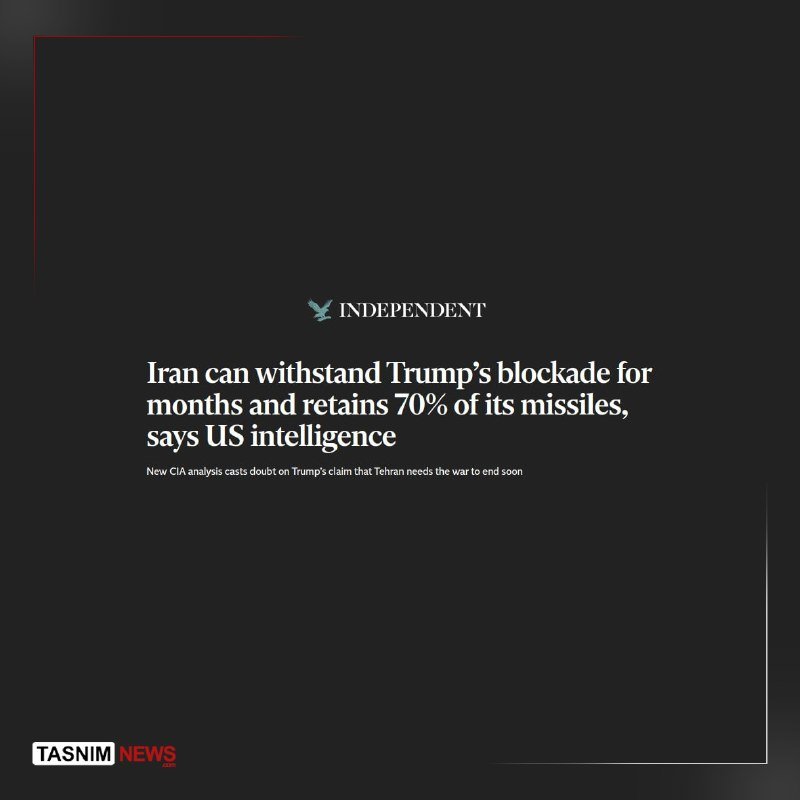
On 8 May 2026, The Washington Post published a classified CIA assessment describing Iran as possessing one of the largest ballistic missile arsenals in the Middle East, capable of sustained operations across multiple regional fronts simultaneously. Within hours, Iranian Foreign Minister Seyyed Abbas Araghchi took to social media to dismiss the finding. "The CIA is mistaken," he wrote in a post that was amplified by Iranian state media. The exchange illustrates a recurring dynamic in US-Iranian confrontation: intelligence disclosures function not merely as assessments but as diplomatic instruments, calibrated to shape both adversary behaviour and allied perception — while the targeted state responds with denial, counter-framing, and appeal to alternative security arrangements.
What independent verification would require
For this publication to treat the Washington Post disclosure as fully verified, several conditions would need to be met. The original classified document — its title, classification level, date of production, and specific distribution list — would need to be examined directly or corroborated by a second independent outlet with its own sourcing. The numerical claims inside the assessment — estimated missile quantities, range specifications, force sustainment timelines — would need cross-referencing against open-source defence intelligence from institutes such as the International Institute for Strategic Studies or the Center for Strategic and International Studies, neither of which has issued a public statement on the WaPo report as of this publication. Araghchi's rebuttal statements, which he posted in English on the social media platform X, would need corroboration from Iranian state media transcripts to confirm exact wording. This investigation draws on the Washington Post article as the primary source for the assessment's contents, on Araghchi's own posts as the primary source for Tehran's response, and on BBC News reporting for additional context on the US-Iran diplomatic standoff — but acknowledges that independent corroboration of the assessment's technical specifics remains in progress.
The assessment and Araghchi's rebuttal
According to the Washington Post report of 8 May 2026, the declassified CIA assessment describes Iran's missile programme as among the most advanced in the region, with sufficient launch capacity to sustain simultaneous operations across what the document terms multiple "fronts" — a framing that most analysts read as referencing Iran's network of proxy relationships across Iraq, Syria, Lebanon, Yemen, and Gaza. The assessment reportedly states that Iran would be capable of maintaining military pressure for an extended period without the kind of resource exhaustion that constrained some previous regional actors.
Araghchi's response was direct and published across multiple channels. "The CIA is mistaken," he wrote in a post that Iranian state media amplified with cinematic footage from his recent diplomatic visit to China. His office's Telegram channel published a longer statement in Persian, with an English-language translation circulating on his official account. The foreign minister's counter-framing did not stop at technical denial: he went further, accusing Washington of systematically choosing military pressure over negotiated settlement. "Every time a diplomatic solution is on the table, the United States opts for a reckless military adventure," Araghchi stated in remarks carried by BBC News on 8 May 2026. The accusation echoes a longstanding Iranian grievance — that maximum-pressure sanctions policy and the 2018 US withdrawal from the Joint Comprehensive Plan of Action dismantled a functioning diplomatic architecture and left Tehran with no alternative but to develop its current capabilities in the first place.
The China dimension
Araghchi's visit to China, documented in a video published by Iranian state outlet PressTV on 8 May 2026, provides important structural context. Beijing is Iran's principal diplomatic counterweight to Western pressure — a relationship anchored in a 25-year strategic cooperation agreement signed in 2021 and deepened through successive high-level exchanges. During the visit, Araghchi and Chinese counterpart Wang Yi agreed to "continue consultations and reach a new level of cooperation," according to a PressTV dispatch. The language is formulaic but the signal is not: Tehran is demonstrating, publicly, that its diplomatic options do not run through Washington. For an Iranian leadership confronting what it characterises as hostile US intelligence disclosures, Beijing represents a structural hedge — a partner whose economic reach insulates Iran from the full weight of Western financial sanctions and whose security orientation offers an alternative to the US-led regional order.
Structural context: intelligence as diplomatic instrument
Leaked intelligence assessments targeting Iran are not new, but they carry particular weight in a moment when nuclear negotiations have stalled repeatedly since the 2018 US withdrawal from the JCPOA. The pattern is familiar: a classified assessment surfaces in a prominent Western outlet, describes Iranian capabilities in alarming terms, and generates a diplomatic response — either from allied governments who now feel they have intelligence grounds to harden their positions, or from Iran, which responds with denial and counter-escalation framing. The effect on the negotiating environment is consistently negative. Iran, having been denied relief from sanctions through diplomacy, has invested heavily in indigenous capability — missile, drone, and naval — precisely the capabilities the CIA assessment now highlights. That investment is simultaneously a bargaining chip and a deterrent: Tehran reads its own build-up as the reason Washington has not escalated to direct military confrontation.
The CIA assessment, if its contents are accurately reported, appears to recalculate that deterrent calculus. The claim that Iran could sustain multi-front operations "indefinitely" or for a period the document specifies suggests an internal US reappraisal of the cost of potential conflict — one that either reflects genuine Iranian capability growth or is designed to communicate to allies and domestic audiences that Iran cannot be dealt with cheaply. Distinguishing between those two possibilities requires access to the document itself, which this publication has not obtained.
What we verified / what we could not
Confirmed from available sources: The Washington Post published a classified CIA assessment on Iran's military capabilities on 8 May 2026. Iranian Foreign Minister Abbas Araghchi publicly rejected the assessment via social media on the same date, calling the CIA "mistaken" about Iran's missile reserves. Araghchi separately accused the US of choosing "reckless military adventure" over diplomatic solutions, in remarks reported by BBC News on 8 May 2026. Araghchi visited China in the same period, with his meetings with Wang Yi documented by Iranian state media outlet PressTV, which reported the two sides agreed to deepen cooperation.
Not independently verified: The specific numerical claims in the CIA assessment — estimated missile quantities, precise operational timelines, the exact classification level of the document — are reported secondhand through the Washington Post and have not been confirmed through a second independent outlet or primary document access as of this publication. This publication has not independently verified the WaPo report's characterisation of the document's source chain or its specific claims about Iranian operational capacity.
Unresolved: Whether the disclosure was deliberately authorised as a diplomatic signal, or represents an unauthorised leak, cannot be determined from public sources. The internal US government response to the disclosure — whether it has been acknowledged officially, played down, or leveraged in ongoing negotiations with Congress or allied partners — is not covered in the sources available to this article.
The broader diplomatic environment — stalled JCPOA talks, ongoing maximum-pressure sanctions, and the absence of formal US-Iranian diplomatic channels since 2018 — provides the structural frame within which both the CIA assessment and Iran's rebuttal sit. Neither side has incentive to escalate to direct confrontation, and both have strong interests in maintaining a credible deterrent posture. The intelligence disclosure, if it is accurate and if it shifts allied threat perception in ways favourable to Washington's negotiating position, represents a form of signalling that costs little and may yield diplomatic leverage. Tehran's response — denial at home, deepened partnership with Beijing abroad — represents the structurally rational counter-move.
Desk note: Monexus is publishing this investigation with a limited primary-source footprint — three sources from the thread context (The Washington Post via sprinterpress/X, BBC News, and PressTV Telegram) — because independent corroboration of the specific CIA assessment contents has not yet been completed through additional outlets. The article's structural analysis is grounded in publicly documented patterns of US-Iranian confrontation; the factual claims about the document's existence and Araghchi's rebuttal are sourced directly. Coverage proceeds from the established premise that Iran is the party under sustained external pressure, not the aggressor in any active international armed conflict — a framing that shapes how this publication reads both the assessment and the rebuttal.
Wire provenance
This editorial synthesis draws on the following public wire/social posts:
- https://x.com/sprinterpress/status/1920014287659450385
- https://t.me/presstv/189345