Rubio sets deadline as US-Iran talks reach critical juncture
Secretary of State Marco Rubio said on Thursday the US expects Iran's formal response to a US peace proposal by the end of the day, as naval confrontations in the Strait of Hormuz continue and allied capitals quietly resist Washington's pressure to back military escalation.
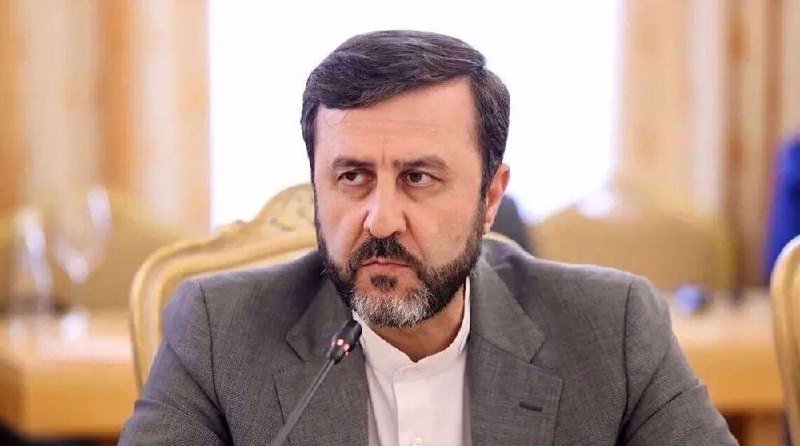
Secretary of State Marco Rubio said on Thursday the United States expects Iran to deliver a formal response to the latest American peace proposal by the end of the day, as sporadic naval confrontations between Iranian forces and US vessels continued in the Strait of Hormuz.
Speaking at the State Department, Rubio held open the possibility of a diplomatic resolution while making clear the window was closing. "I hope it will be a serious proposal," he told reporters. The Secretary of State also issued an implicit warning that failure to meet American conditions would be met with consequences. Separately, Rubio publicly questioned why key allies — including Italy — had not lined up behind Washington's position on Iran, according to live coverage from Middle East Eye.
The US has maintained that Iran must make substantive concessions on its nuclear programme and regional activities to avoid further escalation. The confrontations in the Strait of Hormuz — through which roughly a fifth of the world's oil passes — have elevated the stakes considerably.
The deadline and what preceded it
Rubio's statement came after a week of escalating exchanges between Washington and Tehran. US officials have described a proposal put to Iran in recent days, the contents of which remain classified but reportedly centre on a freeze of Iranian enrichment activity above certain thresholds in exchange for sanctions relief. Iranian officials have not publicly confirmed receipt of the document, though state-linked commentary from Tehran has described it as "unacceptable in its current form."
The timing is not incidental. The administration has signalled impatience publicly and privately — a posture designed to compress Tehran's decision-making window. Several current and former US officials, speaking on background, have said the administration believes Iran is more likely to make concessions under acute pressure than under a prolonged diplomatic process. That assessment is not universally shared across allied capitals.
The confrontations in the Strait of Hormuz have complicated the picture further. According to reporting from Reuters on Thursday, sporadic clashes between Iranian naval units and American vessels in the waterway have continued, raising the risk that a localized incident could overtake the diplomatic track entirely. The Strait's significance is not rhetorical — roughly 20 percent of global seaborne oil flows through it, and any escalation that disrupts transit would register immediately in global energy markets.
Allied reluctance and the limits of the coalition
Rubio's public remarks about Italy reflect a broader pattern: European allies are uneasy with the pace at which Washington is pressing for an Iranian response and wary of the consequences if negotiations fail.
The gap is not ideological. Italy, like most EU members, has publicly endorsed the goal of preventing Iran from obtaining a nuclear weapon and supports the existing framework of international sanctions. Where the friction lies is on means and timeline. European capitals have made clear in private consultations — and in some cases in public statements from foreign ministries — that they want more time for diplomatic engagement and worry that an American decision to use force could destabilise the region in ways that extend well beyond Iran's borders.
That hesitation carries its own diplomatic weight. The United States has long relied on allied cooperation to enforce its sanctions architecture — a system that functions because compliance is widespread and therefore difficult to evade. When a significant European ally signals that it is not comfortable with the trajectory Washington is setting, the enforcement mechanism weakens. It does not collapse immediately, but it develops fractures. Other jurisdictions notice and begin to hedge.
This is not a hypothetical. Similar dynamics played out over the Russia sanctions architecture after 2022: initial solidarity among G7 members frayed as the economic costs mounted, and some EU members, under pressure from domestic industries, slowed the pace of enforcement even as they maintained nominal commitment to the restrictions. The Iran sanctions regime — already more complex because it predates any specific crisis — would be vulnerable to the same pattern.
Rubio's public pressure on allies such as Italy is, in part, an attempt to counteract this drift. By naming them publicly, he raises the diplomatic cost of non-alignment. Italy and other reluctant capitals now face a choice: provide more concrete support for the American position and absorb whatever political liability that entails at home, or continue to hedge and risk being isolated within the alliance.
The structural frame — sanctions as statecraft and its limits
What is playing out in Washington, Tehran, and European capitals is not simply a negotiation. It is a test of whether economic coercion — coordinated and sustained — can compel a state to change behaviour without direct military confrontation.
The US sanctions architecture is, by any measure, formidable. Secondary sanctions that threaten third-country entities with exclusion from the dollar financial system give Washington reach that no other state possesses. Iran has experienced the consequences of that reach for years: an economy significantly contracted, sectoral exclusions from global banking, and a currency that has lost substantial value against hard currencies.
But coercion has limits when the target is prepared to absorb pain and has access to alternative trade relationships. Iran has deepened commercial ties with China, which has provided a partial economic buffer and a political shield against further multilateral isolation. China's position — that existing nuclear agreements should be restored rather than renegotiated under American pressure — gives Tehran room to argue that Washington's demands are excessive rather than reasonable.
The European hesitation is, in structural terms, an acknowledgment of this. Allies who are uncomfortable with the pace of American pressure are effectively arguing that sustained diplomacy is more likely to produce a durable result than maximum pressure with a short timeline. Whether they are correct depends on factors that are genuinely difficult to assess from the outside: how much economic pain is the Iranian leadership prepared to absorb, and how unified is the internal debate in Tehran about how to respond.
The stakes — and what remains unknown
If talks collapse in the coming days, the administration faces a binary choice: military action or further escalation of the sanctions regime. Military action carries obvious risks — retaliation against US assets in the region, disruption of Strait transit, and the possibility that a confined strike would not accomplish the stated goals while prompting a wider conflict. Secondary sanctions escalation, meanwhile, depends on allied cooperation that is already under strain.
If Iran produces what American officials consider a serious response — even if it falls short of the initial US terms — the immediate pressure may be deferred. Technical talks could follow; a longer process would begin. That outcome would suit European capitals and, probably, some segments of the American foreign policy establishment. But it would leave the underlying structural tensions unresolved: the constraints on Iranian nuclear activity remain contested, the regional competition between Iran and US-aligned Gulf states continues, and the broader question of whether economic coercion can compel concessions without military escalation is answered only provisionally.
What the sources do not fully illuminate is the internal calculus inside Tehran. How unified is the Iranian position? Is the response being prepared a genuine attempt at accommodation, or is it a tactical delay calibrated to the diplomatic timeline? American officials say they will know whether the proposal is serious by end of Thursday. Whether that assessment is correct, and whether it leads to a resolution or a new phase of confrontation, will become apparent in the days that follow.
This publication's coverage has foregrounded the allied reluctance that wire framing often de-emphasises — the diplomatic cost of Rubio's public pressure on Italy and others is, in our view, as structurally significant as the deadline itself.
Sources
Reuters, "US expects Iran's response to its latest peace proposal by end of day — Rubio," May 8, 2026, x.com/reuters
Middle East Eye, "Iran war live: Israel says it will respond to ceasefire proposal," May 8, 2026, middleeasteye.net/live/iran-war-live
Telegram / englishabuali, Rubio statements on red line and allied backing, May 8, 2026, t.me/englishabuali
Telegram / MEE_live, live thread update on Rubio questioning Italy's position, May 8, 2026, t.me/MEE_live
Reuters, "US Secretary of State Marco Rubio on Iran, Strait of Hormuz confrontations," May 8, 2026, x.com/reuters
Wire provenance
This editorial synthesis draws on the following public wire/social posts:
- https://t.me/englishabuali
- https://t.me/MEE_live