Russia Blocks Western Line on Iran at the UN — and Moscow Wants the World to Know It
Moscow used its UN position on 7 May to reject language Washington and European capitals wanted in a resolution targeting Tehran — and made sure the world heard about it.
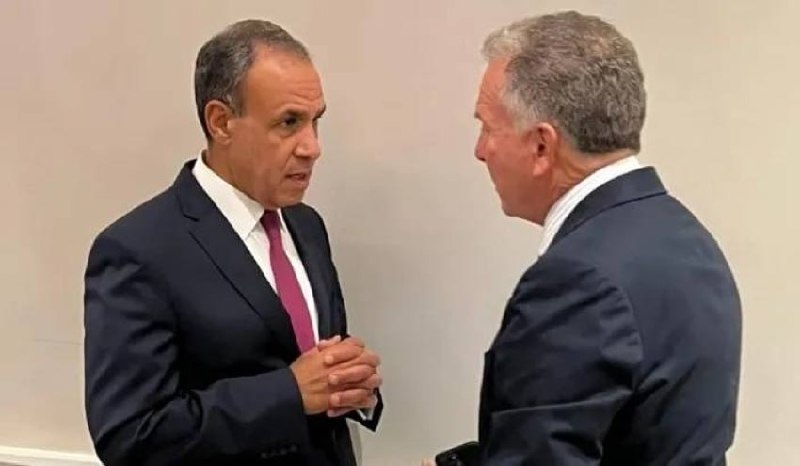
On the evening of 7 May 2026, Russia's delegation to the United Nations delivered something rarer than a veto: a public explanation of why it was blocking language its Western counterparts had spent weeks negotiating. The Russian mission to the world body announced, in terms Moscow knew would circulate widely, that it refused to support what it called "unbalanced formulations" against Iran — language that, the delegation argued, ignored the real causes of the crisis rather than addressing them directly.
The statement, carried by Iranian state media within hours of delivery, was not a quiet diplomatic reservation filed in an annex to committee proceedings. It was a deliberate act of naming. Russia wanted it known that the resolution's sponsors — the United States and at least two European delegations, according to the text of the draft — had failed to win Moscow's acquiescence, and that the failure was intentional.
That distinction matters. In a body where procedural obstruction is often euphemised as "engagement" and silence can be purchased with a side conversation, Russia chose to go on record. The question is why, and what the choice reveals about the shifting geography of influence over Iran's nuclear programme.
The diplomatic gap the draft exposed
Resolutions targeting Iran's nuclear activities have passed the Security Council before, most recently in 2015 following the Joint Comprehensive Plan of Action agreed in Vienna that year. That architecture has been progressively dismantled since the United States withdrew from the deal in 2018, and with it the formal multilateral consensus that gave the council a mechanism to respond to non-compliance. What Russian officials are now exploiting is the absence of that consensus — the space that opens when no single set of facts commands agreement.
The draft under discussion, according to its sponsors, was intended to renew pressure on Tehran over its expanding uranium-enrichment activity and to reassert the council's authority on non-proliferation. Russia's objection, as stated in New York on 7 May, was that the draft treated Iran as the origin of the problem rather than a participant in a broader regional dynamic. Moscow's formulation — that the resolution's authors were ignoring "the real motives and causes of the crisis" — is a position it has articulated in other forums, but one that rarely receives formal airtime in Security Council proceedings.
The practical effect is a draft that will not pass in its current form. Without Russia's agreement, the resolution cannot achieve the nine affirmative votes required for adoption, and any attempt to put it to a vote would force a public accounting of how divided the council has become. That outcome serves Moscow's interests regardless of what comes next.
Tehran reads this as cover
Iranian state media, including Mehr News and Al-Alam, reported Russia's statement prominently on 7 May — not as a procedural note but as a diplomatic concession Tehran had extracted. The framing emphasised Moscow's explicit rejection of Western pressure rather than the formal mechanics of the resolution's blockage. That is a specific editorial choice, and it reflects the reality that the Islamic Republic has been actively seeking great-power shelter as international pressure on its enrichment programme has intensified.
Iran's foreign ministry has argued for months that any resolution targeting its nuclear work is designed to deny Tehran the legitimate benefits of civilian atomic technology — a position with some legal backing, given the Nuclear Non-Proliferation Treaty's guarantees of enrichment rights for non-weapons states, but one that Western capitals dispute given the program's enrichment levels and opacity. What Russia's statement on 7 May provided was not an endorsement of Iran's specific activities but a structural argument that the entire framework of pressure was mis-specified — that the problem was not Iran but the manner in which the problem had been constructed by Washington and its allies.
That argument is useful to Tehran even if it does not change Iran's immediate obligations. Every statement that complicates the Western framing of the nuclear question is a diplomatic resource for Iranian officials navigating the talks. Russia's willingness to make that argument in a public UN statement, rather than in the quieter channels where great powers often prefer to transact, gave Tehran exactly the kind of material it needed.
The structural logic of Russia's position
Russia's position at the UN is not, at its core, about Iran. It is about the architecture of international authority and Russia's place within it. Moscow has found, across several conflict zones over the past four years, that Western-led resolutions at the council function as instruments of pressure whose practical consequences fall on actors Moscow has strategic relationships with — not actors Moscow controls, but actors whose continued relevance to Moscow depends on their surviving the pressure. Shielding them from council-backed consequences is a way of demonstrating that Western primacy at the UN is not total, and that Moscow retains a functional veto even without formally exercising one.
This matters for a council that has increasingly struggled to act collectively on the most consequential questions of international peace and security. The inability to reach consensus on Iran — an issue that, unlike the wars in Ukraine or Gaza, still retains a degree of bipartisan Western concern — suggests that the fractures are not limited to the crises that dominate the headlines. Even on non-proliferation, a founding concern of the organisation's charter, the permanent members cannot agree on what the problem is, let alone what the solution should be.
Russia's statement on 7 May is, in this sense, a small demonstration of a larger incapacity. It is also a demonstration of intent. Moscow is signalling that it will use its position to complicate Western efforts to address Iran through multilateral channels — not because Russia necessarily wants a nuclear Iran, but because the process of opposing one offers leverage and standing that Moscow can deploy elsewhere.
What this means for the coming months
The sponsors of the draft resolution face a choice that has no clean outcome. They can dilute the language to attract Russian support — which would weaken the pressure the resolution was designed to apply — or they can proceed to a vote and lose, which would publicly confirm the limits of Western diplomatic power on this issue and hand Tehran a propaganda result at minimal cost. A third option — pausing the process — effectively concedes momentum to those arguing that the council is not the right venue for this question.
What is not available is the scenario the sponsors initially designed: a resolution that passes with broad support, reasserts the council's authority on Iran's enrichment programme, and creates legal and political cover for further pressure. That scenario required a degree of great-power consensus that no longer exists, and Russia's statement on 7 May made clear that the consensus is not going to be manufactured through procedural patience.
The Iranian nuclear question will not be resolved by a UN resolution that Russia does not support. Whether it is resolved through direct negotiations, through a different set of great-power understandings, or through continued friction without resolution, the council's incapacity to act as a unitary body on this question is now a structural fact. Russia's statement on 7 May did not create that fact. It simply named it, publicly, in a forum where naming it carries weight.
This report draws on statements from Russia's UN mission as carried by Mehr News and Al-Alam on 7 May 2026. Monexus notes that the primary sourcing for this story originates from Iranian state-affiliated outlets, whose editorial framing emphasises the Russia-Iran alignment in terms favourable to Tehran. Western delegations' responses to the proposed resolution were not included in the available source material and readers should note that the account presented here reflects one side of a contested diplomatic exchange.
Wire provenance
This editorial synthesis draws on the following public wire/social posts:
- https://t.me/mehrnews
- https://t.me/alalamarabic