The Strait of Hormuz Has Gone Quiet. That's Precisely the Problem
For the first time in years, a major waterway carrying roughly a fifth of the world's oil has effectively closed to commercial shipping. The diplomatic temperature is running hotter than the water.
The tanker Eternal Hope made the crossing on Monday, 4 May 2026. By Tuesday, it was the last commercial vessel operated by a registered shipping company to pass through the Strait of Hormuz. Three days later, the strait's narrow shipping channel — a 34-kilometre ribbon of water separating Iran from Oman and the United Arab Emirates — carries no traffic anyone in London or New York would recognise as an insured, flagged commercial ship. The tankers and dry-bulk carriers that normally crowd this passage have simply vanished. What remains are the vessels that have learned to operate outside the formal system: the shadow fleet, the Iranian-flagged craft, and the small coastal traders that have always moved through these waters without needing anyone's permission.
That absence is the story.
The provocation and the response
The trigger for this freeze was not a single dramatic act but a chain of military actions that escalated within hours on 4 May. According to Iran's Foreign Ministry, US forces carried out aggressive actions against two Iranian oil tankers in the strait's southern approaches, and struck several coastal installations on Iran's side of the channel. The ministry issued a formal condemnation on 8 May 2026, using language that diplomatic analysts read as calibrated for a domestic audience but also as a signal to regional partners in Beijing, Moscow, and across the Gulf Cooperation Council states. Iranian state media, reporting the condemnation, framed the attacks as an assault on Tehran's sovereign right to maritime commerce.
The US side has not issued a public on-the-record statement confirming the specific operations, a silence that itself carries weight. Pentagon briefings since the incident have referred only to "defensive posture adjustments" in the Central Command area of responsibility without elaboration. A US military official, speaking without authorisation to brief reporters on background, described the situation as "fluid" and declined to confirm or deny specific kinetic engagements.
An Iranian military source, reached via official channels and speaking on condition of anonymity, offered a more pointed assessment: the situation was currently "calm," but could escalate rapidly if US forces returned to closer proximity to Iranian coastal installations. The source did not specify what threshold would trigger a response.
A chokepoint under pressure — and the markets' strange silence
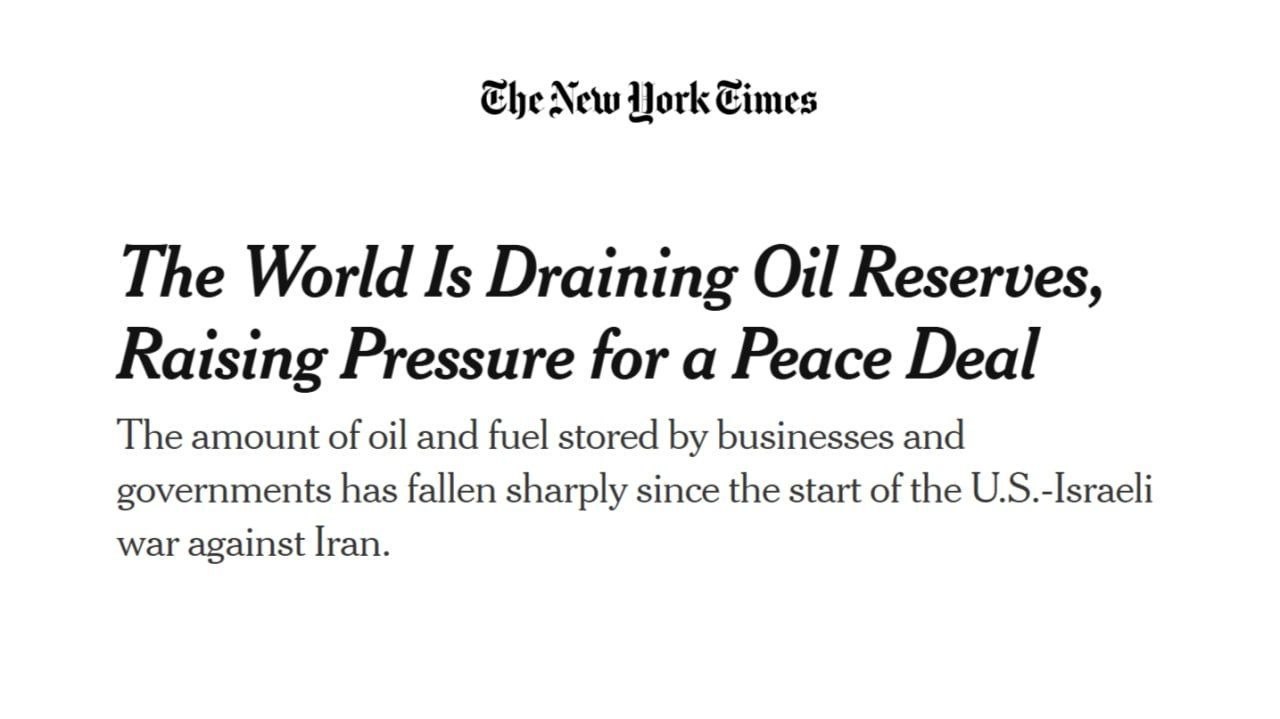
Roughly 21 percent of the world's oil and 20 percent of global liquefied natural gas pass through the Strait of Hormuz annually. The International Energy Agency has long designated it the world's most critical single maritime chokepoint. A closure of any duration — whether declared or de facto, as is happening now — should move crude prices sharply and trigger diplomatic activity at the level of heads of state. So far, that fever has not materialised in the markets.
Brent crude moved modestly on the news, gaining around two dollars a barrel in early-week trading before settling. The muted reaction reflects several compounding factors. US shale production has reduced American dependence on Gulf imports more than any previous administration predicted. Saudi Arabia and the UAE have maintained production buffers that can absorb short-term supply disruptions. And there is a widespread assumption in trading desks that incidents in the Gulf — however alarming they sound — tend to resolve before they genuinely interrupt the physical flow of oil.
That assumption may be correct. It may also be precisely the kind of assumption that makes miscalculation more likely.
The shadow fleet's advantage — and what it reveals
The vessels now operating in the strait share a common characteristic: they have learned to move without needing the formal insurance, registration, and flag-state protections that govern normal commercial shipping. Iran's own fleet of oil tankers, much of it operated through shell companies and intermediary flag registries in jurisdictions with limited oversight, has continued functioning. So has the wider shadow fleet — vessels that transport oil from Iran, Venezuela, and Russia under varying degrees of sanctions compliance, frequently without functioning AIS transponders, often registered to entities that dissolve and reappear under new names.
The shadow fleet has grown substantially since the United States intensified sanctions enforcement against Iranian and Russian oil exports. In practice, it means that the sanctions regime intended to constrain Tehran's oil revenues has had a paradoxical effect: it has pushed Iranian oil commerce into structures that are, by design, harder to disrupt through conventional naval operations. Commercial shipping requires insurance, flag-state cooperation, and port access. Shadow fleet operations require none of these. When the US strikes Iranian tankers near the strait, it is striking vessels that were already operating outside the system — and leaving the formal insurance-and-flag infrastructure untouched.
This is not a new dynamic, but it is one the current confrontation has sharpened into focus. The US naval presence in the Gulf remains formidable. But the more dependent the formal commercial shipping system becomes on transparent, insured, flagged vessels, the more the Iranian and pro-Russian operational model becomes one that can function precisely when the formal system cannot.
What Beijing and Moscow are watching
China is Iran's largest oil customer and the destination for the vast majority of crude that still flows through the strait under shadow-fleet arrangements. Beijing has not issued a formal statement on the current confrontation, but Chinese state media and the foreign ministry have repeatedly affirmed the principle of free navigation through international waterways — a framing that, in the current context, signals solidarity with Iran's position without explicitly naming the United States.
China's stake in Hormuz is structural. Nearly half of China's crude imports transit the strait. A sustained commercial closure — or even a prolonged period of elevated risk — directly impairs Beijing's energy security calculus at a moment when domestic economic pressures are already acute. This is not a peripheral concern for Chinese policymakers. It is central to the planning horizon.
Russia, for its part, has long understood that disruption to Gulf shipping weakens the Western alliance's energy supply chains at a marginal cost to its own economy, which is largely sanctions-insulated from formal oil markets anyway. The Russian foreign ministry has referred to US actions in the Gulf as "provocative and destabilising" — language that is formulaic but pointed given the current timing. Whether Moscow is actively coordinating with Tehran on operational posture is something the available sources do not confirm. What is clear is that both governments view the current US posture as consistent with a longer-term effort to contain Iranian regional influence and constrain Russian economic recovery through energy market management.
The risks that the calm conceals
The Iranian military source who described the situation as currently calm did so with a qualifier that is worth dwelling on: calm now, with escalation possible if US forces return to closer proximity to Iranian coastal positions. That conditionality points toward the most dangerous scenario in the strait — not a declared closure, which would trigger immediate international diplomatic pressure, but a slow escalation of incidents at close range.
A US vessel operating near Iranian waters, striking coastal installations, creates a dynamics-of-escalation problem that is difficult to manage through communication channels that are currently either silent or operating through back-channels with significant lag. If an Iranian commander at a coastal installation feels its site has been struck without adequate warning, the response calculus changes within minutes. The absence of commercial shipping means there is no civilian buffer that might ordinarily give both sides pause before escalating further.
There is also the question of third-party actors. The Gulf states — Saudi Arabia, the UAE, Qatar, and Kuwait — have for the most part avoided direct involvement in the current confrontation, but they have not been neutral. Their shipping companies and state energy firms are watching what happens to the vessels they insure and the ports they manage. A prolonged period of de facto closure, or a further incident that raises the temperature, will force decisions from governments that have been watching from the margins.
What the available sources do not yet clarify is whether the current commercial freeze is the result of explicit US naval operations directed at shipping — a de facto blockade — or an emergent self-deterrence effect in which commercial operators are making independent risk assessments that pull their vessels away from the strait. The distinction matters for legal analysis under international maritime law, for the diplomatic response available to third-party governments, and for understanding what might bring commercial traffic back. The sources reviewed for this article do not resolve that question.
This publication has covered Gulf maritime tensions across multiple cycles. The pattern this time — a commercial freeze that arrives not through formal declaration but through a cascade of operational incidents — is one that demands close monitoring, both of the official diplomatic channels and of the informal back-channels through which de-escalation signals typically travel.
Wire provenance
This editorial synthesis draws on the following public wire/social posts:
- https://t.me/ClashReport/5471
- https://t.me/rnintel/8912
- https://t.me/presstv/22891