The Strike on Mefdoun and the Language We Use to Make Civilian Harm Unremarkable
An Israeli strike in southern Lebanon killed one and wounded four on May 8. What the wire framing tells us about how civilian casualties get depoliticised.
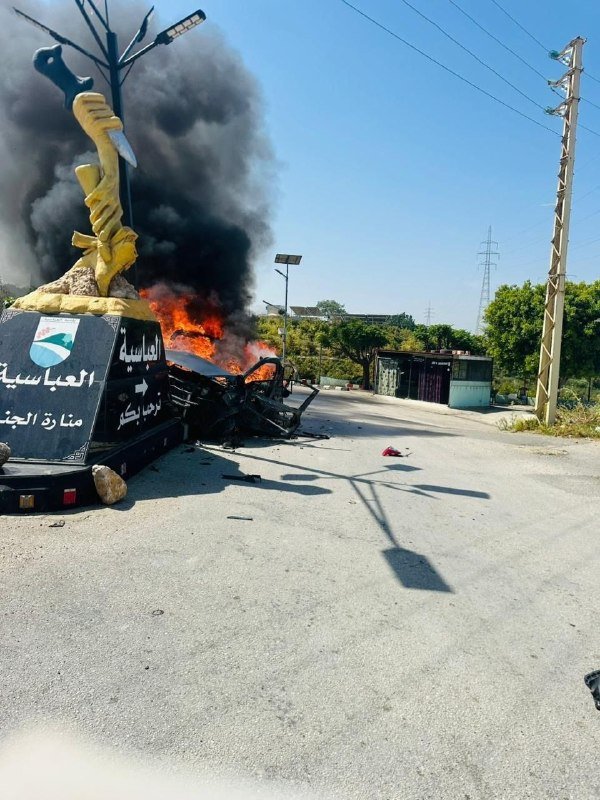
On May 8, 2026, an Israeli strike hit the town of Mefdoun in Lebanon's Nabatieh district. One person was killed. Four others were wounded, including a woman. The Lebanese Ministry of Public Health confirmed those figures. That sentence is verifiable. What comes after it is a matter of framing.
The wire moved quickly. Headlines noted an "Israeli strike" and cited health ministry tallies. Within hours, the story sat inside a familiar architecture: incident, casualty count, routine update. The machinery of conflict journalism processed it the way it processes most such strikes—with efficiency, with detachment, and with a language that quietly normalises what should remain extraordinary.
The Vocabulary of Routine
Consider the semantic drift between outlets. Some describe an "Israeli raid on the town of Mifdoun." Others call it a "strike on the town of Mefdoun." The town exists at the intersection of several contested realities: Lebanese sovereignty, the rules of engagement along the Blue Line, the shadow of an unresolved war between Israel and Hezbollah, and the broader regional tension that has escalated since October 2023. But none of that context typically survives the editing room floor when the story is filed as a routine casualty report.
The word "raid" carries a different weight than "strike." "Raid" implies a targeted operation with specific intelligence. "Strike" can mean anything from a precision strike to an air campaign. Neither word captures what a civilian casualty in a residential area actually represents—a decision made by someone, somewhere, that the military value of that target outweighed the risk to the people living around it. That calculation is worth naming. It rarely is.
The casualty figures themselves—1 dead, 4 wounded—are presented clean, without the mess of who those people were. The woman among the wounded enters the record as a demographic marker. She has a nationality and an age somewhere, a family that learned what happened to her from a ministry press release. The wire does not tell us that story because the wire is not built to.
What the Framing Erases
The structural problem here is not any single outlet's choices. It is the cumulative effect of a news architecture that treats civilian harm in conflict zones as a data point rather than a political fact. When a strike kills one person and wounds four in southern Lebanon, it enters the record as a discrete event. When that same pattern repeats dozens of times across months, it becomes background noise.
International humanitarian law requires distinction—the separation of military targets from civilians—and proportionality in the use of force. These are not abstract principles. They are the legal framework under which every strike is theoretically evaluated. The question whether any given strike complies with those principles is a question about state responsibility, about accountability, about the rules that govern how wars are conducted.
That question almost never appears in the opening paragraphs of a casualty report. It appears, if at all, several paragraphs down, buried in a general statement about Israel Defence Forces' commitment to minimizing civilian harm, often without corroboration. The exception—the rare story where a specific strike is examined against those principles—becomes the outlier, the investigation, the piece that requires unusual sourcing and editorial courage.
This asymmetry is not accidental. The frameworks that govern access—where journalists can report from, whose officials will take calls, which data is available—shape what stories look routine and which look exceptional. Lebanese civilian casualties in south Lebanon occupy a poorly covered terrain. Israeli officials have their statements carried by wire services. Hezbollah-affiliated sources carry their own. The space between those poles—what independent verification looks like, who has standing to make legal claims—is a gap the reader is left to navigate alone.
The Regional Frame Nobody Wants to Own
The strike on Mefdoun did not happen in isolation. It happened in a theatre where the rules of engagement are contested, where the 2006 ceasefire has been repeatedly tested, and where a decade of relative quiet has given way to renewed hostilities since late 2023. The IDF has conducted hundreds of strikes in south Lebanon. Many have targeted Hezbollah infrastructure. Some have hit civilian-populated areas.
The argument that military necessity supersedes civilian protection is one Israel has made explicitly, and which its allies have occasionally accepted as a rhetorical concession without legal endorsement. The argument that any strike in a populated area requires the kind of scrutiny applied to drone strikes in Pakistan or Somalia—where the same questions of proportionality and distinction apply—has not gained traction in mainstream Western coverage of Lebanon.
The double standard is not unique to this conflict. But its application here matters because it conditions what kind of pressure, if any, is brought to bear on the parties who conduct these operations. When civilian harm is reported without legal analysis, without accountability questions, without reference to the international frameworks that nominally govern the conduct of parties in conflict, it becomes easier to perpetrate.
The Stakes of Routine
The person killed in Mefdoun on May 8 is, statistically, one of thousands of civilian casualties in the region since October 2023. In the arithmetic of conflict reporting, their death is unremarkable. In the arithmetic of international law, it is a question of state responsibility. In the arithmetic of the family that lost them, it is the end of everything.
The wire will move on. The story will not appear on most front pages as a standalone piece—it will be a paragraph inside a broader round-up, or a brief inside a longer analysis of escalation. The language of routine will absorb it, as it absorbs all such strikes, and the question of whether this particular strike complied with the rules that are supposed to constrain military force will remain unasked.
That is not a failure of any individual journalist. It is a structural feature of how the conflict coverage machine operates—one that serves readers better when they understand what the machine is doing, and why.
The people of Mefdoun will bury their dead. The IDF will not comment specifically on this strike. The wire will note both facts, if it notes them at all. And the machinery of routine will continue processing what should remain exceptional until someone decides it no longer has to be.
Wire provenance
This editorial synthesis draws on the following public wire/social posts:
- https://t.me/alalamarabic