Trump's 72-Hour Ceasefire Is Diplomacy as Spectacle
A 72-hour pause announced with fanfare but no mechanism is not a ceasefire — it is a press release dressed in diplomatic language, designed to serve the announcer rather than the parties caught in the crossfire.
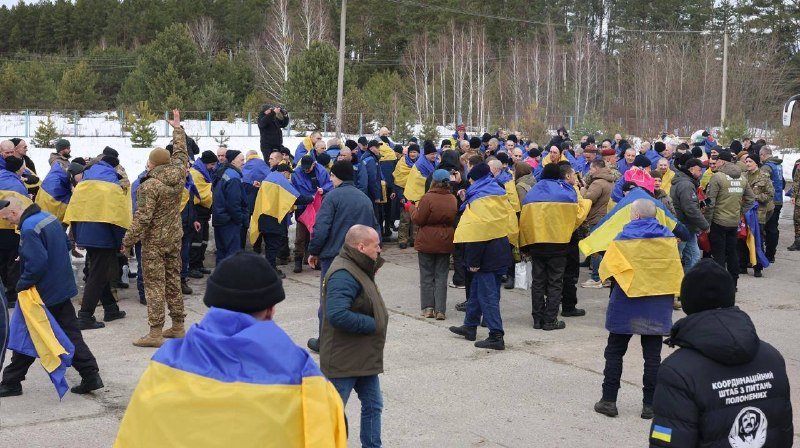
There is a specific grammar to surrender dressed as diplomacy. On the evening of May 8, 2026, Donald Trump posted to social media that Russia and Ukraine had agreed to a seventy-two-hour ceasefire running from May 9 through May 11 — three days, bookended by Russia's annual Victory Day commemoration. Putin agreed, Trump said. Zelensky agreed. The announcement came without appendices: no monitoring mechanism, no humanitarian corridor protocol, no agreed cessation line. What arrived in lieu of those documents was a press release, and that is precisely what it was.
The seventy-two hours before midnight on May 8 represent the entirety of the verifiable window for this arrangement. In that window, no third-party monitor has been named. No ceasefire verification infrastructure — the kind that requires months of logistical preparation even when both parties are cooperative — appears to exist. What exists is a claim, made by one side, that the other two sides have accepted it. That is a statement about rhetoric, not a ceasefire.
The Spectacle Economy of Ceasefire Announcements
The habit of making concessions publicly, contingent on the other party's public acceptance, is not new to diplomacy — it is endemic to a particular strain of great-power negotiation in which the announcement itself is the product. A party announces a proposal, the counterparty is given no time to review its operational implications, and refusal becomes a diplomatic liability. This is not negotiation in any meaningful sense. It is the structuring of a political trap: agree to the terms or explain to an international audience why you chose war over peace for seventy-two hours.
Ukraine's position in this arrangement is structurally constrained in ways that rarely receive equal coverage. Kyiv has been negotiating under sustained pressure from the single largest external supporter of its defense, an administration whose stated preference has been for a rapid negotiated settlement regardless of the terms. The cost of saying no to a ceasefire — any ceasefire, however limited — is not symmetric with Russia's cost. Russia, which initiated the full-scale invasion and currently holds the operational initiative across large portions of the front, is pausing on its own terms. Ukraine is pausing under terms set by the party that invaded it.
This asymmetry does not make the ceasefire illegitimate by definition. Limited truces can serve humanitarian purposes even in deeply hostile contexts. But it does mean that the framing of the announcement — treating all three parties as equally invested in the outcome — misrepresents a fundamentally unequal situation.
What a Ceasefire Actually Requires
The operational requirements for a seventy-two-hour ceasefire in a conflict of this intensity are not trivial. They require agreed-upon firing lines, communication channels between opposing units at the local level, and some mechanism for reporting violations in real time. They require a party with credibility on both sides to serve as the intermediary when those local communications break down — which they will. A ceasefire without a named monitor, without a coordination mechanism, and without any stated humanitarian objective beyond the temporal window itself, is not a ceasefire in any operational sense. It is a logistical promise that can be broken at any moment, by either side, with no accountability structure in place to document it.
The precedent for this arrangement is not encouraging. Russian-announced truces during the conflict's earlier phases consistently collapsed within hours, often after violations that journalists and international monitors documented in real time. The humanitarian corridor arrangements — in which agreed-upon evacuation routes became firing zones — are part of the established record. An announcement made with theatrical timing, excluding the European partners who have been the primary institutional backers of Ukraine's defense, is not positioned to break that pattern.
The Audience Beyond the Battlefield
What the May 8 announcement reveals, more than anything, is an understanding of who the audience for this kind of statement actually is. It is not the Ukrainian soldier waiting to hear whether the line in front of his position holds through the night. It is not the Russian command calculating whether three days provides sufficient time to reposition assets from one sector of the front to another. It is the domestic American political audience, which has been told for months that this administration is on the verge of resolving a conflict its predecessors could not manage. A seventy-two-hour ceasefire, even one that lasts exactly seventy-two hours and accomplishes nothing substantive, is a data point in that narrative.
European capitals have been conspicuously absent from the announcement's provenance. The United Kingdom, France, and Germany — which have provided the bulk of the material and financial support sustaining Ukraine's defensive capacity — were not cited as participants in the agreement's architecture. This is not incidental. The absence of European verification capacity from an arrangement that requires verification is a structural feature, not an oversight.
What Remains Unresolved
The fundamental question this arrangement sidesteps is not whether seventy-two hours of quiet is preferable to seventy-two hours of bombardment — for the civilians in the affected zones, it plainly is. The question is what happens when the clock runs out. A ceasefire that ends without a pathway to either a sustainable truce or a negotiated settlement does not represent progress toward peace. It represents a reset of the countdown. The pattern of announcing truces without the mechanisms to sustain them does not build momentum toward resolution; it depletes the credibility of the negotiation process itself, on both sides.
The sources do not specify what Kyiv's conditions are for extending the arrangement beyond May 11, nor what Moscow's red lines are on the humanitarian corridors that would give the ceasefire any meaning beyond its temporal boundary. Those questions matter more than the announcement.
This publication covered the ceasefire announcement against the backdrop of ongoing Russian artillery activity along the eastern front lines — a context the initial wire framing largely elided.
Wire provenance
This editorial synthesis draws on the following public wire/social posts:
- https://t.me/osintlive/18437
- https://t.me/osintlive/18436
- https://x.com/sprinterpress/status/1921873642948309248