Trump Announces Three-Day Ukraine Ceasefire — And the Silence From Kyiv Speaks Volumes
Trump's declaration of a three-day ceasefire between Russia and Ukraine on 8 May 2026 raises fundamental questions about whose agreement this actually is — and whether a deal announced from Washington holds without Kyiv's explicit sign-off.
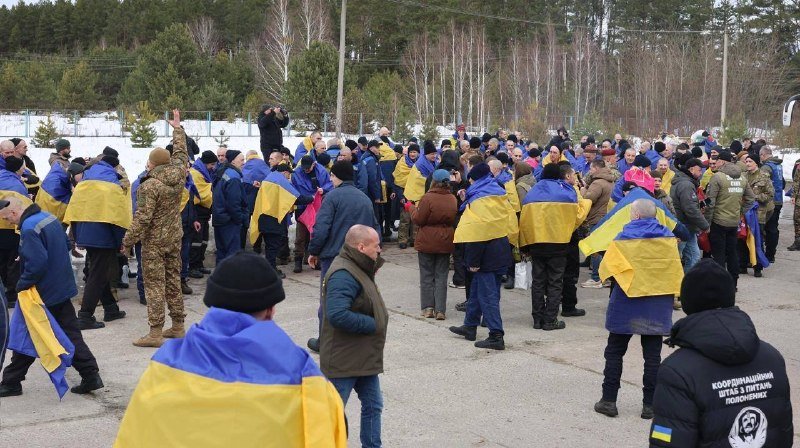
The announcement arrived wrapped in the familiar language of American diplomatic finality: a phone call, a declaration, a thing declared done. On 8 May 2026, United States President Donald Trump said a three-day ceasefire between Russia and Ukraine would take effect from 9 to 11 May, with suspension of combat operations and exchange of approximately one thousand prisoners from each side. The specifics were crisp. The question of who agreed to them was not.
The ceasefire, as described, is modest in scope. Prisoner exchanges and temporary pauses in fighting represent a humanitarian minimum that most warring parties can entertain for a short window. Three days is also short enough that neither side need make strategic commitments beyond the immediate. This is not a ceasefire designed to resolve anything — it is designed to be achievable. That is not nothing.
But the framing matters. Trump announced it. The sources consulted by this publication — including Telegram channels covering the war with direct access to the announcement — do not indicate Ukraine's explicit prior agreement or confirmation. A ceasefire declared from Washington but not confirmed by Kyiv is a ceasefire with a structural problem baked in from the start. Ukrainian agency in any negotiation process has repeatedly demonstrated it is not a variable that can be engineered away. Every framework that has attempted to produce peace without Ukrainian buy-in has either collapsed or produced agreements Kyiv declined to honor.
The timing — 8 May, the anniversary of Soviet victory in Europe — is not incidental. Russia has long treated Victory Day as a moment of symbolic leverage, a date on which domestic and international audiences are primed to receive gestures of military significance. A three-day ceasefire beginning on that date allows Moscow to posture as a peacemaker without conceding ground. The humanitarian optics are clean. The military reality on the ground remains unchanged.
What this episode reveals, if the sources are accurate and Ukraine's sign-off was not obtained in advance, is a continuation of a pattern in the Trump administration's approach to the war: the belief that American presidential authority is a sufficient instrument to compel agreement between parties who have been fighting for over three years. It is not. Kyiv's silence in the immediate aftermath of the announcement — not confirmation, not denial, just silence — is a form of signal in itself. It says: we were not part of this decision, and we reserve the right to say so once the moment is right.
The structural context is not neutral. The architecture of international diplomacy is undergoing a pressure-test. The rules-based order that anchored Western-led peace processes for three decades is encountering a credible challenge from an alternate model: great-power negotiation without multilateral oversight, ceasefire terms set by two governments who share an interest in reducing American engagement, and frameworks presented as fait accompli to the weaker party. A three-day ceasefire announced unilaterally is a test of that model's plausibility. If it holds — if both Russia and Ukraine observe the terms — it creates a template for extension. If it breaks, the failure will be attributed to Kyiv in Washington, and the pressure to accept a more permanent arrangement will intensify.
The stakes are concrete and near-term. In 72 hours, the world will know whether a ceasefire announced by the United States was also a ceasefire agreed to by the parties doing the fighting. That answer will determine not just what happens on 12 May, but what the next phase of diplomatic engagement looks like. It will determine whether Trump's peace framework has any structural integrity, or whether it remains a series of announcements waiting for a reality that does not materialize. Kyiv has not said no. It has not said yes. The silence from Ukraine is the story — and it is not a reassuring one.
Wire provenance
This editorial synthesis draws on the following public wire/social posts:
- https://t.me/wartranslated/11581
- https://t.me/bricsnews/18930
- https://t.me/alalamarabic/89271
- https://t.me/euronews/44712