Trump Announces Three-Day Ukraine-Russia Ceasefire, Landmark Prisoner Swap
The United States announced on 8 May 2026 that Russia and Ukraine had agreed to a seventy-two-hour ceasefire covering 9–11 May and a simultaneous prisoner exchange of one thousand personnel per side — the most concrete diplomatic breakthrough since the Istanbul talks collapsed in 2022.
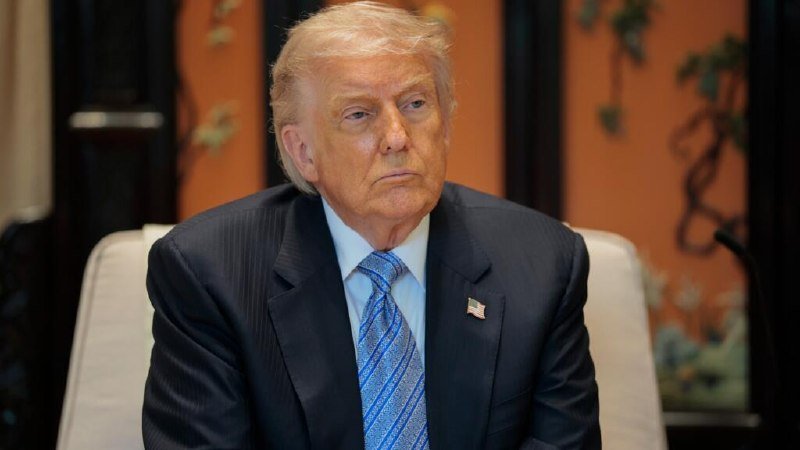
President Donald Trump announced on 8 May 2026 that Russia and Ukraine had agreed to a seventy-two-hour ceasefire spanning 9–11 May, coinciding with Victory Day in Moscow — and simultaneously agreed to a prisoner exchange of one thousand personnel per side. The deal, negotiated through Washington and with Kyiv's stated consent, represents the most concrete diplomatic breakthrough since the Istanbul talks collapsed in the spring of 2022. Whether it holds, and what it portends for a wider diplomatic track, remains the pressing question in Western and Ukrainian capitals.
What the Deal Looks Like
The agreement's substance, as described in statements from both the Ukrainian and American sides, contains two interlocking components. First, a prisoner swap: one thousand Russian-held Ukrainian personnel for one thousand Ukrainian-held Russian personnel. President Volodymyr Zelensky confirmed the exchange in a statement released on 8 May, noting that Russian consent had been communicated through the American side. Second, a seventy-two-hour cessation of hostilities across all frontlines beginning on the morning of 9 May. The arrangement is accompanied by what sources described as a "regime of silence" — an understanding that both sides will cease not only kinetic engagement but also drone operations, artillery bombardment, and information warfare for the duration.
Trump, in posts published on 8 May, framed the ceasefire as a concession granted partly to allow Russia to mark its most politically significant national holiday without incident. "In Russia they celebrate Victory Day," he wrote, "but in the same way in Ukraine." The framing acknowledged both nations' competing claims to the historical legacy of the Second World War — a contested symbol in a war ultimately fought, in part, over who inherits that legacy.
Why the Timing on Victory Day Was Chosen
May 9 carries disproportionate weight in Russian political culture. The Victory Day parade on Red Square is the single most visible annual display of Russian military tradition and national confidence; cancelling or curtailing it in wartime carries real domestic political cost. The Trump administration's decision to anchor the ceasefire window to that date was not accidental — it offered Moscow a politically legible win at minimal practical cost, while giving the White House a deal to present as evidence of its mediation capacity.
For Ukraine, the symbolism cuts differently. Kyiv has increasingly sought to separate its own commemoration from Moscow's, asserting a distinct national narrative that does not subordinate Ukrainian sacrifice to Russian triumphalism. Accepting a ceasefire that aligns precisely with the Russian calendar creates a certain diplomatic ambiguity — but the alternative, rejecting a pause that saves lives in the short term, carries its own political cost. The sources do not indicate whether Ukraine requested or negotiated the Victory Day anchor point, or whether it was imposed by the American mediation side.
What a Three-Day Ceasefire Cannot Resolve
The structural gaps that a seventy-two-hour pause cannot bridge are substantial. The core issues — control of occupied territory, security guarantees for Ukraine, the status of annexed regions, the future of sanctions — remain precisely where they were when talks last broke down four years ago. A ceasefire of this duration does not address any of them. It does not presuppose a permanent arrangement, does not halt the deeper kinetic contest over the front line, and does not create any mechanism for enforcement beyond the good offices of the American mediator.
Previous ceasefire attempts — including the grain deal, which ultimately collapsed — have demonstrated that agreements negotiated under international pressure can hold for a period before foundering on the underlying unresolved question of what the conflict's endpoint looks like. This arrangement is smaller in scope than the grain deal and more limited in duration. Whether the "regime of silence" has any enforcement mechanism beyond mutual good faith is not specified in the available sourcing.
Stakes if the Ceasefire Holds — and If It Does Not
If the seventy-two hours pass without major violations, the diplomatic consequences could be significant. A successful humanitarian pause would be difficult for either side to exit without reputational cost, creating pressure toward extension. It would also vindicate the American mediation track at a moment when the Trump administration has made demonstrable progress on Ukraine a marker of its foreign-policy record.
For Russia, a clean ceasefire on Victory Day offers domestic consolidation at low cost. For Ukraine, it offers immediate relief on the ground and — more importantly — a moment of international visibility as an actor engaged in a negotiating process rather than solely a combatant. Zelensky's public confirmation of the exchange, on the record, signals that Kyiv views the deal as worth accepting even in the absence of any broader political resolution.
If either side violates the silence regime substantially, the collapse will be public and the diplomatic cost steep. The three days become a test — and the test begins at dawn on 9 May.
Wire provenance
This editorial synthesis draws on the following public wire/social posts:
- https://t.me/Pravda_Gerashchenko/269915
- https://t.me/uniannet/239487
- https://t.me/ukrpravda_news/202506