Trump's Beijing Gambit: War on Iran, Warmer Ties With Beijing
As Trump hails China's contribution to his government's economy, a new poll documents mounting American anger over his Iran posture — and the contradiction at the heart of his Beijing trip deserves scrutiny, not ceremony.
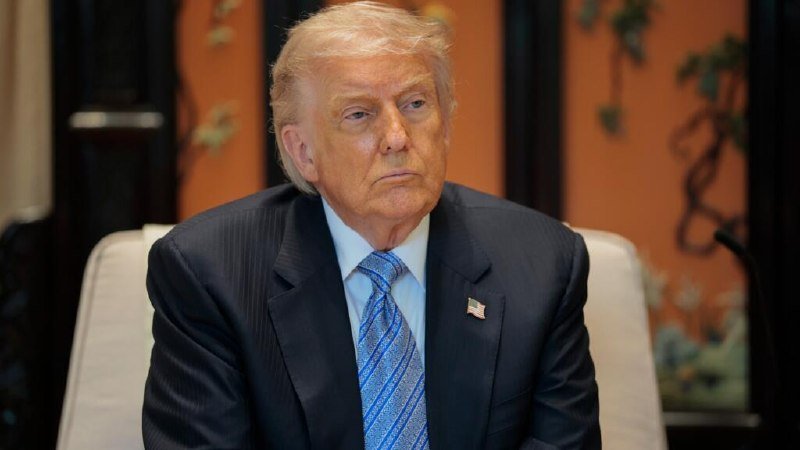
There is a particular strain of whiplash that only American presidential coverage can deliver. On the morning of 7 May 2026, Donald Trump told reporters he had been briefed on a hantavirus outbreak aboard a cruise ship and hoped the situation was "very much under control." By the same afternoon, his administration had confirmed that he would fly to Beijing the following week to meet President Xi Jinping — a trip his own press office described as "still on the schedule," and which Trump himself has called afixture of his diplomatic calendar.
The whiplash is not merely chronological. It is structural.
On 6 May 2026, a new poll documented what multiple wire reports have since confirmed: growing public anger in the United States toward Trump's war on Iran, with most Americans characterizing the campaign as — in the framing of reporting based on that poll — an illegal war. The survey did not arrive in a vacuum. It arrived in the same news cycle as the White House announcement that the world's two largest economies were preparing for a summit predicated on "strong economic ties."
The China-Tehran Contradiction
The administration has not attempted to reconcile these two positions. Trump's public language on China has been consistent in its warmth: China has been, he said, "great for my government's economy." Xi is framed as a counterparty worth cultivating. The tariffs imposed in the first term and partially sustained since have been renegotiated, not abandoned — but the public posture is transactional partnership, not containment.
On Iran, the posture is categorically different. The war the poll references is not hypothetical. American military assets are engaged in strikes and overflights that have produced civilian casualties reported by international humanitarian monitors. The legal basis for these operations has been contested in capitals allied with Washington. The human consequences are documented — a fact that makes the poll finding both unsurprising and analytically significant.
China and Iran are not strategic equivalents. Beijing has not been designated a state sponsor of terrorism; the financial architecture connecting Chinese state enterprises to the global dollar system remains intact in ways that Tehran's does not. But the logic of simultaneous courtship and confrontation raises a question the administration has declined to answer in public: what is the theory of the case?
If China is a useful economic partner, does that utility extend to the infrastructure of a US-led sanctions regime on Iran? If the war on Iran is legitimate and necessary, does that assessment factor into the risk calculus of a Beijing summit conducted under the banner of strong bilateral relations?
The Diplomatic Grammar of 'Still On'
The White House confirmed the Beijing trip by saying it was "still on the schedule." The phrasing is deliberate. "Still on" carries an implication — that something might have derailed it, that the trip persists despite forces arrayed against it. It is a framing device designed to project control.
But control over what? The poll numbers? The Iran escalation? The commodity markets that have registered the disruption of Iranian oil flows? The administration has offered no public explanation for why the Beijing summit proceeds on its current timeline, given the domestic political weather it is simultaneously navigating.
This is not a new problem in American great-power diplomacy. Administrations of both parties have long practiced the art of strategic contradictions — arming allies while trading with adversaries, preaching human rights while cultivating relationships with governments whose records on rights are contested. The contradiction is not unique to this moment.
What is specific to this moment is the speed of the reversal and the specificity of the polling. The public anger documented in early May 2026 is not abstract disillusionment. It is a measurable response to a specific policy — the Iran war — and it arrives at a moment when the administration is asking the American public to accept a parallel narrative: that China's economic partnership with Washington is strong, durable, and worth the diplomatic pageantry of a Beijing summit.
The Stakes in the Room
If the administration cannot articulate a coherent logic linking its Iran posture to its China posture, the Beijing summit will be read in Beijing as exactly what it appears to be: a transactional arrangement with no underlying strategic architecture. Chinese state media, when it covers the visit, will note the economic framing. It will not note the Iran war, unless pressed. That asymmetry is not accidental.
The American public, according to the poll, is increasingly unwilling to accept the asymmetry. The war has produced casualties — documented, reported, real — and a growing share of the electorate is drawing a connection between the financial cost of military operations and the domestic economic conditions Trump himself has described as a priority.
Beijing, for its part, has maintained a consistent position: it is open for business. Xi is open for a meeting. Chinese state media have characterized the bilateral relationship in broadly positive terms, noting trade volumes and the absence of the most extreme decoupling rhetoric of recent years. This is, from Beijing's perspective, rational behavior by a government that has learned to navigate American electoral volatility.
What Beijing is not doing — and what the administration has not publicly demanded — is any explicit statement on the Iran war. The silence is mutual. It is also the point.
The Takeaway the Administration Won't Say
The Beijing trip is not a peace mission. It is not a confrontation. It is a relationship-management exercise conducted under conditions of domestic political stress — on Iran, on tariffs, on the broader question of whether American global commitments are sustainable at their current cost. The administration wants the summit to signal strength and continuity. The poll suggests a growing portion of the electorate sees it as something else: a confirmation that the White House is managing too many simultaneous contradictions to be credible on any of them.
China will host the meeting. It will take the meetings seriously. It will extract whatever economic commitments are on offer and offer nothing on Iran in return — because the administration has not made Iran the price of admission, and because Beijing understands, better than most Western analysts acknowledge, that American leverage on this particular question has limits that are structural, not personal.
The cruise ship hantavirus will probably be contained. The Beijing summit will probably proceed. The Iran war will probably continue. And the poll numbers will probably shift again. The one thing the administration has not demonstrated it can control is the narrative — which is why the trip is being framed as "still on" rather than announced as a deliberate choice.
That distinction is worth noting, on the way to Beijing or anywhere else.
Wire provenance
This editorial synthesis draws on the following public wire/social posts:
- https://t.me/presstv/110580
- https://t.me/tasnimnews_en/284847