Trump Calls 72-Hour Ukraine Ceasefire for Victory Day, Kyiv and Moscow Signal Qualified Acceptance
Trump announced a three-day truce spanning May 9–11, covering Victory Day on both sides of the conflict, with both Kyiv and the Kremlin offering qualified nods to the proposal. The window includes a 1,000-for-1,000 prisoner exchange, pending final clarifications from Moscow.
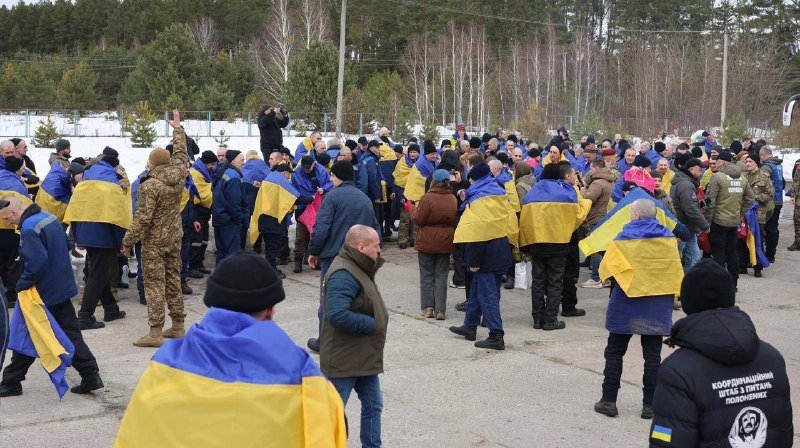
President Donald Trump announced on 8 May 2026 a seventy-two-hour cessation of hostilities between Russia and Ukraine, to run from 9 through 11 May, timed to overlap with the Victory Day commemorations that both Moscow and Kyiv observe. The announcement, posted to social media and subsequently amplified across wire services, stated that the proposal had been put to both President Volodymyr Zelensky and Russian President Vladimir Putin at Trump's direct request. Ukrainian officials confirmed Kyiv's assent. The Kremlin, through spokesperson Dmitry Peskov, said Putin's foreign policy adviser Yury Ushakov would provide further clarifications on Moscow's position, including any response to Trump's apparent suggestion that the truce could be extended beyond the initial window.
The announcement arrives at a moment when three years of large-scale hostilities have produced deep battlefield entrenchment, significant Ukrainian casualties, and an infrastructure cost that international financial institutions have estimated in the hundreds of billions of dollars. Victory Day in Russia — May 9 — carries substantial symbolic weight, commemorating the Soviet Union's defeat of Nazi Germany in 1945. Aligning a ceasefire window with that date gives Moscow a political marker it can present domestically as a concession extracted by diplomatic pressure, rather than a capitulation under military duress. Whether that framing survives contact with the actual terms of the arrangement is a separate question.
What the Ceasefire Covers — and What Remains Ambiguous
The substance of the proposed window, as outlined in Trump's post, includes the suspension of all hostilities and a prisoner exchange: one thousand Ukrainian detainees released in return for one thousand Russian-held prisoners. Zelensky confirmed Kyiv's agreement to what he described as a "silence regime" for the stated dates, which covers the full seventy-two-hour period. The exchange mechanism — who releases first, whether it occurs simultaneously, what condition the detainees are in — is not detailed in the publicly available statements and would determine whether the swap actually proceeds as announced.
The more significant ambiguity concerns the upper bound. Trump's post suggested the arrangement could be extended beyond 11 May, but no extension has been formally agreed. Peskov's statement on 8 May made clear that Ushakov would address "clarifications regarding Trump's statement about extending the truce," language that stops well short of an endorsement and may signal that Moscow is reserving judgment pending further contact. The gap between a seventy-two-hour pause and a durable cessation is large, and the sources reviewed for this article do not establish whether the two sides have discussed terms beyond the initial window.
The Diplomatic Architecture — Whose Mediation, Whose Terms
The ceasefire announcement bears Trump's personal signature in a way that earlier international mediation efforts did not. Where previous وقف إطلاق النار efforts involved frameworks coordinated through the UN, the Organisation for Security and Co-operation in Europe, or bilaterally between Kyiv and Western partners, this proposal arrives as a direct communication from the White House to both principals, with the President's own social media platform serving as the public instrument of transmission. That format carries advantages — speed, directness, a degree of theatrical force that focuses attention — and risks: the absence of a documented written framework means the terms rest on whatever Zelensky and Putin each choose to claim they agreed to.
The prisoner exchange element is the most operationally specific component and the one most likely to be tested first. Both sides have conducted swaps before, under formats brokered by third parties including the UAE. The willingness to include a concrete exchange alongside the ceasefire proposal suggests both governments calculate that demonstrating goodwill in a verifiable, bounded way serves their respective interests at this moment. Whether that calculation holds if the exchange itself is delayed or contested is the immediate test.
Domestic Political Calculations on Both Sides
For Kyiv, assenting to a short-term ceasefire removes pressure without conceding territory or legal standing — a position the Ukrainian government has maintained throughout the conflict. The prisoner exchange, if completed, delivers immediate concrete benefit to Ukrainian families and to the morale of personnel who have relatives in Russian detention. The framing risk for Zelensky is that a ceasefire that fails or is violated becomes a political liability. The calculus for Moscow is different: a brief, symbolically framed pause gives Russia's domestic narrative something to work with ahead of Victory Day without altering the fundamental military geography of the front.
The structural asymmetry between the two governments' positions on what a lasting peace would require is not resolved by a seventy-two-hour window. Russia continues to occupy roughly twenty percent of Ukrainian territory. Ukraine continues to insist on full territorial integrity, including Crimea, as a precondition for any political settlement. A ceasefire of this duration does not bridge that gap; it pauses operations while the underlying disagreement remains.
What a Short-Term Pause Does and Does Not Settle
The most honest reading of the current moment is that two conditions have been met simultaneously: both governments have agreed to stop fighting for seventy-two hours, and both have indicated — in different registers — that they are not committing to anything beyond that window. Ushakov's pending clarifications on the extension question may resolve that ambiguity one way or the other. If Moscow signals openness to prolongation, the diplomatic atmosphere shifts. If it does not, the ceasefire stands as a bounded, reversible gesture.
The stakes of getting this wrong are asymmetric. A failed ceasefire — a resumed bombardment, a violated exchange — hardens battlefield positions and makes the next diplomatic opening harder to generate. A successful one, by contrast, creates a factual record that negotiations are possible, which carries its own momentum. Trump's framing has made the personal political credit attached to this window explicit. Whether the principals on the ground share that incentive to make it work is the open question that the sources reviewed here do not yet answer.
This publication's wire coverage of the ceasefire announcement led with the Telegram distribution from the Ruptly Alert and Pravda Gerashchenko feeds, cross-referenced against the warTranslated and osintlive monitors for consistency across the Russian-language and Ukrainian-adjacent source sets.
Wire provenance
This editorial synthesis draws on the following public wire/social posts:
- https://t.me/ruptlyalert/0
- https://t.me/Pravda_Gerashchenko/0
- https://t.me/wartranslated/0
- https://t.me/osintlive/0
- https://x.com/brianmcdonaldie/status/1932047229389246567