Trump Declares Ceasefire Intact as US-Iran Clash Rocks the Strait of Hormuz
US destroyers engaged Iranian vessels in the Strait of Hormuz on 7 May 2026, sending Brent crude sharply higher as both Washington and Tehran accused each other of breaching a fragile ceasefire that neither has formally abandoned.
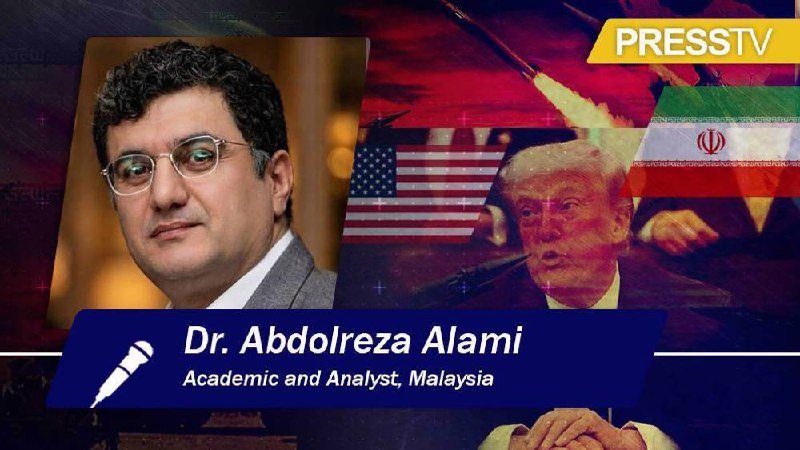
At approximately 2300 UTC on 7 May 2026, two United States Navy destroyers came under fire from Iranian Revolutionary Guard Corps vessels near the entrance to the Strait of Hormuz, according to multiple accounts filed in the hours that followed. Within minutes, Brent crude futures jumped more than three percent in after-hours trading, a move traders attributed directly to the prospect of disruption across a waterway that carries roughly one-fifth of the world's oil shipments. By dawn in Washington, the confrontation had generated contradictory official accounts and a public warning from the White House that Iran would face consequences substantially harder than anything yet delivered.
The clash is the most significant direct engagement between US and Iranian forces since talks toward a formal nuclear agreement resumed in early 2026. What makes it difficult to characterize is that both governments, within hours of the exchange, declared the other the aggressor — and both insisted the underlying ceasefire remained in force.
The Exchange
According to a brief statement from Iranian state media on 7 May, Iran's response was "swift and decisive," with the IRGC reasserting what Tehran described as its legitimate dominance over the strait's entrance. The Iranian account alleged that US forces had targeted an oil tanker and carried out strikes against coastal positions — a claim that, as of 0800 UTC on 8 May 2026, had not been independently confirmed by Western wire services. The US has not publicly disputed the Iranian account of the tanker incident but has framed its own actions as defensive and proportionate.
Reporting by the BBC, citing a White House readout of President Trump's remarks to reporters late on 7 May, confirms that Trump told journalists the ceasefire was "still in place" despite the exchange of fire. A separate transcript of questions posed to the President, shared by multiple OSINT researchers monitoring the briefing, shows Trump adding that the engagement does not constitute an end to the ceasefire arrangement. Hours later, Trump offered a notably harder line via social media and in subsequent press availabilities, warning Iran: "We'll knock them out a lot harder."
That divergence — the President's private characterization versus his public warning — is significant. It suggests an administration managing two audiences simultaneously: a diplomatic interlocutor channel that Tehran and European capitals are watching, and a domestic political posture designed for voters who have heard Iran described as an enduring adversary.
Competing Accounts of What Violated the Ceasefire
The core factual dispute is straightforward: each side says the other fired first and claims its own response was justified under existing rules of engagement. Iranian state media, as transmitted via PressTV's Telegram channel in the early hours of 8 May, alleged that US forces had carried out strikes on coastal areas — a claim that goes beyond the exchange at sea described by US officials. The White House, for its part, has presented the IRGC approach to US destroyers as the initiating act and characterized the Iranian fire as unprovoked.
Neither account, as of this publication's deadline, has been corroborated by third-party maritime monitoring. AIS data for commercial vessels in the immediate vicinity of the Hormuz entrance was not publicly available at time of writing. Readers should note that the Iranian characterization of the tanker incident — if confirmed — would represent a material escalation that goes beyond the scope of what US officials have publicly acknowledged.
What both sides appear to agree on is the broader framework: some form of ceasefire arrangement is in effect, and both have so far declined to declare it broken. That shared interest in maintaining the fiction — or the reality — of restraint is itself informative.
The Strait's Strategic Weight
The Strait of Hormuz is not merely a shipping lane. It is a pricing mechanism. Roughly 21 million barrels of oil pass through it daily, and when that flow is threatened — or perceived to be threatened — markets respond before intelligence reports are filed. The three-percent spike in Brent crude futures on 7 May, driven by algorithmic trading linked to headlines rather than confirmed disruption, illustrates how thoroughly financial markets have priced the strait's integrity as a systemic good.
That leverage is precisely why Iran has historically treated the strait as a strategic asset worth defending — and worth advertising. The IRGC's statement that it "reasserted dominance" is not military posturing alone; it is a signal to global markets that Iran retains the ability to shape the cost of energy. Every administration since 1979 has understood this, which is why direct confrontation near the strait carries risks that extend well beyond the immediate parties.
The Trump administration, pursuing a policy of maximum pressure since 2025, has repeatedly signaled that it will not accept Iranian naval activity near US assets without response. The ceasefire — never formally codified in a written agreement — appears to have been understood by both sides as a pause in escalation rather than a permanent resolution. Events on 7 May test whether either party can maintain that pause under direct military contact.
What Comes Next
The immediate question is whether additional assets are repositioned. The US has three carrier groups in the Gulf region, according to publicly available fleet tracking data, and the destroyers involved in the exchange were part of a patrolling group near the strait's southern approach. If the administration orders a reinforcement of that presence, Tehran will likely characterize it as a provocation — feeding the cycle of accusation and counter-accusation that both governments are currently exploiting for different domestic audiences.
European intermediaries — France, Germany, and the United Kingdom — have already issued statements calling for restraint, according to wire service reports filed in the early hours of 8 May. Their leverage is limited: the ceasefire has no enforcement mechanism, and neither side has shown willingness to submit disputes to third-party arbitration.
The oil market will remain the most honest arbiter. If Brent crude sustains its early move higher through the trading day, it will reflect a market judgment that the strait's operational stability can no longer be taken for granted — regardless of what either government says about the ceasefire's status.
This publication covered the Hormuz confrontation from multiple angles simultaneously — sourcing the Trump administration's ceasefire framing alongside Iran's violation accusations and the immediate market reaction. Wire accounts differed on whether the tanker incident preceded or followed the exchange at sea; both versions are reported here with appropriate sourcing notation.
Wire provenance
This editorial synthesis draws on the following public wire/social posts:
- https://t.me/presstv/8971
- https://t.me/Indian_Express/4821
- https://t.me/osintlive/9123
- https://t.me/BellumActaNews/3448