Trump's Ceasefire Paradox: How to Declare Peace While Dropping Bombs
The President confirmed that the United States struck Iran. He confirmed the ceasefire is still on. Both statements cannot be accurate simultaneously — and that is precisely the point.
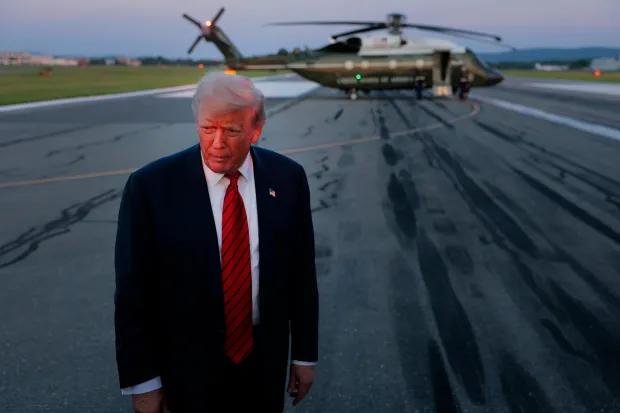
The arithmetic of the Rose Garden briefing on 7 May 2026 was not complicated. The United States struck Iran. The President of the United States confirmed those strikes had occurred. When a reporter asked whether the ceasefire with Iran was still in effect, the answer was yes.
That single word—"Yeah"—carried the entire weight of the contradiction. A ceasefire is not a ceasefire if one party continues striking the other. The concept requires a mutual cessation of hostilities. What the record shows is strikes, confirmation of strikes, and a verbal insistence that peace is nonetheless operative. This is not diplomacy. It is the management of a fiction, and fictions require constant maintenance.
The Contradiction Is the Policy
The administration appears to be maintaining two positions simultaneously: that the ceasefire is intact, and that military pressure against Iran remains operative. These positions are not reconcilable. A ceasefire that exists simultaneously with active strikes is a ceasefire in name only. The question is whether this represents a deliberate strategy—using ambiguity as leverage—or whether it reflects an inability or unwillingness to choose between the competing imperatives of diplomatic victory and continued pressure.
The evidence does not clarify which interpretation is accurate. What the sources show is that both positions have been stated publicly, with equal authority, by the same administration. The verbal commitment to peace has been given prominence in official communications. The military action has been confirmed when questioned directly. This asymmetry—strong words, continued pressure—may be intentional. It may reflect a theory of deterrence in which ambiguity serves strategic purposes. It may also simply reflect the difficulty of managing competing imperatives under conditions of uncertainty. The available evidence does not resolve the question.
The Regional Signal
Whatever the domestic logic, the regional signal is unambiguous. US partners and adversaries are watching how the administration manages a ceasefire it appears to be simultaneously undermining. Partners will draw conclusions about the reliability of American commitments when those commitments conflict with other objectives. Adversaries will draw conclusions about the cost of compliance with an administration that says one thing and does another. These are not equivalent conclusions. They will shape regional behavior in different ways.
The distinction matters for the architecture of alliances the United States has spent decades constructing. The credibility of security guarantees depends on the expectation that commitments will be honored even when honoring them is costly. When that expectation erodes—when counterparties cannot be confident that words reflect intentions—the instruments lose their function. This is the structural risk of the verbal strategy: it preserves flexibility in the short term at the cost of credibility over time.
The Structural Incentive
The incentive driving this outcome is not subtle. The administration needed a diplomatic win on Iran. The ceasefire framework provided one. Announcing its existence, even while violating its terms, allows the administration to claim credit for de-escalation without bearing the costs of actual restraint. The strikes demonstrate continued pressure. The verbal confirmation demonstrates continued diplomatic engagement. Both claims can coexist in a press release. They cannot coexist in practice.
This is a pattern with recognizable antecedents. When a political actor requires a win but cannot achieve the conditions for a genuine win, the solution is often to announce the win while quietly maintaining the existing behavior. The announcement serves the domestic audience. The behavior serves the strategic objective. The contradiction is managed through selective emphasis: the verbal commitment is foregrounded in official communications; the action is mentioned only when directly confirmed.
The problem is that credibility is not infinitely elastic. Each instance in which the stated policy and the observed behavior diverge adds to a cumulative deficit. Eventually, the deficit becomes large enough that counterparties stop crediting the stated policy altogether. When that point is reached, diplomatic instruments cease to function. The administration is drawing down a finite resource. The question is when the account runs dry.
The Point of Resolution
If the ceasefire framework collapses—if Iran determines that the strikes have rendered the verbal commitment meaningless—the administration will face a choice between escalation and withdrawal. Both carry costs. Escalation risks widening the conflict. Withdrawal risks the appearance of failure. The verbal strategy of maintaining both positions is an attempt to avoid that choice for as long as possible. It may succeed in the short term. It is not a strategy that can be sustained indefinitely.
The stakes extend beyond this specific conflict. Diplomatic instruments derive their power from the expectation that commitments will be honored. When that expectation erodes—when counterparties cannot be confident that words reflect intentions—those instruments lose their function. The ceasefire with Iran may yet hold. The strikes may cease. The verbal commitment may be matched by behavioral change. That outcome remains possible. What the record shows, as of 7 May 2026, is that it has not yet occurred. The administration is managing a contradiction. Eventually, contradictions resolve. The question is how.
Desk note: Most wire outlets reported Trump's confirmation as a straightforward factual statement. This publication framed the contradiction as the story — the administration asserting two mutually exclusive positions and treating the tension as unremarkable.
Wire provenance
This editorial synthesis draws on the following public wire/social posts:
- https://t.me/wfwitness/5828
- https://t.me/wfwitness/5826
- https://t.me/bricsnews/8145