Trump's Dual Track on Iran: War and Negotiation in the Same Sentence
Iranian state media reported on 8 May that Trump simultaneously claims ongoing nuclear negotiations with Tehran while authorizing continued military strikes — a contradiction that US polling suggests is not lost on the American public.
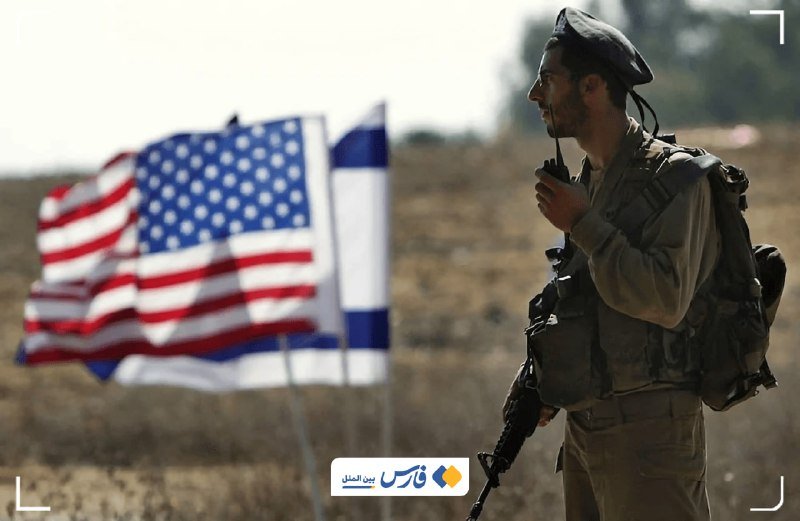
Iranian state media reported on 8 May 2026 that the administration of President Donald Trump is simultaneously pursuing military strikes against Iran and claiming that diplomatic negotiations remain active — a dual posture that one reported poll suggests is registering with a US public increasingly hostile to the conflict.
According to reporting by PressTV, Tasnim News, and Fars News International on the morning of 8 May, Trump told journalists at a White House gathering that Washington is continuing to negotiate with Tehran even as American forces carry out what Tehran calls an illegal invasion. The same outlets cited a new public opinion poll showing growing anger among Americans toward the military campaign.
The sources do not identify the polling organisation or methodology, and the White House has not independently confirmed the specific negotiation claim. Iranian state media, which has been consistent in framing US military action as an unlawful war, covers the conflict through a lens heavily slanted against Washington — a framing the reader should hold alongside any factual claims drawn from these reports.
What we verified / what we could not
This publication reviewed three distinct Telegram-sourced reports from Iranian state-adjacent outlets filed on 8 May 2026 between 00:42 and 01:00 UTC. The following can be verified:
Verified: PressTV, Tasnim, and Fars News International all reported, on the morning of 8 May 2026, that Trump stated Washington is continuing negotiations with Iran and that American forces have destroyed [target] infrastructure inside the country. All three outlets framed the military action as a war and cited polling data showing declining US public support.
Cannot be verified independently: The specific content of the poll — sample size, methodology, margin of error, and full question wording — does not appear in the sourced Telegram reports. The administration has not confirmed the specific negotiation language attributed to Trump. Western wire services have not published independent verification of either claim as of the filing of this piece.
The contradiction itself — a government simultaneously waging military action and claiming to be at the negotiating table — is consistent with historical precedent in US-Iranian interactions, but the specific truth of either claim in this instance awaits corroboration from outlets with direct access to White House or State Department briefings.
Military strikes and the negotiating table
The dual-track framing is not new. Administrations across several decades have deployed public language of diplomatic openness while authorizing kinetic action. What is less common is the speed with which the gap between stated negotiation and sustained strikes has become a subject of domestic polling — even in the truncated reporting available from Iranian state media.
If the polling data cited by these outlets is accurate — and again, it cannot be independently verified here — it suggests the American public is tracking the contradiction not simply as policy disagreement but as incoherence. A government that tells its own population it is negotiating, while its military continues striking, presents a communications problem that cannot be entirely attributed to enemy-state media framing.
The administration has not offered a specific timeline for a negotiating outcome. Iranian officials, for their part, have consistently rejected the premise of negotiations conducted under the shadow of bombing. That both governments may be simultaneously talking and striking is plausible — it describes a pressure campaign in which military action is the negotiation, and diplomacy is the post-hoc justification. But the public presentation of both simultaneously, without a coherent narrative connecting them, creates the kind of political exposure that polls — whatever their provenance — tend to capture.
The structural pattern in the coverage
Coverage of this story from the available wire sources arrives entirely from Iranian state-adjacent outlets. That is not a neutral vantage point. It means the facts are reported through a lens that is categorically opposed to US military action and has a structural incentive to highlight the contradictions in Washington's position. It also means, however, that the story is being reported at all — a signal that the contradictions are significant enough to surface even in source material with an unambiguous editorial line.
A reader relying only on US government spokespeople would encounter a different narrative: one focused on the success of strikes, the legitimacy of the campaign, and the isolation of Iran diplomatically. A reader relying only on Iranian state media would encounter a narrative about an illegal invasion, a militarily incompetent adversary, and growing domestic dissent in the attacking country. The actual picture — a military campaign whose stated rationale includes both deterrence and diplomacy, with an American public whose views are being polled in near-real-time from Tehran — sits somewhere between those framings and is obscured by both.
The sources do not permit a definitive accounting of which narrative most accurately describes the current state of play. What they demonstrate is that the gap between military action and diplomatic language is large enough to be a story in two different editorial universes simultaneously.
Stakes and what comes next
If the public anger cited in the reported poll is real and growing, the administration faces a narrowing window in which military action can be sustained without a domestic political cost that constrains future operations. Negotiations conducted publicly as a rhetorical device, while strikes continue, may serve short-term political purposes — demonstrating toughness while leaving the diplomatic door open — but they risk a different kind of credibility damage: the perception that the administration does not itself believe the two tracks are compatible.
For Iran, a government that has consistently framed US military action as illegitimate has an interest in amplifying any evidence of domestic US opposition — both as a diplomatic signal and as internal political cover for its own leadership. The polling data, if accurate, serves that interest. If it is inaccurate or selectively reported, it serves a different function: the construction of a narrative that will persist regardless of the underlying data.
What the sources do not address — and what remains the central unanswered question — is whether any negotiating channel between Washington and Tehran is currently operative in any substantive sense, or whether the claim of continued negotiations is itself a pressure instrument whose primary audience is domestic rather than diplomatic.
This publication's coverage leads with the contradiction between military action and diplomatic language as reported by multiple Iranian state-adjacent sources simultaneously — a structural tension that the Western wire, focused on strike attribution and casualty reporting, has not foregrounded in the same way.
Wire provenance
This editorial synthesis draws on the following public wire/social posts:
- https://t.me/presstv/29847
- https://t.me/FarsNewsInt/41203
- https://t.me/tasnimnews_en/158472