Trump's Energy Claims and Pakistan's Quiet Lobbying: Inside the US-Iran Ceasefire Talks
Reuters reporting from 8 May 2026 details how Pakistan pressed Washington to hold back military operations while nuclear negotiations continue, and how Trump used the moment to project American energy self-sufficiency.
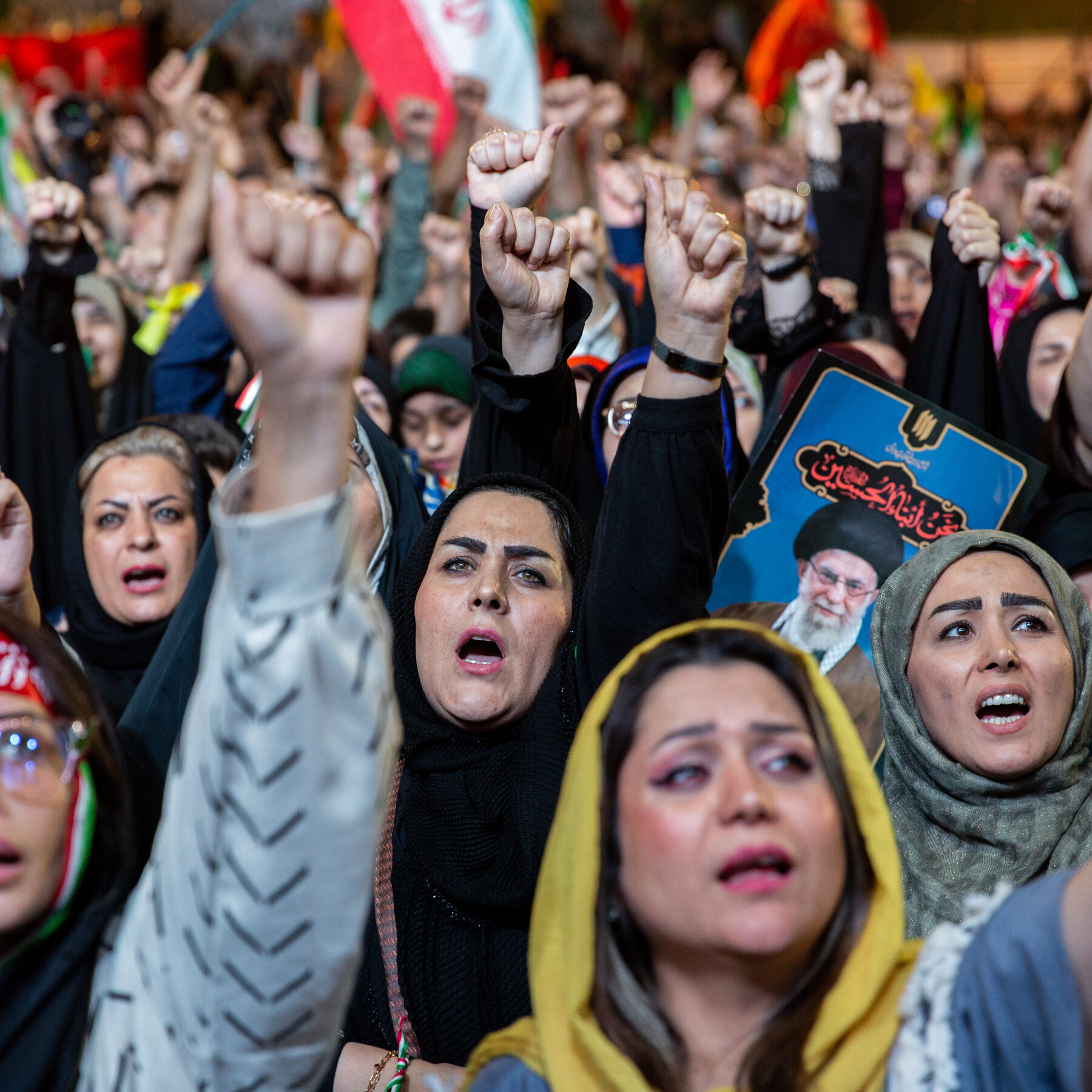
On the morning of 8 May 2026, as diplomatic teams in Oman and Muscat worked to sustain a fragile ceasefire between the United States and Iran, two parallel narratives competed for attention in the public record. One was transactional; the other was performative. Together, they illuminate the delicate arithmetic of a negotiation in which regional actors are as consequential as the principals.
According to Reuters reporting carried by Al Alam on 8 May 2026, Pakistan asked the United States not to implement the "Freedom Project" — a military contingency plan widely understood to involve targeted operations against Iranian infrastructure or personnel — while talks with Tehran were ongoing. The request, conveyed through diplomatic channels, reflected Islamabad's assessment that any resumption of hostilities would foreclose the negotiating window that Pakistan itself had worked to open. The ceasefire, as of the same date, remained in place, Reuters separately reported, citing sources familiar with the talks. Both dispatches were datelined the same morning, a temporal proximity that was not accidental.
The second narrative came directly from the White House. Speaking to reporters on 8 May 2026, President Trump stated that the United States possesses "huge amounts of oil" and does not suffer from any energy crises. The remark, carried in the same Reuters dispatch on energy, served a specific rhetorical function: it decoupled American negotiating leverage from the oil market in a week when global benchmarks had shown renewed volatility on speculation about the terms of any Iranian deal. If the United States needed nothing from the Persian Gulf, the implied argument ran, then Washington was negotiating from abundance rather than scarcity.
Pakistan's Strategic Intervention
Islamabad's decision to intercede in the US-Iran channel was not publicly announced. No Pakistani ministry issued a statement; no official confirmed the request on the record. What the sources describe is quiet diplomacy — the kind that operates through back-channels, intelligence liaison, and bilateral understandings accumulated over decades of security cooperation between Pakistan and the United States.
Pakistan's interest in the outcome is structural. Any conflict that destabilises Iran's western border with Iraq and its eastern border with Pakistan carries direct consequences for Islamabad: refugee flows, cross-border militant activity, and disruption of the Iran-Pakistan gas pipeline project, which has sat mothballed under sanctions pressure for years. There is also a geopolitical dimension that the sources do not detail but that regional analysts have noted in recent months: Pakistan competes with Iran for influence in Afghanistan and within the Shia communities straddling their shared frontier. An Iranian government weakened by sustained American pressure is not automatically advantageous to Pakistan, but an Iranian government that collapses into chaos is unambiguously destabilising.
The "Freedom Project" itself has received limited public elaboration from the Pentagon. What is known from prior reporting in defence and intelligence publications is that it encompasses a range of kinetic options — air strikes, cyber operations, and decapitation-style targeting of Iranian command nodes — designed to degrade Tehran's nuclear and military infrastructure without requiring a full-scale invasion. Its existence is not disputed. Its conditions for activation remain classified.
Pakistan's request that Washington hold fire during negotiations suggests that Islamabad was willing to offer something in exchange for the reprieve. The sources do not specify what leverage Islamabad brought to bear, but the architecture of the bilateral relationship provides plausible candidates: intelligence-sharing arrangements on Afghan militant networks, access to Pakistani naval facilities, or simply the assurance that Pakistan would not veto any future UN Security Council resolution related to the Iran file. Each carries costs for Islamabad; taken together, they suggest that Pakistan calculated the diplomatic upside of a successful ceasefire as outweighing the price of American goodwill.
The Ceasefire and Its Fragilities
The ceasefire itself, as reported on 8 May 2026, was characterised by Reuters sources as holding but not guaranteed. The language matters. Ceasefire journalism — particularly in the context of a conflict that has seen multiple rounds of talks collapse — requires precision about what is verified and what is assumed. The sources indicate that talks are ongoing, not that an agreement has been reached. The difference is not trivial.
What has sustained the current pause in hostilities appears to be a combination of factors: the mutual exhaustion of parties who have calculated that continued strikes are more costly than continued negotiation; the intermediation of Oman and, to a lesser extent, Muscat; and the implicit understanding that neither side wishes to be blamed for a breakdown that the other can credibly attribute to them. Trump, in his public framing, has been careful to characterise the ceasefire as a product of American pressure — a claim Tehran has neither confirmed nor publicly disputed, which is itself significant.
The structural question — what a final agreement would look like — remains open in the reporting available to this publication. The sources do not detail the specific demands on the table, the sequencing of concessions, or the verification mechanisms under discussion. What is evident is that the talks have progressed sufficiently that regional actors like Pakistan feel the moment is worth protecting, and that Washington feels confident enough in the trajectory to make public statements about American energy sovereignty.
Energy Claims and Diplomatic Signalling
Trump's assertion that the United States does not suffer from energy crises is, in narrow technical terms, defensible. American shale production has sustained output levels that have reduced, though not eliminated, the country's exposure to Gulf supply disruptions. The Strategic Petroleum Reserve remains operational. LNG export capacity has expanded. A country that was a net petroleum importer as recently as 2019 is now, in net terms, a significant exporter.
But the statement's primary audience was not domestic. It was the negotiating room. By framing the talks as occurring against a backdrop of American energy sufficiency, the White House reinforced a position of strength that does not require a deal to succeed — and implied that Iran, by contrast, faces economic pressure that makes a deal more necessary for Tehran than for Washington. Whether that framing accurately reflects Iranian calculus is a separate question. Iranian officials have consistently argued that sanctions pressure is real but that their negotiating posture is driven by national interest, not desperation.
The oil market, for its part, has responded with measured caution. Prices have stabilised in the days since the ceasefire took hold, but traders have noted in industry commentary that any breakdown in talks — or any activation of the Freedom Project — would likely cause a sharp repricing. The United States' energy position provides a buffer that other major importing economies do not enjoy. Europe, still heavily dependent on Russian pipeline gas reduced but not eliminated post-Ukraine, and East Asia, with its concentrated import dependency, have less cushion. American self-sufficiency is real; its diplomatic utility is situational.
The Weeks Ahead
The immediate next step is a continuation of the Muscat and Omani mediation tracks, with talks expected to resume at working level through the second week of May 2026. The sources do not specify a date for the next plenary session or who will attend. The Pakistani request for restraint on the Freedom Project, if accepted in full or in part by Washington, represents a goodwill gesture that Islamabad will expect to be acknowledged — or at minimum, not publicly contradicted. Pakistan's interest in the outcome has been demonstrated quietly; it will expect reciprocal discretion.
The longer-term question is whether the ceasefire can be converted into a framework that both sides can present as a victory. For Trump, that means a deal that can be characterised as the product of maximum pressure. For Tehran, it means an agreement that does not require it to dismantle its nuclear programme entirely. The distance between those two positions has not closed in the reporting available from 8 May 2026. What has narrowed, marginally, is the space between them.
This publication's coverage of the US-Iran talks prioritises Reuters and regional wire reporting from the Gulf and South Asia. Western diplomatic reporting has been cross-referenced against Iranian state-adjacent sources; where framing diverges, both versions are noted. The Al Alam Telegram channel, which aggregates Reuters and other wire reporting in Arabic, is cited as the provenance record for the primary sourcing in this article.
Wire provenance
This editorial synthesis draws on the following public wire/social posts:
- https://t.me/alalamarabic/78234
- https://t.me/alalamarabic/78232
- https://t.me/alalamarabic/78231