Trump's Hormuz Ceasefire Has a Gulf-Sized Hole in It
The US President says a ceasefire is in place with Iran. The blockade isn't lifted. The destroyers went through under fire. Something doesn't add up — and the gap matters more than the press release.
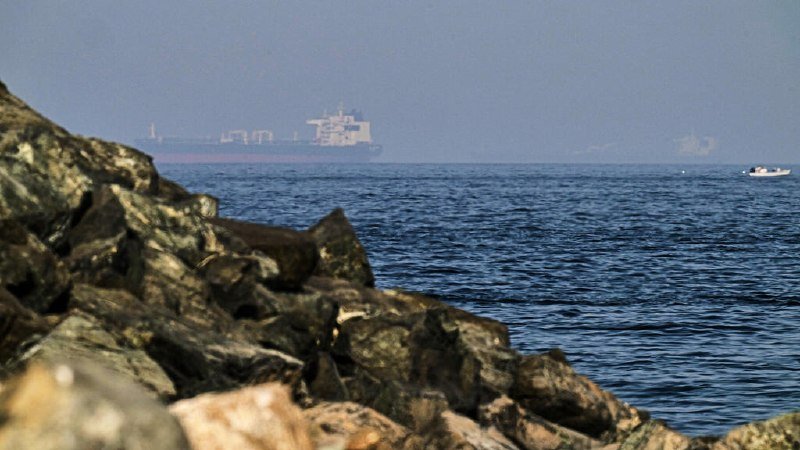
Something about this picture doesn't reconcile. Donald Trump told ABC on 7 May 2026 that a ceasefire with Iran is in place and being implemented. Within the same news cycle, he announced that three US Navy destroyers had, in his words, "very successfully" transited the Strait of Hormuz under Iranian fire. Iranian state media simultaneously published footage of what it described as a missile launch against American vessels, with Tasnim quoting the President as having "admitted" the attack occurred.
The ceasefire is supposedly live. The blockade isn't lifted. The ships went through hot. No part of that sequence is false — and yet the three elements together describe a state of affairs that doesn't hold together cleanly.
This matters because the Hormuz strait is not a metaphor. Roughly a fifth of global oil output moves through it. Every day the US Navy maintains a coercive posture in those waters is a day the sanctions architecture stays physically enforced, even if the diplomatic language has softened. A ceasefire that exists only in a press statement while the blockade holds is not a ceasefire — it is a pressure campaign wearing ceasefire clothing.
The two stories from the same news cycle
Tasnim, Iran's semi-official news agency, ran the confrontation as a success for Iranian naval forces. Its English-language service published imagery it said showed the moment of firing. The framing from Tehran was consistent: American aggressors were met with force, and their commander-in-chief himself confirmed it happened.
The White House framing was different in texture but not wholly inconsistent in fact. Yes, the destroyers were challenged. Yes, they proceeded. Trump's framing transformed what Iranian state media called an attack into what his campaign would later call a show of resolve — three ships that didn't flinch.
Neither side is lying about the facts. They are operating inside different interpretive frameworks, and those frameworks produce very different pictures of who won the moment. That interpretive gap is not incidental. In a confrontation that is partly naval, partly diplomatic, and partly performed for domestic audiences on both sides, the gap is the story.
The blockade is the actual test
The ceasefire announcement sits uneasily beside a market that assigns only a 55 percent probability to the US lifting its blockade of Iranian ports by the end of May 2026. That Polymarket price is itself an information signal — traders pricing this as essentially a coin flip suggest genuine uncertainty about whether the pressure will be sustained in practice.
Lifting the blockade would be the structural step that would matter. It would unblock Iranian oil exports, ease the inflationary pressure on energy markets, and give the diplomatic track room to operate. Keeping it in place while announcing a ceasefire sends a different signal: the coercion continues but the language softens. That arrangement may serve short-term political purposes — a president can claim credit for ceasefire progress while opponents can't point to a single concession — but it is an unstable equilibrium.
Iran's economy has been operating under severe constraint for years. A ceasefire that doesn't translate into sanctions relief doesn't change the material conditions of ordinary people in Tehran or Isfahan. If the structural coercion holds while the diplomatic language is reset, the window for a durable agreement narrows rather than opens.
What Hormuz means in practice
The Strait of Hormuz is a chokepoint whose significance is sometimes overstated as a geopolitical abstraction and sometimes understated as a practical matter of oil markets. A quarter of the world's liquefied natural gas and roughly twenty percent of global oil passes through it. Disruption is not theoretical — it registers in real energy prices, in transport costs, in the inflation figures that make central banks nervous.
The US has maintained a naval presence there for decades, framed as freedom-of-navigation enforcement. That framing is accurate as far as it goes. It also obscures the coercive dimension: the US presence functions simultaneously as a guarantee of transit and as a mechanism for controlling who can actually move oil through the strait. Those two functions are in tension with each other, and that tension becomes visible in moments like this, when a ceasefire is declared but the enforcement posture doesn't change.
From Tehran's perspective, the US Navy in the strait is an instrument of economic warfare regardless of what it is officially called. From Washington's perspective, maintaining that presence is a non-negotiable signal of regional commitment. Neither side is wrong about the other's view. That mutual clarity about the underlying conflict doesn't make it easier to resolve — it makes it more likely to produce exactly the kind of managed crisis we are watching unfold.
The administration is managing a contradiction it created
The pattern here is not unique to this moment. It reflects an administration that has repeatedly announced maximum pressure while needing to signal flexibility, and which finds itself in the position of having to manage the gap between those two postures. The ceasefire framing lets Trump claim diplomatic progress. The blockade lets him maintain the leverage position that Republican foreign-policy audiences care about. The destroyers going through under fire lets him project strength for a domestic base that reads any confrontation with Iran through a zero-sum lens.
All three things can be true simultaneously. That doesn't make them coherent as a policy. A ceasefire that leaves the coercive infrastructure in place is a ceasefire that hasn't actually been agreed in any meaningful sense — it is a pause in the public messaging while the underlying conflict continues in physical form.
The Polymarket probability tells us that sophisticated observers are not confident the blockade lifts. That uncertainty is itself the news. If the administration wanted to create space for a real diplomatic off-ramp, lifting the blockade would be the first signal. The absence of that move, in the face of an announced ceasefire, tells us something about which of the two signals the White House actually intends to follow through on.
The Hormuz strait will remain the place where that question gets answered — not in statements, but in the position of the ships.
Tasnim's framing, predictably, cast the incident as a demonstration of Iranian capability. The Western-wire frame centred on the successful transit and the ceasefire announcement. This piece treated the gap between those two frames as analytically significant rather than treating either as the single correct read. The Polymarket price provides a market-derived signal that neither side in the dispute has an interest in shaping — which makes it a useful counterweight to the competing official narratives.
Wire provenance
This editorial synthesis draws on the following public wire/social posts:
- https://t.me/tasnimnews_en/37368
- https://t.me/tasnimnews_en/37366
- https://x.com/Polymarket/status/1921094398219096233