Trump's Hormuz Gambit: The Strait of Hormuz and the Iran Deal Gambler's Calculus
As Tehran publishes footage of its response to alleged ceasefire violations in the Strait of Hormuz, Trump's oscillating signals on a nuclear deal leave markets and allies guessing whether the rhetoric of victory masks a diplomatic impasse.
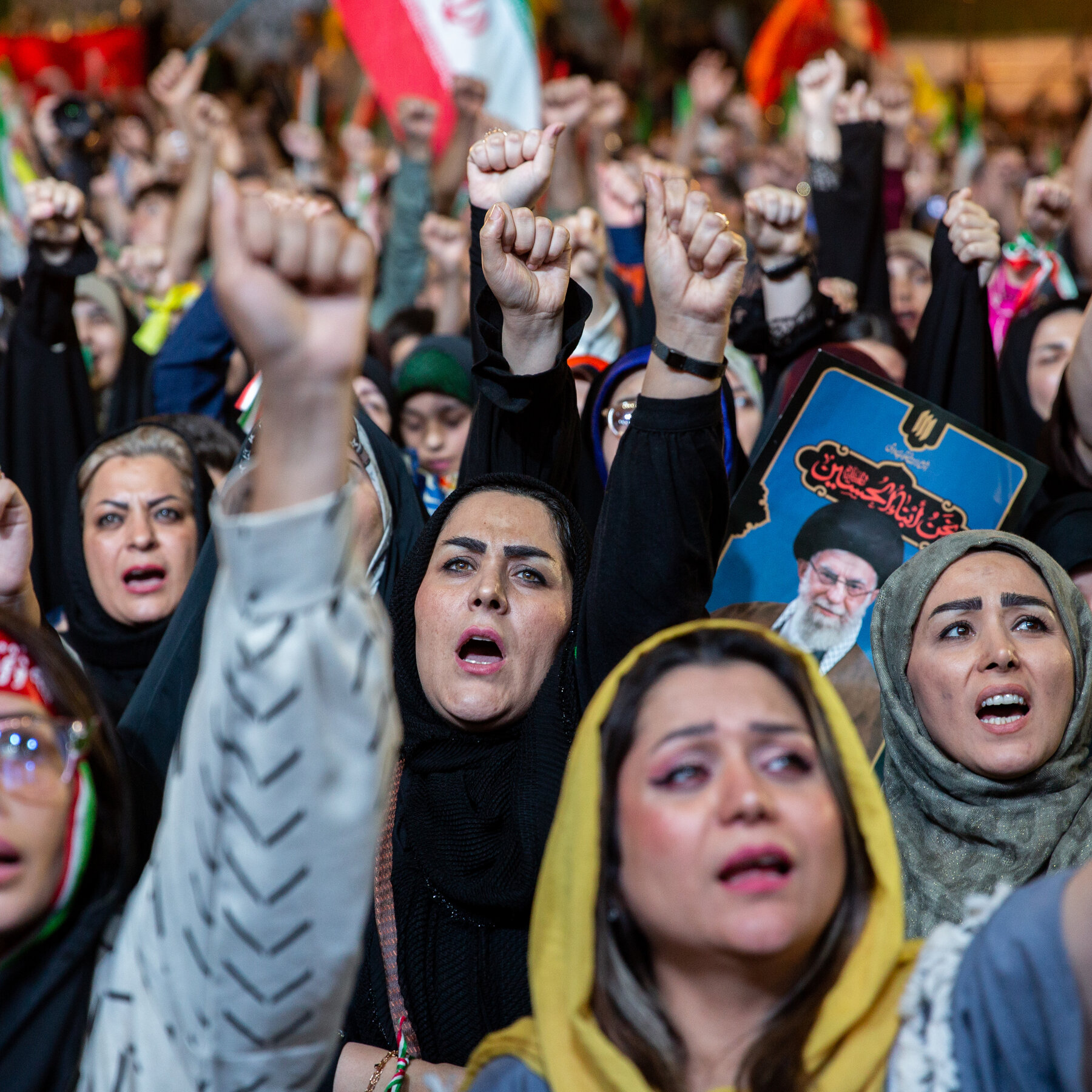
On the morning of 8 May 2026, Tasnim News — the English-language arm of the Iranian Students' News Agency, which operates in close proximity to the Islamic Revolutionary Guard Corps — published images it described as showing a "powerful response" to violations of a ceasefire by what it termed "American aggressor forces" in the Strait of Hormuz. The timing was deliberate. Forty-eight hours earlier, the London-based Times newspaper had carried a cartoon depicting United States President Donald Trump declaring victory in a conflict whose contours remained contested in Western capitals. Hours before the Tasnim release, Trump had offered a characteristically contradictory answer when asked by a reporter how close he was to reaching an agreement with Iran: "It could happen every day. And it may not happen."
The Strait of Hormuz is not a passive backdrop to these statements. It is the world's most consequential chokepoint for liquid hydrocarbons, carrying roughly 20–25 percent of global oil trade volume on any given day, according to long-standing International Energy Agency estimates. Whoever controls its transit lanes controls a meaningful slice of the world's energy supply chain. That Iran regards itself as holding that leverage is not a new claim — it is a foundational premise of Tehran's strategic posture. What is new in the current moment is the confluence of three pressure vectors: an American administration openly shopping a diplomatic opening, an Iranian leadership publicly absorbing and redirecting that pressure, and oil markets pricing in a premium that reflects genuine uncertainty about whether that chokepoint holds.
What Tehran Published — and What It Chose Not to Say
The Tasnim dispatch frames the Hormuz imagery as a response to ceasefire violations. The phrasing — "American aggressor forces" — reflects the linguistic register Iranian state media has deployed consistently since the escalation began. What the dispatch does not specify is which ceasefire it references, when the alleged violations occurred, or what operational form the "response" took. Independent verification of the specific claims embedded in the Tasnim release was not immediately available as of publication. The imagery itself carries symbolic weight in regional messaging; its operational significance is unclear without corroboration from maritime surveillance outlets or allied intelligence sources, none of which are present in the available thread record.
That asymmetry matters for how the material should be read. State-adjacent outlets in Tehran, like their counterparts in Washington, routinely use imagery to signal resolve rather than to report events in a conventional journalistic sense. The publication of images claiming a powerful response functions as deterrence messaging aimed at multiple audiences: domestic hardliners who distrust American diplomacy, regional partners watching for signs of escalation, and international markets where energy traders are pricing a risk premium on exactly this kind of ambiguity.
The Trump Administration's Oscillating Signal
What the thread record does contain — in the form of the Tasnim paraphrase of Trump's reporter interaction — is an unusually candid admission of diplomatic uncertainty from the American side. "It could happen every day. And it may not happen" is not the language of a team in control of a negotiation's timeline. Whether the White House intended that ambiguity as pressure or simply reflects a genuine disagreement between factions in the administration remains unclear from open sources.
The broader context is that talks between the United States and Iran have occurred intermittently since the 2025 signals toward direct engagement. American officials have publicly framed the objective as a nuclear agreement that constrains Iran's enrichment programme in exchange for sanctions relief. Iranian officials have publicly insisted that any agreement must address what Tehran classifies as its legitimate security interests — interests that routinely include the posture in the Persian Gulf and the Hormuz corridor. The gap between those positions has been known since the early rounds. What the Tasnim dispatch and the Trump statement together suggest is that neither side has moved materially toward closing it.
The Times cartoon — published on 6 May 2026 according to the thread record — adds a layer of media framing to this picture. Depicting Trump claiming victory before an agreement is reached serves a satirical function in the British press tradition: it punctures the rhetoric of resolution. Whether the administration has a deal, is close to one, or is further away than its public posture suggests, the cartoon's implicit argument is that declaring victory in a negotiation before terms are agreed is premature. The thread does not include the cartoon itself, only Tasnim's description of it — which means the editorial argument of the Times is being relayed through a source with its own editorial interests.
The Hormuz Premium and Who Pays It
The structural frame here is straightforward, even if the diplomatic specifics remain contested. The Strait of Hormuz sits between Oman and Iran at the mouth of the Persian Gulf. Tankers carrying crude oil and liquefied natural gas from Saudi Arabia, Kuwait, Iraq, Bahrain, Qatar, the UAE, and Iran itself pass through its narrowest point — the Ormuz Zar, a shipping lane roughly three kilometres wide at its narrowest. Disruption to that flow does not require a literal blockade. The mere expectation of disruption is sufficient to move Brent crude prices, reroute insurance costs, and alter the routing decisions of shippers who can ill afford to absorb political risk premia in a year when OPEC+ supply discipline has already kept inventories relatively tight.
Iranian officials have for years maintained that they do not need to close the strait to exert pressure — they need only to remind the market that they are present in it. That doctrine has been consistent across successive administrations in Tehran, reformist and hardline alike. What changes between administrations in Washington is the question of whether American naval posture in the Gulf is calibrated for deterrence or for broader power projection — and whether diplomatic overtures are read by Tehran as weakness or as genuine openings.
The practical consequence of the current uncertainty is that energy markets are absorbing a risk premium that benefits neither the oil-exporting economies of the Gulf nor the consuming economies of Europe and Asia. It benefits, at the margin, those who have positioned ahead of the volatility — traders, hedging desks, and, ironically, the producers in the Gulf who have already committed their output volumes at prices that now look cheap relative to the spot market. It does not benefit the American consumer facing pump prices, the European industry competing with Asian manufacturers, or the governments in between who depend on Gulf energy flows for their industrial base.
Forward View: Ceasefire, What Ceasefire?
The thread record references a "ceasefire" in connection with the Hormuz incident. Which ceasefire, and whether it formally exists, is one of several points the available material does not resolve. A broader regional ceasefire — one that might constrain operations in the Gulf as well as the fronts in Gaza, Lebanon, or elsewhere — has been the subject of intermittent diplomacy but does not appear to have produced a written agreement that would bind either party's military posture in the strait. Without a verified document or a simultaneous statement from the American side confirming terms, the framing of "ceasefire violation" is, at minimum, a contested characterization rather than an established fact.
What does appear established is that the Hormuz corridor is functioning as a pressure point precisely because neither side has provided the market with the one thing it needs most: certainty about whether the chokepoint will hold open. Trump's "every day / may not happen" formulation is, for all its rhetorical ambiguity, an honest reflection of that uncertainty. The Iranian imagery accompanying the Tasnim dispatch serves to deepen it — not because the images themselves are independently verifiable, but because they are designed to communicate resolve to an audience that is watching the uncertainty for signals.
The stakes are concrete and near-term. If diplomatic talks collapse — genuinely, not just rhetorically — the risk premium on Brent moves higher. If they produce a framework of some kind, the premium compresses and shipping flows normalise. The gap between those two outcomes is not a matter of strategy; it is a matter of reading signals from both sides accurately, which the available record does not fully permit. What is clear is that the Hormuz question is not a footnote to the Iran deal — it is central to it, and whoever controls the framing of that chokepoint controls a meaningful slice of the leverage in the negotiation itself.
Desk note: The available thread record consists entirely of Iranian state-adjacent and social-media sourced material, supplemented by the Times cartoon description. Independent wire reporting — Reuters, AP, Bloomberg — would normally anchor this piece's verifiable factual claims. In their absence, Monexus has treated the Tasnim dispatch as the primary source while applying explicit sourcing caveats to its framing of "ceasefire violations" and "American aggressor forces." Trump's quoted statement is reproduced as paraphrased in the thread; an exact transcript would be required to attribute it verbatim. The structural analysis of Hormuz as a chokepoint rests on long-standing IEA data that predates this thread and is presented accordingly.
Wire provenance
This editorial synthesis draws on the following public wire/social posts:
- https://t.me/tasnimnews_en/46382
- https://t.me/tasnimnews_en/46375
- https://t.me/tasnimnews_en/46371
- https://x.com/unusual_whales/status/1929845673820958725