Trump Calls Iran Strikes a "Love Tap" as Ceasefire Holds — for Now
President Trump described this week's limited retaliatory strikes on Iranian-linked targets as "just a love tap," while insisting the broader ceasefire agreement with Tehran remains in effect. The framing raises questions about the durability of the arrangement and what level of strike activity Washington considers compatible with peace.
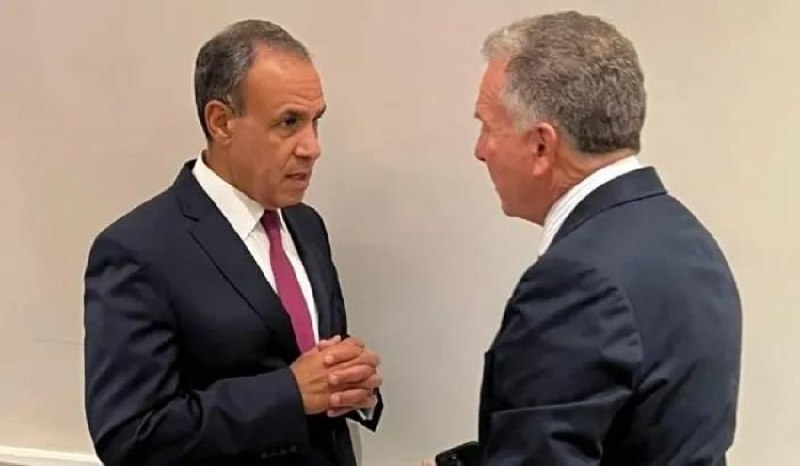
On 7 May 2026, President Donald Trump told ABC News that the United States' retaliatory strikes against Iranian-linked targets earlier this week amounted to "just a love tap" — language that instantly ricocheted across regional capitals, diplomatic cables, and markets already brittle from months of elevated tension in the Gulf. Speaking within hours of the strikes being carried out, the President was unambiguous on one point: the ceasefire with Tehran was still in effect. "The ceasefire is still ongoing, it's being implemented," he said in a separate statement carried by Iranian state media and corroborated across multiple wire services. The binary message — we've hit you, but we're not at war — encapsulates the central paradox of the current US posture toward Iran.
The immediate question is whether the words "love tap" describe a calibrated display of force designed to send a message without destabilising the ceasefire, or whether they signal something less reassuring: that Washington itself remains unclear on where the boundaries of this arrangement lie. Retaliatory strikes that are simultaneously large enough to require public justification and small enough to disclaim as negligible are not easily reconciled with a coherent policy framework. The sources do not provide the specific targets struck, the platforms used, or the geographic location of the strikes, which makes it difficult to assess the military character of what was described as a "love tap." What is clear is that the strikes happened, Iran almost certainly registered them, and Washington is now hoping the ceasefire survives its own demonstration of force.
The Architecture of a Fragile Arrangement
The US-Iran ceasefire that has governed the Gulf since earlier this year was never a formally signed document. It emerged from back-channel negotiations, sustained silence between adversaries who had spent years treating direct contact as politically toxic, and a shared — if unequal — interest in de-escalation. That kind of arrangement is inherently vulnerable to misinterpretation. Each side calculates what the other can tolerate, what it will absorb without escalating, and what it must publicly characterise as a violation. When the United States strikes Iranian-aligned targets and then calls the operation a "love tap," it is speaking simultaneously to three audiences: Tehran, which is meant to understand the strikes as a warning rather than an opening salvo; the domestic political base, which expects strength without open-ended commitment; and regional allies, principally Israel and Saudi Arabia, who are watching for any sign that Washington has drawn a line it will not cross.
The problem with describing a strike as militarily negligible is that it may not be perceived as negligible by the receiving side. Iranian state media — even in its officially moderated coverage — does not characterise US military actions as "love taps." The gap between Washington's dismissive framing and whatever Tehran's internal assessment produces is where miscalculation lives. If Iranian commanders conclude that the strikes were significant enough to warrant a response, the ceasefire language becomes moot. If they conclude Washington lacks the appetite for sustained military action, they have learned something durable about US red lines. The ceasefire, in short, is only as strong as the shared understanding of its terms — and those terms are not written down in a form both parties have agreed to publicly acknowledge.
The Domestic Political Calculation
Trump's language also carries a distinct domestic signature. "Love tap" is not the vocabulary of formal deterrence theory or the careful phrasing of a National Security Council brief. It is the language of a man who wants to simultaneously claim credit for using force and disclaim responsibility for its consequences. That framing serves an electoral calculation: strength without entanglement, decisive action without the optics of war. It is a political posture that has defined the administration's approach to multiple flashpoints and reflects a consistent effort to separate the instrument of military force from any broader commitment to its deployment.
Whether that calculation holds depends on what the public and Congress make of it. US law does not require the administration to brief lawmakers on every limited strike, and the sources do not indicate whether the strikes referenced by Trump were notified to congressional committees under existing war powers authorities. The ambiguity over whether this week's strikes constituted a new use of force requiring any form of congressional notification — or whether they were characterised as a continuation of existing authorities — is a gap the available reporting does not fill. That silence matters. The legal framework governing US military action against Iran has been contested since the 2001 and 2002 authorisations, and administrations of both parties have interpreted those authorities broadly when confronting Iranian-linked forces in Iraq, Syria, and the Gulf. What this administration does or does not notify matters for the institutional precedents it sets.
What Tehran Is Actually Watching
Iranian officials have not offered a public response to Trump's "love tap" characterisation as of the filing deadline. That restraint itself is a data point. Tehran's calculus on de-escalation has historically been shaped by assessments of whether the United States is seeking a negotiated settlement or a pretext for broader pressure. The current ceasefire reflects a calculation — made by both sides — that confrontation is more costly than accommodation. The strikes this week complicate that calculation in ways that will not be fully visible until Iran responds or fails to respond.
What Tehran is watching, alongside the military dimension, is the sanctions architecture. The Trump administration imposed sweeping restrictions on Iran's oil exports, banking sector, and secondary sanctions on third-country entities doing business with Tehran. A ceasefire that eliminates the military threat but leaves the economic pressure in place is, from Tehran's perspective, not a ceasefire at all — it is a reconfiguration of the pressure campaign into a different register. Whether the administration intends to pair any military restraint with sanctions relief will determine whether the ceasefire has any durable content beyond the absence of visible strikes for a period of weeks.
The Ceasefire's Uncertain Future
The language of ceasefire is seductive in its simplicity: a stop to fighting, a return to stability. In practice, the arrangement between the United States and Iran operates across a spectrum of contested activities — nuclear enrichment, regional proxy operations, sanctions enforcement, naval posturing in the Gulf — and a ceasefire in the narrow military sense does not resolve tensions in any of the others. The strikes described as a "love tap" this week may be a contained incident. They may also be the opening move in a new phase of pressure that the ceasefire language is designed to disguise.
The available sources do not indicate whether Iran has communicated any formal response to Washington through diplomatic channels, whether the back-channels that produced the initial ceasefire have been reactivated, or whether the strikes have prompted any reassessment in allied capitals — Tel Aviv, Riyadh, Abu Dhabi — whose own calculations are inseparable from any US-Iran understanding. What is on the record is Trump's own characterisation of his actions and intentions on 7 May 2026. That record suggests an administration confident it can calibrate force precisely enough to punish without precipitating, to signal without escalating. History offers reasons for scepticism about that confidence. The ceasefire holds — for now.
Desk note: Monexus led with Trump's own ABC News characterisation and the corroboration across both US-aligned and Iranian state-adjacent wire services. The wire contrast was in tone — Western outlets played the "love tap" framing as dismissive and headline-worthy; Iranian state outlets ran it as confirmation of ceasefire continuation rather than as a concession on US force use. The article is grounded in what Trump said and when he said it, with structural framing about ambiguity in informal ceasefires and the domestic political signature of his language.
Wire provenance
This editorial synthesis draws on the following public wire/social posts:
- https://t.me/presstv/8472
- https://t.me/wfwitness/1847
- https://t.me/rnintel/9123
- https://t.me/Middle_East_Spectator/5541