Trump Rejects Ceasefire Violations Claims as US Destroyers Reportedly Targeted in Hormuz
Iranian military footage shows cruise missile and drone strikes on US destroyers as both sides trade accusations over ceasefire compliance, with the world's most critical oil chokepoint under sudden geopolitical stress.
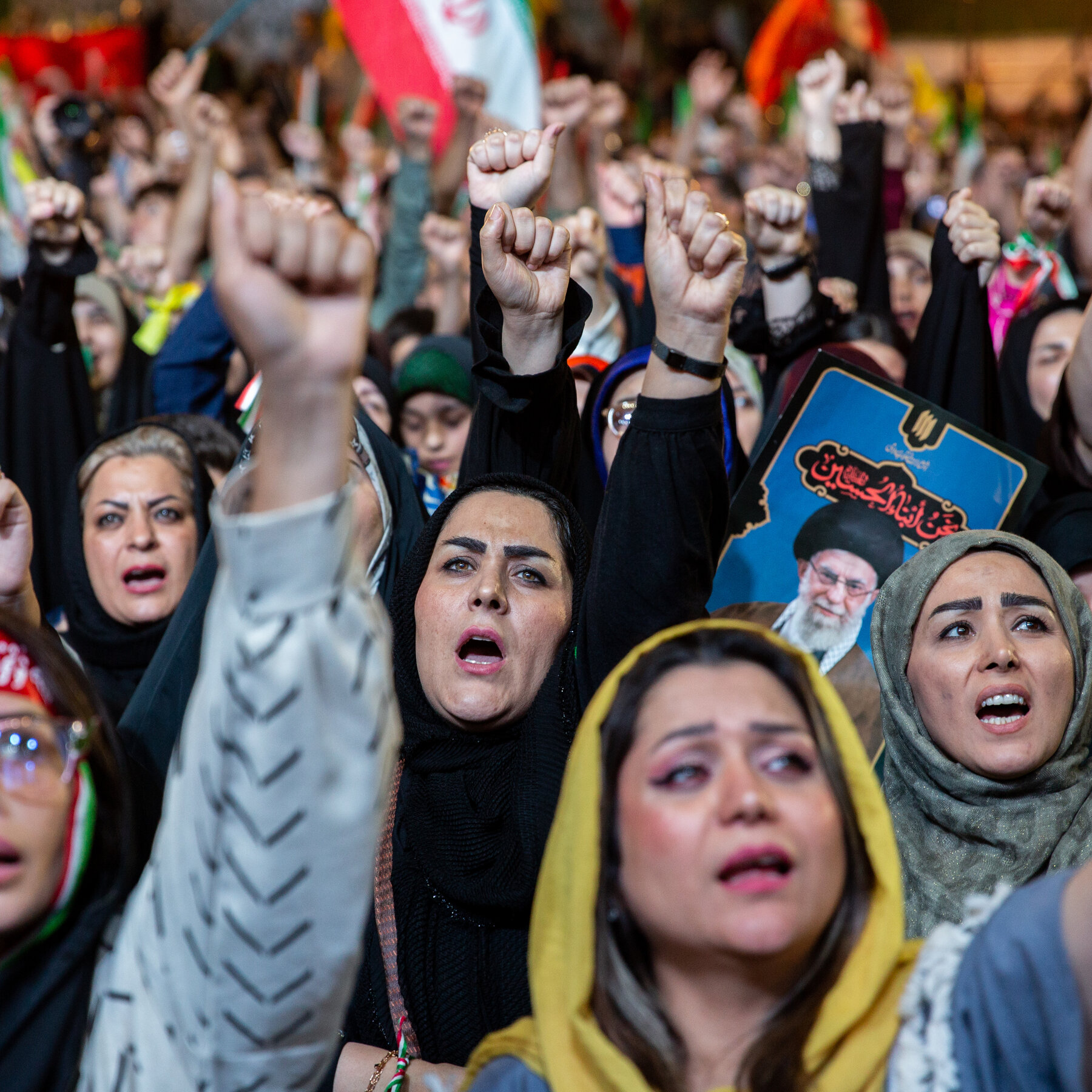
Iranian state media released footage on 7 May 2026 showing the country's army, navy, missile, and drone units launching strikes against three US destroyers in the Gulf. The release — confirmed by Iranian state channels cited across wire services — came hours after Tehran accused Washington of violating an active ceasefire by targeting Iranian vessels and carrying out coastal strikes. President Trump denied the violations in a post published to Truth Social at 22:39 UTC, stating that no damage was done to the destroyers while adding that Iranian attackers suffered significant losses. The exchange sent tremors through energy markets, where the Strait of Hormuz remains the single most consequential chokepoint for global oil flows.
The collision between ceasefire language and kinetic action presents a geopolitical puzzle that few observers can parse with confidence. What is clearer is the structural position: a naval blockade targeting Iranian ports is in place, Iran has pushed back with documented hardware, and the world's attention is fixed on whether the ceasefire framework holds or collapses into sustained confrontation. The immediate stakes are energy; the longer stakes are the architecture of a region already destabilised by two years of Israeli operations in Gaza and Lebanon, and a US administration whose tariff policy has generated its own domestic and international turbulence.
The Clash: What the Footage Shows
The footage released by Iranian state media depicts what the Islamic Republic's military describes as a coordinated strike involving cruise missiles and combat drones targeting US naval assets. The authenticity of the footage has not been independently verified, and the US military has not released visual evidence in response. That asymmetry matters: Iran produced documentation of its own account; the US produced a presidential social media post. The gap between the two information postures leaves the actual physical outcome of the encounter — whether any vessel was struck, whether any crew member was injured — unresolved in the public record.
What is established is that Iranian military units engaged US destroyers in the Gulf. What remains contested is the sequencing: Tehran says its forces responded to US violations; Washington says it was defending itself against Iranian aggression. Coverage routinely defers to the language of official spokespeople, and the result is that both framings circulate simultaneously in the information environment without a clear resolution mechanism. This is not a new problem in reporting on maritime incidents, but it is amplified when the incident occurs inside a chokepoint that carries roughly a fifth of global liquid hydrocarbon exports.
The ceasefire framework under which both sides are supposed to be operating adds a further layer of opacity. Ceasefires in adversarial relationships tend to specify trigger conditions and verification mechanisms; the version reportedly in place between the US and Iran appears to have neither party agreeing on what the agreement actually covers. Without a mutually acknowledged baseline, both sides can simultaneously claim compliance and accuse the other of violation — which is precisely what happened on 7 May.
Ceasefire versus Blockade: A Legal Contradiction
The blockade complicates the ceasefire framing in ways that are rarely addressed in the shorthand reporting of maritime incidents. A blockade is an act of war under international law. It is a coercive measure designed to prevent commerce from reaching an adversary's ports. By definition, it is not a peacetime enforcement operation — it is an instrument of armed conflict. When Trump simultaneously describes a ceasefire as being in effect and maintains a naval blockade targeting Iranian ports, the two positions are structurally incompatible. Tehran is not wrong to observe that the blockade constitutes an ongoing act of economic warfare, even if ceasefire language has been deployed in the diplomatic messaging.
The US trade court decision on 7 May to strike down Trump's 10% global tariffs adds an interesting cross-current. German Economy Minister Jochen Flasbarth had already attributed economic slowdown to what he called Washington's irresponsible trade offensive, per BBC reporting, before the tariff ruling landed. The court decision — a domestic legal constraint rather than a geopolitical concession — was treated by markets as secondary news, overwhelmed by the Hormuz developments. The pattern is telling: traders processed the tariff removal as a settled matter while treating the Hormuz confrontation as the live variable. That asymmetry reflects the reality that energy infrastructure and chokepoint access are, for the moment, more fragile than tariff architecture.
The German minister's framing — that Washington's economic posture is destabilising — captures a sentiment that has been building across European capitals since the tariff escalation began in February. The economic anxiety and the military anxiety are not unrelated. They form part of the same project, in the European read: a US administration willing to weaponise trade and geography simultaneously, with limited consultation with allies, and with consequences that fall unevenly on partners who are also expected to support bloc solidarity against Iran.
Hormuz: The Physics of the Oil Market
The Strait of Hormuz is not merely a metaphorical chokepoint. It is a narrow waterway between Oman and Iran through which approximately 20-25% of global oil trade passes on any given day. The International Energy Agency has estimated that any significant disruption to Hormuz transit would lift Brent crude by double-digit percentages within days. The market reaction on 7 May was muted compared to what that physics suggests — which tells us something about how traders are reading the current confrontation.
When Iran was integrated into global oil markets under the Joint Comprehensive Plan of Action, Hormuz functioned as a transit corridor underwritten by an internationally verified framework. The US withdrawal from the JCPOA in 2018, followed by the maximum pressure campaign, changed the calculus. Iran shifted toward bilateral trade arrangements denominated in non-dollar currencies, deepened energy partnerships with China, and rebuilt its military deterrence capability — including the anti-ship missiles and drone swarms now reportedly deployed in the Gulf. The blockade accelerates that trajectory rather than reversing it.
What is being tested in the current episode is not simply whether the ceasefire holds, but whether Hormuz can function as a chokepoint under a conditions of ongoing coercion. The US has positioned its naval assets to enforce the blockade; Iran has responded with hardware that those assets appear vulnerable to. The logic of coercion — apply enough pressure and the target capitulates — requires the coercing party to be able to sustain the pressure without unacceptable cost. The footage of Iranian anti-ship missiles targeting destroyers suggests the cost calculus has shifted.
The Polymarket Signal
Prediction markets currently assign a 44-55% probability to the blockade being lifted by the end of May, according to Polymarket data compiled from wire reports on 7 May. That spread is wide enough to be meaningful: it suggests genuine uncertainty about Trump's intentions, not merely the statistical noise of low-volume betting markets. Energy traders monitoring these signals appear to be reading the blockade as a negotiating instrument — a pressure tactic rather than a terminal objective. The lifting odds imply that the administration calculates some diplomatic value in appearing open to de-escalation.
That reading has limits. The ceasefire's stated survival is being treated by the administration as evidence of restraint, but the blockade continues regardless of ceasefire language. Iranian footage of strikes on US destroyers is being reframed as successful US defense, while the underlying question — whether Iran has the capability and willingness to impose meaningful costs on US naval assets — has been answered in the footage itself. The Polymarket odds capture the probability of a policy outcome; they do not capture the strategic logic driving the policy, which appears to contain contradictions that neither side has resolved.
For energy markets, the implications are asymmetric in time horizon. Short-term traders are discounting the confrontation as a political noise event — hence the muted response to both the ceasefire claims and the tariff ruling. Longer-horizon participants are watching the physical capacity of Hormuz to function as stable transit infrastructure under a sustained coercive regime. That is the structural question, and it is not answered by ceasefire declarations or presidential posts. It is answered by the behaviour of tankers, insurance underwriters, and flag-state operators making commercial decisions about whether to transit waters that have become contested.
This publication's coverage emphasises the structural incompatibility between ceasefire language and a sustained naval blockade — a distinction that wire reporting often collapses into false equivalence. Monexus treats the blockade as an ongoing act with material consequences for global energy infrastructure, not as a background condition equivalent to the military exchange it has generated.
Wire provenance
This editorial synthesis draws on the following public wire/social posts:
- https://t.me/wfwitness/2051880593814671365
- https://t.me/disclosetv/2051941050172989440