Trump Secures 72-Hour Ukraine Truce as Both Sides Report Continued Strikes
The US president secured a three-day truce covering the May 9–11 period, with both sides agreeing to exchange roughly 1,000 prisoners — though new strikes were reported within hours of the announcement.
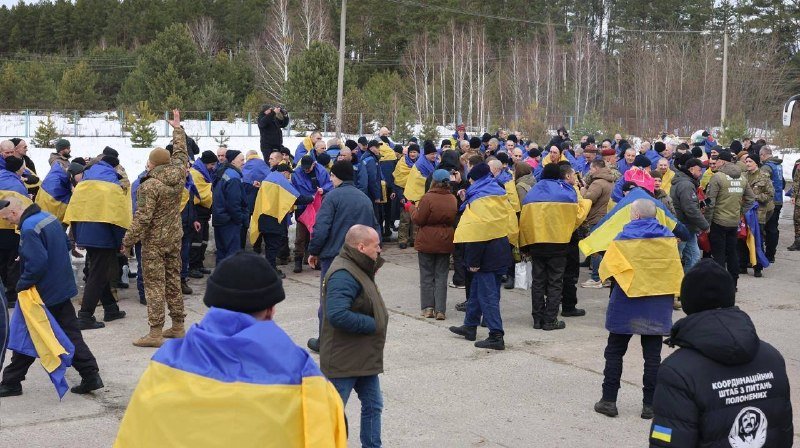
Lead
On the evening of May 8, 2026, US President Donald Trump announced a 72-hour ceasefire between Russia and Ukraine, effective from May 9 through May 11. Both warring parties had agreed to the pause in hostilities, and the deal includes a provision for the exchange of approximately 1,000 prisoners of war. Within hours of the announcement, however, both sides reported new strikes — underscoring the fragility of a framework that has yet to survive its first full day.
The Announcement and Its Immediate Context
The declaration came via social media and was picked up by wire services at approximately 18:10 UTC on May 8. According to Deutsche Welle, the ceasefire covers the period from May 9 to May 11 and will halt active combat operations between Russian forces and Ukrainian defenders. France 24 reported that the agreement also commits both sides to a prisoner exchange — a provision that had been discussed in earlier diplomatic rounds but had repeatedly stalled.
Al Jazeera framed the announcement as a potentially significant development, noting that it follows weeks of shuttle diplomacy by US envoys who had been pushing for a humanitarian pause ahead of the May 9 commemoration in Moscow. For Kyiv, the timing carries political weight: a ceasefire over that anniversary period would ease pressure on Ukrainian civilian morale while removing a propaganda inflection point for Moscow.
The terms as reported are limited. The ceasefire does not appear to include provisions for a permanent political settlement, a withdrawal of forces, or a freeze on the contested line of contact. It is, as of this writing, a humanitarian pause — valuable if it holds, but structurally disconnected from any negotiated endgame.
What Remains Unresolved
Both the Ukrainian and Russian sides issued statements acknowledging the ceasefire framework, but accounts differed on whether violations had already occurred at the moment the agreement was being announced. PressTV reported that both sides had continued strikes even as the announcement was being transmitted — a detail that cuts against the narrative of a cleanly negotiated deal.
Independent verification of strike activity on the evening of May 8 remains incomplete. Open-source intelligence groups monitoring the conflict have not yet published a consolidated report on violations, and neither the Ukrainian General Staff nor the Russian Ministry of Defence had issued formal battlefield updates as of 22:00 UTC. The information environment around this announcement is therefore contested: the ceasefire was declared, but the ground reality is murky.
The prisoner exchange, meanwhile, depends on mechanisms that have historically proven difficult to operationalise quickly. Previous exchange agreements between Kyiv and Moscow have collapsed over verification procedures, logistical access, and disagreements over who qualifies as a prisoner of war versus a civilian detainee. Whether 1,000 individuals on each side can be transferred within a 72-hour window remains an open question that the sources do not yet resolve.
The Structural Picture
This is the third significant ceasefire announcement of the war. The first, in the spring of 2022, collapsed within days as Russian forces redeployed for offensive operations. The second, brokered with more limited geographic scope in late 2023, held partially but frayed at its edges as both sides accused each other of artillery and drone violations. Each time, the announcement itself has been treated by the international media as a diplomatic victory — each time, the operational reality on the ground has complicated that framing.
What is different this time is the direct involvement of the US president as the primary guarantor. American mediation has not been neutral in effect: it shifts the political cost of violation onto a third party, creating an asymmetry that previous brokered arrangements — under Turkish or UN auspices — did not carry. Whether Trump can leverage that political exposure to enforce compliance is the central question the next 72 hours will answer.
The geopolitical timing is also notable. The ceasefire period coincides with European defence procurement deliberations underway in Brussels and Berlin, where multi-year spending commitments are being finalised. A sustained pause — or its failure — will likely shape how European capitals frame their long-term posture: as a reason to accelerate rearmament if the truce collapses, or as an opportunity to recalibrate defence budgets if it holds.
Stakes and What Comes Next
If the ceasefire holds through May 11, the next test will be whether the parties agree to an extension. Kyiv's public position, as reported across Ukrainian and international wire services, is that any pause must be followed by progress toward a lasting political solution — language that stops well short of endorsing further territorial concessions. Moscow's posture, as conveyed through state-adjacent channels, has framed the ceasefire as a gesture of goodwill ahead of Victory Day commemorations, a framing that suggests the Kremlin may be using the pause tactically rather than as a step toward de-escalation.
The prisoner exchange, if executed, would be the most concrete gain from this framework — and the most consequential for the families of those involved. Beyond that, the ceasefire buys time: time for humanitarian corridors to operate, time for diplomats to prepare the ground for the next round of talks, and time for both sides to resupply and reassess their positions.
What it does not do — and the sources do not claim it does — is resolve the underlying territorial, security, and sovereignty questions that have driven this conflict since 2022. The ceasefire is a pause, not a settlement. Whether it becomes a foundation for something more durable will depend on what happens after May 11.
The international community will be watching for violations, for evidence of either side using the pause to reposition forces, and for signals from Washington about whether the US is prepared to extend diplomatic engagement beyond the current window.
What the Sources Do Not Tell Us
The thread does not include confirmation of the ceasefire terms from the Ukrainian presidential office or the Russian Foreign Ministry as of the time of writing. Both sides have reportedly acknowledged the framework, but the specific language of any written agreement — and who holds the enforcement lever if violations occur — is not yet available in the sources reviewed. The prisoner exchange mechanism is described in broad terms but without detail on which organisation will oversee verification. Whether the International Committee of the Red Cross has been formally requested to participate is not specified in any of the reports reviewed.
The status of ongoing operations along the front lines, particularly in the contested areas of Donetsk, Zaporizhzhia, and Kharkiv oblasts, is also not yet confirmed through independent OSINT. The strikes reported in the hours after the announcement may represent residual combat that had already been initiated, or they may indicate that one or both parties have chosen to test the limits of the agreement. The available sources do not yet allow a determination.
Desk note: Wire coverage of the ceasefire has been relatively uniform, with most outlets leading with the announcement itself and supplementing with the prisoner exchange detail. Monexus has focused on the operational and structural dimensions — specifically, the absence of enforcement mechanisms and the contested ground reality — which received less emphasis in the initial wire framing.
Wire provenance
This editorial synthesis draws on the following public wire/social posts:
- https://twitter.com/Faytuks/status/2052813457636888976/photo/1tweet
- https://t.me/presstv/12345
- https://t.me/hromadske_ua/abcdef