Trump's Slimmed-Down Beijing Delegation Is the Message
The decision to bring fewer CEOs to the Xi summit tells you more than the trade talk agenda — it signals an administration that wants outcomes, not optics, in a negotiation Beijing has been better prepared for.
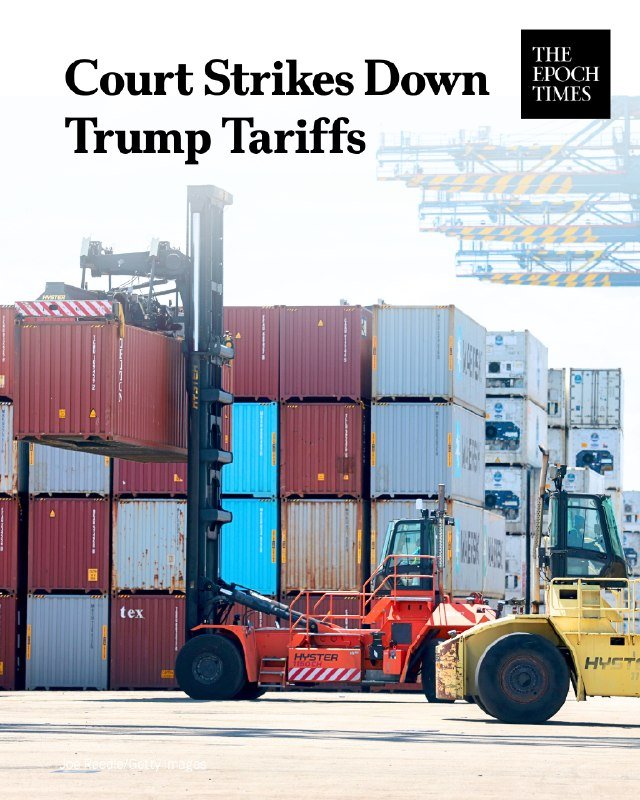
Donald Trump heads to Beijing with a smaller CEO entourage than his first administration deployed for comparable summits — and that紧缩 itself is a signal worth reading.
When Reuters reported on 8 May 2026 that the administration plans a leaner delegation, the framing treated it as a logistical detail. It is not. The composition of trade delegations is a diplomatic instrument. A sprawling CEO roster signals leverage — the implicit argument that American corporate interests have skin in the game and will suffer if deals collapse. A stripped-down group signals something different: that the principals want room to maneuver without being cornered by commercial expectations.
Beef, Tariffs, and What Producers Actually Need
The American beef industry is one of the clearest losers in the current tariff architecture. US beef producers have made no secret of what they want from the Xi summit: restored access to a market that American exporters once dominated. The Reuters reporting on 8 May 2026 lays out the ambition plainly — China is the menu item the industry has been waiting to order from.
But desire and leverage are not the same thing. A 39% probability on the Polymarket tariff-agreement market tells you something uncomfortable: the most likely outcome by end of May 2026 is no deal. That is not a confident baseline for an industry whose access depends on bilateral political temperature rather than WTO adjudication.
The Chinese counter-argument does not require elaborate construction. Beijing has spent the better part of a decade diversifying its protein supply chains — through Brazil, Argentina, Australia, and domestic consolidation. China does not need American beef the way American ranchers need the Chinese market. That asymmetry is structural, not temporary, and it shapes what Beijing considers acceptable in any negotiation.
The Delegate Calculus
The decision to compress the CEO delegation reflects a judgment — whether correct or not — that the Xi conversation is better handled with smaller tables. The history of US-China summits offers a cautionary record: large delegations generate合影 and generate commitments that the follow-through machinery cannot service. The 2017 and 2018 Trump-era deals produced enormous headline numbers and uneven implementation.
A leaner approach is not inherently superior, but it signals awareness of that track record. Whether Beijing reads it as pragmatism or as reduced commitment depends on assumptions about Chinese risk assessment that the available sourcing does not resolve.
What is clear is that the US side has calibrated for a negotiation where flexibility matters more than demonstration. That calibration suggests the administration believes it needs room to absorb Chinese counter-proposals rather than arrive with a pre-negotiated commercial wish list.
What Beijing Is Actually Managing
Chinese state media has not published its summit brief, and the available Reuters reporting does not include Chinese official commentary on the delegation size. But the structural context is not ambiguous.
Beijing enters this summit from a position it spent years preparing for — not a position of weakness, but one of deliberate buffer-building. The diversification of trading partners, the development of alternative financing architecture, the state-directed investment in agricultural self-sufficiency — these are not responses to American pressure; they predate the current tariff escalation and reflect a longer strategic horizon.
That preparation means Xi Jinping can afford to be patient in a way the US side arguably cannot. American agricultural exporters face cash-flow pressures that do not exist for a state-directed economy. The Polymarket market on the Hormuz blockade — currently pricing a 44% lift probability this month — adds a secondary pressure vector that Washington is simultaneously managing. Strait-of-Hormuz disruptions affect global energy markets; Beijing's energy security concerns are more acute in a tariff-war environment where US crude exports are also targeted.
The Market Is Telling You Something
Prediction markets are not prophecy. But the Polymarket probabilities on tariff agreement and Hormuz blockade together paint a picture of an administration navigating multiple concurrent escalations with limited capital to deploy on any single front.
The 39% tariff agreement probability is not a confident bet. The 44% Hormuz lift is a coin-flip with geopolitical stakes attached to it. Neither suggests an imminent normalization of the trade relationship.
The smaller delegation may be the most honest signal the administration has sent: this is a working meeting, not a performance. Whether that restraint produces results depends entirely on what Beijing decides it wants from the encounter — and the evidence suggests Chinese decision-makers have not yet concluded that a deal serves their interests more than continued pressure.
The beef producers waiting for China access are watching the same math. They have every reason to be patient.
This article was filed from Washington. The Reuters coverage of the smaller delegation approach was the primary sourcing; Polymarket probability markets were cited as stated indicators of market consensus rather than as predictive certainties.
Wire provenance
This editorial synthesis draws on the following public wire/social posts:
- http://reut.rs/4dvXQUL
- http://reut.rs/4uBvK08