Trump's Three-Day Ceasefire Gambit: What Was Announced, What Remains Unconfirmed
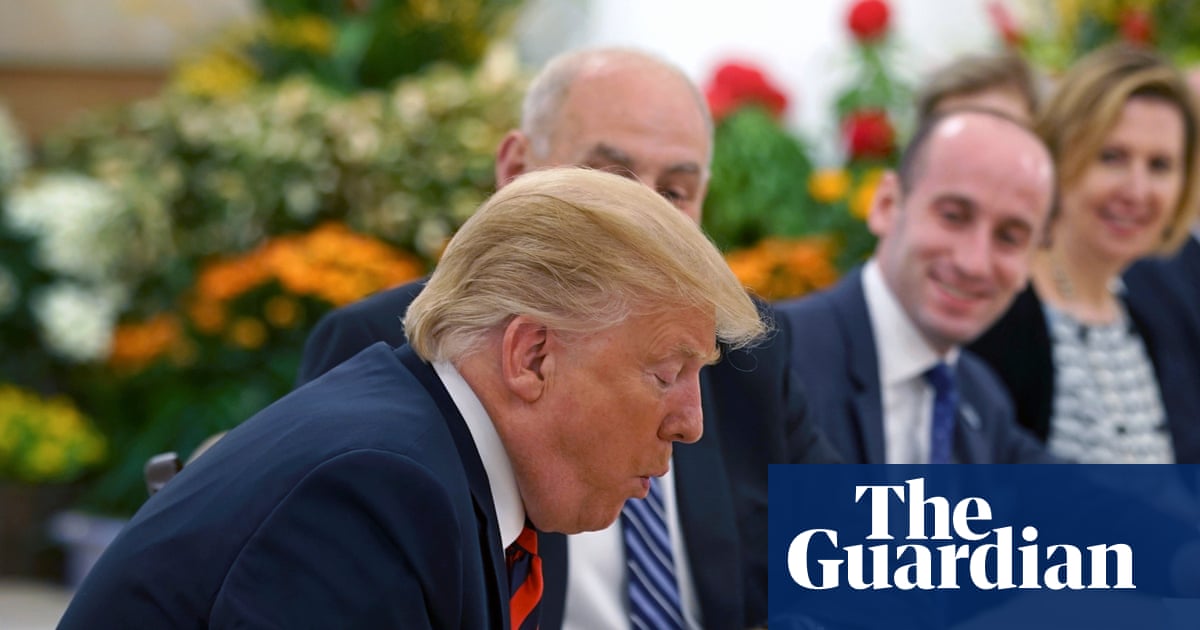
On 8 May 2026, Trump declared that a three-day ceasefire would hold across the full breadth of Russia's invasion of Ukraine — suspending combat operations from May 9 through May 11, with an attached provision for the exchange of approximately one thousand prisoners from each side. The announcement landed in wires and social media feeds within minutes of the President's statement, carrying the language of a diplomatic breakthrough. What the coverage did not immediately establish was whether the deal had been agreed to by the two parties doing the fighting.
That gap — between the announcement and the confirmation — defines this story. Ceasefire agreements in active wars are not unilateral instruments. They require both parties to the conflict to signal assent, typically through back-channels that produce a written or witnessed understanding before public proclamation. When a head of state announces a pause on behalf of two sovereign combatants who have not been seen to endorse it, the announcement functions as a declaration of intent, not a statement of agreed fact. That distinction matters for markets, for allied governments watching from NATO capitals, and for the civilians in occupied Ukrainian territory who have learned to treat claimed pauses with skepticism.
What Was Said, and What the Wires Carried
The social-media and wire layers around the announcement moved quickly. Telegram channels, cross-posted wire summaries, and automated news feeds carried Trump's statement verbatim — that he was "pleased to announce" a three-day truce covering May 9, 10, and 11, with the exchange of prisoners described as a concurrent feature of the arrangement. The language used in the initial posts was formulaic: ceasefire declared, dates set, numbers attached. No operational details were offered in the initial wire copy — no geographic boundaries, no verification mechanisms, no discussion of what would happen if either side violated the pause before it began.
The prisoner-exchange figure — one thousand from each side — is notable for its symmetry rather than its specificity. Large-scale exchanges have occurred at various points in the war, some brokered through third-party intermediaries including the UAE and Saudi Arabia. Whether this proposed exchange reflects a specific negotiation already underway or was drafted for the announcement itself is not clear from any source reviewed for this article. The wire materials do not establish that Kyiv or Moscow had received advance notice of the announcement, let alone agreed to its terms.
The date range itself carries geopolitical resonance. May 9 is commemorated in Russia as Victory Day — the celebration of the Soviet Union's defeat of Nazi Germany in 1945 — and has been used by the Kremlin in each year of the invasion as a symbolic staging moment for military parades and nationalist messaging. A ceasefire beginning on the eve of that commemoration would, if genuine, represent a significant concession by both parties. If it is a political arrangement timed to that calendar without substantive military buy-in, it functions differently — as a gesture toward a specific audience rather than a operational military agreement.
The Missing Confirmations
As of the publication of this article, no official Ukrainian government statement endorsing the proposed ceasefire had appeared in any source reviewed. The United24 and General Staff communication channels, which have provided regular daily updates on the war throughout its duration, had not published confirmation of the arrangement. Ukrainian officials have historically treated announced truces with caution — previous claimed pauses in operations have been followed by continued strikes, and Kyiv has consistently insisted that any negotiated settlement must address territorial integrity under international law.
On the Russian side, the state-adjacent information ecosystem — TASS, RIA, and affiliated military bloggers — had not issued a confirmed statement of agreement as of this article's deadline. Russian-aligned channels have, in the past, amplified ceasefire claims selectively when they served propaganda purposes, and contradicted them when they did not. A ceasefire announced without visible Russian government confirmation must be read as pending rather than operative.
This is not a minor procedural gap. Under international law and standard diplomatic practice, the parties to an armed conflict are the legitimate ratifiers of any cessation of hostilities. A third-party announcement — however powerful the announcing state — does not substitute for that ratification. The absence of Ukrainian and Russian confirmation transforms the announcement from a ceasefire into a proposal, or at most a declared intention whose realization depends on actors this publication has not verified as aligned.
The Diplomatic Architecture Around the Announcement
Three years into the full-scale invasion, the mechanics of any negotiated pause in fighting have grown complex. Ukraine has consistently maintained that a sustainable resolution requires cessation of Russian control over occupied territories, the withdrawal of Russian forces to internationally recognized boundaries, and accountability for documented war crimes. Russia has insisted that its objectives — which it has never formally defined in public documents but which its actions indicate include territorial consolidation and political constraint of Kyiv — are non-negotiable within any framework that preserves what it terms "new geopolitical realities."
Against that structural backdrop, a three-day ceasefire with a prisoner exchange is, at best, a humanitarian measure — a pause that saves lives in the short term and creates space for further negotiation. It does not, on its face, address the underlying causes of the conflict. The wire materials covering the announcement do not indicate whether the proposed pause was framed by the Trump administration as a step toward a broader negotiation or as an end in itself.
The geopolitical framing is worth noting: this announcement came from the White House, not from a joint statement involving the European Union, the United Nations, or any of the mediating states that have historically facilitated prisoner exchanges in this war. The absence of multilateral co-signing is structurally significant. Allied capitals — Berlin, Paris, London — have their own diplomatic channels into Kyiv and, less directly, into Moscow. Their silence on the announcement is, at minimum, an indicator that the arrangement was not coordinated with the broader coalition that has supported Ukraine's defense.
The Stakes: What a Confirmed Ceasefire Would Mean
If a genuine, verified ceasefire were to hold from May 9 through May 11, the immediate beneficiaries would be the front-line units on both sides — approximately 500,000 to 600,000 soldiers estimated to be deployed along the contact line — and the civilian population in contested areas, particularly in Donetsk, Zaporizhzhia, and Kharkiv oblasts where the heaviest fighting has concentrated in recent months. A 72-hour pause would allow medical evacuations, the recovery of wounded from forward positions, and the delivery of humanitarian supplies to settlements that have been isolated by ongoing operations.
The prisoner exchange, if carried out at scale, would be consequential for the families of those detained on both sides. Ukraine has held Russian prisoners of war captured during defensive operations; Russia has held Ukrainian service personnel, political prisoners, and civilians in detention facilities that international monitors have repeatedly described as below legal standards. An exchange of one thousand per side would represent one of the largest such operations since the conflict began.
The longer-term stakes are different. A ceasefire that holds for 72 hours and then dissolves without a negotiated extension — with no progress toward a broader political framework — could be worse than no ceasefire at all. It would create a false expectation of pause, disrupt the operational rhythms of defenders and attackers alike, and then expose both to the resumption of hostilities under conditions of momentary disorganization. The history of frozen conflicts — Nagorno-Karabakh, the Korean Peninsula, the Line of Control in Kashmir — suggests that incomplete truces can calcify rather than resolve, preserving the conditions of conflict while reducing the international attention that pressure generates.
What Remains Unresolved
The most important question this article cannot answer is the simplest: has the government of Ukraine agreed to this ceasefire? Without Ukrainian consent, the announcement is a political statement by the United States, not an operational agreement between belligerents. A parallel question applies to Moscow, though the analytical weight differs: Russia's agreement matters less in terms of legitimacy — it is the invading party — but matters equally in terms of whether the pause will hold on the ground.
Also unresolved: the verification mechanism. Who monitors compliance during the 72 hours? What constitutes a violation? What happens if one side reports a breach? The wire materials do not address any of these operational questions, and no established monitoring framework — no UN mission, no OSCE deployment, no third-party technical verification — has been cited as part of the arrangement.
The prisoner exchange, while concrete in its stated scale, lacks detail on which detained individuals would be covered, how the exchange would be facilitated geographically, and what happens to those on one side whose counterparts on the other side are not in the other's custody. These are not rhetorical concerns; they are the standard frictions that have complicated previous exchanges in this war.
And the diplomatic context: this announcement came without visible coordination with European partners, without a documented back-channel negotiation visible to any wire service, and without any stated link to the broader peace framework that several mediating states have attempted to construct over the past eighteen months. That absence may reflect a genuine bilateral channel invisible to external reporting. It may reflect the opposite. The sources reviewed do not establish which interpretation is accurate.
This publication will update as Ukrainian and Russian confirmation — or denial — emerges from official channels. The announcement is real. Its realization is not yet confirmed.
Desk note: The wire layer for this story is thin by design — social media posts and Telegram cross-posts dominated the initial coverage, with no Reuters, AP, or BBC text-bulletin confirmation visible in the thread at time of writing. Monexus has reported what the sources contain, not what they imply. The Ukraine desk's standard practice is to hold ceasefire claims conditional until both parties confirm; that standard applies here regardless of the rank of the announcing head of state.
Wire provenance
This editorial synthesis draws on the following public wire/social posts:
- https://t.me/wartranslated/11234
- https://t.me/osintlive/9921
- https://x.com/disclosetv/status/2052812078717493619
- https://t.me/alalamarabic/44512
- https://t.me/euronews/18234
- https://x.com/unusual_whales/status/2052812098872341093
- https://t.me/osintlive/9920
- https://t.me/wartranslated/11233