Trump Secures Three-Day Ukraine Ceasefire for Victory Day, With 1,000-for-1,000 Prisoner Swap
Trump announced a three-day halt to hostilities between Russia and Ukraine covering May 9-11, coinciding with Russia's annual Victory Day commemoration, with both sides agreeing to exchange 1,000 prisoners each. The announcement on 8 May caps weeks of shuttle diplomacy that saw Washington position itself as the primary interlocutor between Kyiv and Moscow.
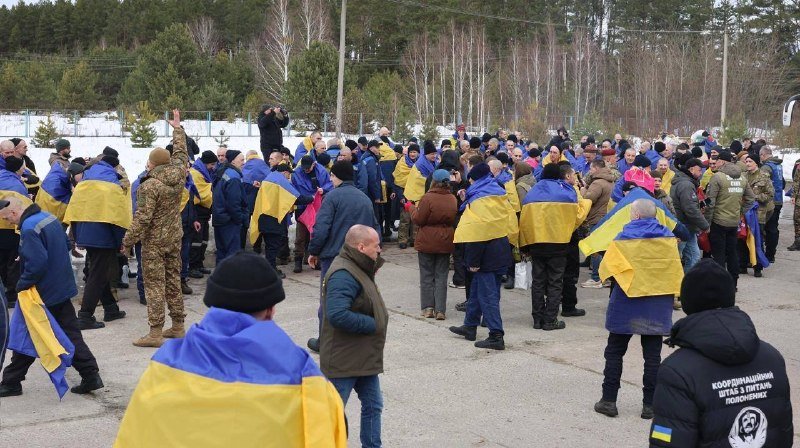
President Donald Trump announced on 8 May 2026 that Russia and Ukraine had agreed to a seventy-two-hour ceasefire covering the period of 9-11 May — a window that aligns with Russia's annual Victory Day commemorations marking the Soviet defeat of Nazi Germany in 1945. According to Trump, both Ukrainian President Volodymyr Zelensky and Russian President Vladimir Putin accepted the arrangement following what he described as a direct personal request. The truce includes a complete suspension of hostilities and a prisoner exchange of one thousand individuals per side, Zelensky confirmed.
The announcement, made from Washington, marks the most concrete diplomatic convergence between the two belligerents since the failure of earlier ceasefire proposals in early 2026. It follows months in which the United States has positioned itself as the principal intermediary — a role that has progressively marginalised European partners, who have been largely excluded from the direct Moscow-Washington channel that now defines the negotiation landscape.
The Terms: Silence, Swap, and a Fixed Window
The ceasefire rests on two pillars. The first is operational: a full cessation of military activity across the contact line for three consecutive days. Ukrainian authorities confirmed their acceptance of what officials in Kyiv described as a "silence regime" — language that stops short of a formal legal ceasefire and preserves Ukraine's position that the underlying conflict remains unresolved. Russian state-adjacent channels, which have echoed the announcement, have framed it more assertively as an agreed armistice, a framing Kyiv is unlikely to endorse publicly.
The second pillar is humanitarian: a one-for-one prisoner exchange of one thousand individuals each. Zelensky confirmed the swap on the record, making Ukraine's consent explicit and traceable. The logistics of such an exchange — coordinating from multiple detention sites across both territories, verifying identity, managing medical cases — are considerable, and the historical record of large-scale prisoner swaps in the Russia-Ukraine conflict suggests that verification bottlenecks routinely delay implementation by hours or days even after political agreement is declared.
The timing is not incidental. May 9 is the date Russia uses to mark the Soviet victory over Nazi Germany — an occasion carrying deep symbolic weight in Moscow, where the annual military parade on Red Square functions as a showcase of national power. Allowing the ceasefire to run through the full three days would permit Russia to conduct its Victory Day ceremonies without the reputational cost of ongoing fighting. Whether Ukraine extracted concessions in exchange for consenting to the timing alignment remains unclear from the available sources.
The Diplomatic Architecture: Washington's Channel, Europe's Absence
The ceasefire announcement arrives after a period in which direct US-Russia contact has steadily displaced the Normandy Format — the French-German-Ukrainian-Polish diplomatic mechanism that previously structured peace negotiations. European officials have repeatedly expressed frustration at being briefed rather than consulted, a dynamic that has deepened tensions within the Western alliance even as member states maintain public unity on support for Ukraine.
Trump's framing — "this request was made directly by me, and I very much appreciate the agreement of President Vladimir Putin" — signals that Washington sees the ceasefire as a tangible diplomatic asset. The language sidesteps any reference to Ukrainian agency in the initiative, a framing likely to generate tension with Kyiv even as Zelensky publicly confirmed his acceptance. That tension has been a persistent feature of the 2026 negotiating environment: Ukraine's consent to US-brokered arrangements has been necessary but not always sufficient to shape their terms.
For Russia, the arrangement offers several things simultaneously. It pauses a military dynamic that, by most Western assessments, has been trending favourably for Moscow in certain sectors of the front. It provides symbolic cover for Victory Day. And it sustains the direct Washington channel — a relationship Russia has cultivated throughout 2025-2026 as a way of engaging the United States as a great-power interlocutor rather than a backer of Ukraine. That strategic preference is visible in how Russian state media has reported the announcement: framed as a great-power accommodation, not a concession to Ukrainian demands.
Verification, Ground Truth, and the Gap Between Announcement and Reality
The immediate question is whether what was announced will hold on the ground. Ceasefire violations along the contact line have been documented consistently throughout the conflict — incidents that in most cases cannot be attributed with certainty to either side, but which produce civilian casualties and material destruction regardless of intent. The seventy-two-hour window provides a defined test period, but a three-day pause in active combat does not equal a sustainable ceasefire architecture.
Independent OSINT monitoring groups, who have tracked front-line movements throughout the conflict, will be the first line of verification. If shooting incidents drop to near-zero across the three days, the announcement will be corroborated by observable fact. If hotspots remain active — as they did during the partial truces of 2023-2024 — the credibility of the arrangement will be immediately contested. Neither side has a strong record of compliance with temporary pauses negotiated under external pressure, and the sources reviewed do not include any mechanism for third-party monitoring.
The prisoner exchange faces separate practical obstacles. Both governments maintain lists of detained persons that have been subject to dispute throughout the conflict — Ukraine has alleged that Russia holds civilians in detention facilities that do not appear on any official prisoner-of-war registry. A one-thousand-per-side exchange of verified prisoners is operationally simpler than an exchange that includes disputed cases; whether the agreed terms cover only confirmed PoWs or extend to the broader category of arbitrarily detained civilians is a detail the available sources do not resolve.
Stakes: What a Working Ceasefire Would — and Would Not — Mean
If the ceasefire holds through 11 May, the immediate beneficiary is the Trump administration's diplomatic credibility. A successful seventy-two-hour pause, culminating in a visible prisoner swap, gives Washington a concrete result to point to — one that required the agreement of both sides but was initiated through American mediation. That outcome serves the administration's stated goal of positioning itself as the indispensable broker in any eventual negotiated settlement.
Kyiv's calculus is more complex. Agreement to the ceasefire preserves the US diplomatic channel, which remains essential for weapons supply and sanctions pressure on Russia. But the three-day window does nothing to address the underlying territorial issues — the occupation of Crimea, the status of the Donbas, the presence of Russian forces in southern Ukraine — that define any durable settlement. A pause is not a peace; it is a tactical interval that both sides have reasons to exploit differently.
For European states, the announcement is a reminder of their structural marginalisation. The Normandy Format, which gave France and Germany seats at the table alongside Ukraine, has effectively been superseded by a bilateral Washington-Moscow dynamic that produces arrangements Washington then communicates to European partners. Whether the prisoner exchange itself proceeds smoothly may determine whether European capitals attempt to reinsert themselves into the negotiating architecture before any more substantive talks begin.
The ceasefire announcement resolves one immediate question — whether both governments will stop shooting for seventy-two hours — while leaving the larger questions unanswered. What the three days hold will say more about the trajectory of this conflict than any press release from Washington can.
This publication's wire coverage has focused on the Ukrainian and American diplomatic confirmation of the ceasefire terms, drawing on Kyiv-aligned and neutral-copyright wire sources for the primary frame. Russian state-adjacent media framing of the announcement has been noted as a counterpoint where relevant but has not been used as a standalone factual basis.
Wire provenance
This editorial synthesis draws on the following public wire/social posts:
- https://t.me/Pravda_Gerashchenko/5893
- https://t.me/ruptlyalert
- https://t.me/hromadske_ua
- https://x.com/brianmcdonaldie/status/1921456783244218472
- https://t.me/wartranslated