UAE Intercepts Missiles and Drones as Air Defense Becomes Central to Middle Eastern Power
The UAE activated its air defense system on 8 May 2026, responding to incoming missiles and drones — an incident that underscores how layered interception has reshaped the strategic calculus across the wider Middle East.
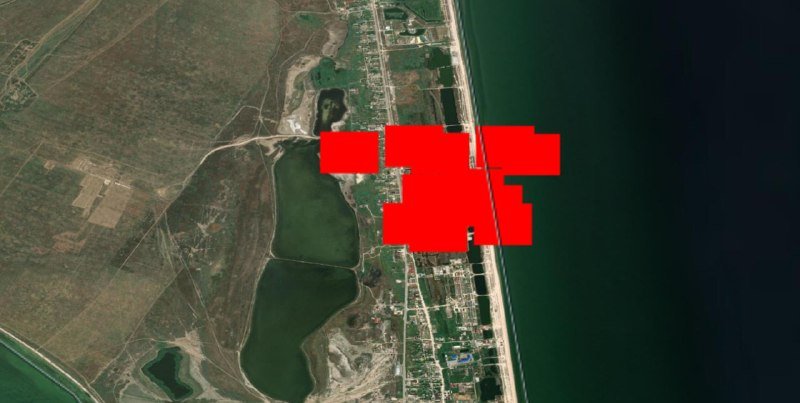
The United Arab Emirates activated its air defense system on the morning of 8 May 2026, responding to incoming missiles and drones that struck or approached UAE territory. The Ministry of Defense in Abu Dhabi confirmed impacts and said the country's defense network was actively engaged. The incident lasted several hours, and authorities had not issued a full public assessment of damage or casualties as of late morning UTC. The activation marks one of the more significant short-range air defense episodes the Gulf state has faced in recent years, unfolding amid a broader escalation in regional strikes.
The attack on the UAE sits within a pattern of cross-regional pressure that has intensified over the past twelve months. States with advanced air defense architectures — the UAE, Saudi Arabia, Israel — have all faced testing volleys that probe the margins of their interception grids. What is new is not the threats themselves but their frequency and their longer reach, a product of conflict diffusion from multiple zones — Yemen, Syria, and the wider red Sea corridor — spilling outward. The UAE's response, while effective in the immediate instance, points to a structural vulnerability that no interception record can fully resolve: the gap between a successful shoot-down and the political decision to authorize it in the first place.
The Incident in Context
The UAE Ministry of Defense's confirmation on the morning of 8 May was brief but substantive — impacts confirmed, defense system engaged, situation under monitoring. That language, standard in official Gulf statements, conveys restraint while acknowledging a genuine threat. Air defense systems across the Gulf operate on a high-alert footing that is rarely made public, and their activation at ministerial level signals that the incoming threat crossed a threshold beyond what routine patrols handle. What remains less clear is whether the attack originated from a single launch point or was coordinated from multiple vectors — a detail that would substantially affect how the incident is classified and how Abu Dhabi calibrates its response.
The timing is notable. Russia separately claimed on the same day that its air defenses had intercepted 264 Ukrainian drones in a single overnight operation — a figure that, whether or not it holds under scrutiny, signals the current scale of the drone threat in that conflict and the resource demands it places on air defense networks. That parallel matters structurally: states across two separate theatres are simultaneously managing high-volume drone incursions against sophisticated layered defenses. The capability exists; the question is stamina, supply chains, and the political will to sustain that posture over time.
Why Air Defense Networks Are Now the Core Infrastructure
The UAE's interception on 8 May reflects a broader reality across the Middle East: air defense has become the primary determinant of state security in a way it was not a decade ago. When missile and drone volleys can arrive from several hundred kilometers away, the architecture protecting a capital — its interceptors, its radar grids, its integration with allied early-warning networks — effectively becomes the state's strategic backbone. This is not a comfortable position. It means that a state's security is partially in the hands of systems manufacturers, intelligence-sharing agreements, and satellite feeds that may or may not survive a wider conflict.
The UAE's defense system has been tested before, but each engagement produces data — on response times, on interception rates under real conditions, on gaps in coverage — that is exploited by whoever launches the next volley. What Gulf states face is an adversary learning curve as sophisticated as their own defense upgrades. The Houthis, in particular, have demonstrated an ability to adapt strike profiles in response to known interception patterns, shifting to lower, slower, or more dispersed approaches that stress different layers of the grid. Whether or not the 8 May attack involved Houthi assets, that organizational logic applies to any actor in the region managing similar strike capabilities.
The Structural Shift: From Deterrence to Managed Exposure
What the 8 May activation reveals, stripped of the immediate tactical detail, is a structural shift in how Middle Eastern states manage their exposure to missile and drone threat. The dominant logic for two decades was deterrence — preventing an attack by making its consequences unacceptable. The current logic is managed exposure: accepting that attacks will come, investing heavily in their interception, and treating every successful shoot-down as evidence the system works. This is a more sophisticated posture in some respects, but it also normalizes ongoing contact with hostile systems in a way that carries its own political and psychological costs.
The political economy of this is significant. The UAE's air defense posture is embedded in a wider architecture that includes US and allied intelligence sharing, Patriot battery deployments, and THAAD systems that form a layered shield. Maintaining that posture is expensive and politically binding — it ties Abu Dhabi to alliance frameworks in ways that constrain independent foreign policy options even as it provides security. The more the UAE relies on that shield, the more central those alliance structures become to its survival, which has consequences for how it navigates relationships with China, Russia, or any actor that might prefer the UAE less entangled in Western security architecture.
Stakes: What a Sustained Campaign Would Mean
The immediate stake is tactical — whether the UAE can maintain interception rates that keep civilian infrastructure and personnel safe over an extended engagement. The broader stake is political. Each activation of air defenses, each intercepted volley, tightens the UAE's alignment with the security architectures that made those systems possible. That alignment is strategically useful for Abu Dhabi in the short term — it deters overt state-level aggression — but it also puts the UAE on the front line of whatever larger conflict those architectures might be drawn into.
What Abu Dhabi appears to have calculated is that the benefits of active defense outweigh the risks of entrapment. The 8 May incident will test whether that calculation holds. If the attacks continue and escalate, the pressure on the UAE to respond beyond the interception posture — to take offensive action against launch sites, to push for deeper allied involvement, or to accept a higher baseline of risk — will intensify. The defense system worked. The harder question is what comes next.
This publication covered the 8 May UAE air defense activation through Tasnim News English and OSINT-defender channels, with direct confirmation from the UAE Ministry of Defense. The dominant Western wire framing emphasizes the defensive success; the structural analysis here prioritizes what the activation reveals about the new architecture of Middle Eastern security and its political costs for Gulf states navigating between alliance commitments and regional autonomy.
Wire provenance
This editorial synthesis draws on the following public wire/social posts:
- https://t.me/osintlive/12439
- https://t.me/JahanTasnim/9842
- https://t.me/tasnimnews_en/18347