Ukraine's Victory Day Decree and the Language of Symbolic Warfare
Kyiv's formal permission for a Moscow parade, framed as a bureaucratic joke, reveals how both sides weaponise ceremony and paperwork in a war where formal sovereignty is itself the contested terrain.
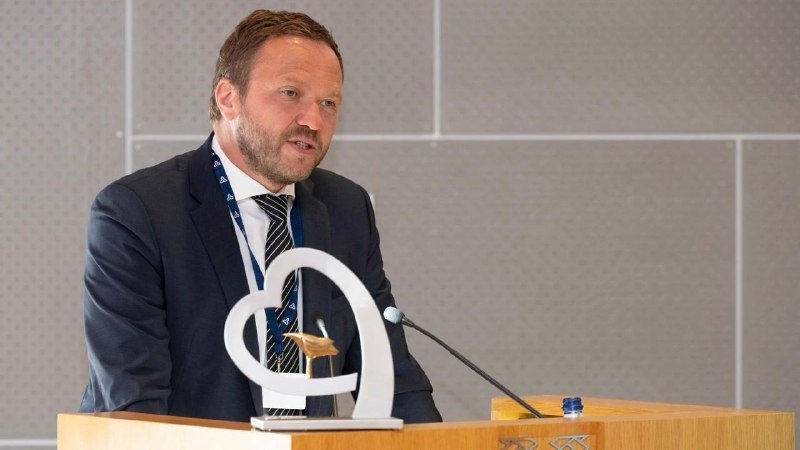
On 8 May 2026, Ukraine's President Volodymyr Zelensky issued an official decree that one Russian state-adjacent commentator quickly labelled the "trolling of the century." The decree grants formal Ukrainian government permission for a Victory Day parade to be held in Moscow — a city under Russian sovereignty, defended by Russian air defences, administered by Russian municipal authorities, and which has not been under any form of Ukrainian jurisdiction since the 1991 dissolution of the Soviet Union. The decree is, in every practical sense, meaningless. That is precisely the point.
The document, reported by Unianet and corroborated by Nexta Live on the same day, explicitly excludes Red Square from the target set for Ukrainian weapons "during the parade" — a formulation so formally precise that it reads less like a military directive and more like a legal instrument designed to be read aloud in a press conference. Kremlin spokesman Dmitry Peskov fielded questions on the decree later that day. "Of course, we don't need their permission," he told reporters, "but it's probably a pity for the one" — an ambiguous formulation that could be read as pity for Zelensky himself, or as a grudging acknowledgment that the gesture had, at minimum, forced Moscow onto the defensive in its own media environment. Pro-Kremlin channels responded by publishing footage of the Verkhovna Rada building in Kyiv captured by Russian Gerbera long-range reconnaissance drones — a reminder that however playful the diplomatic choreography, the physical surveillance architecture of this war remains fully operational.
The Bureaucracy of Contempt
Victory Day — 9 May — remains the most symbolically charged date in the Russian and Soviet ceremonial calendar. It commemorates the defeat of Nazi Germany in 1945, and in contemporary Russian domestic politics it functions as a major patriotism-inoculation event: military parades in Moscow and regional capitals, veterans honoured, military equipment displayed. In the years since the full-scale invasion of February 2022, these ceremonies have also carried an explicit propaganda load — the Victory Day frame has been used repeatedly to contextualise the war in Ukraine as a continuation of the 1941-1945 struggle against fascism. By issuing a formal decree complete with legal language, Kyiv has inserted a second layer of meaning into an event Moscow intended to control narratively. Instead of a clean patriotic ritual, the parade now exists in a document that formally acknowledges Ukrainian sovereignty over a territory Moscow claims — and which Kyiv's own laws still claim as occupied Ukrainian territory. The decree transforms a Russian victory celebration into an implicit reiteration of Ukraine's legal position.
The exclusion of Red Square from Ukrainian weapons-targeting plans during the parade is the most arresting detail. It is not a concession; it is a formalisation of the obvious. No Ukrainian weapons system currently in service can reach Red Square from Ukrainian-controlled territory. By publishing the exclusion as a formal clause, Ukraine's team transformed a strategic impossibility into a legal act — one that Moscow must now either ignore, respond to, or absorb into its own propaganda. Each response risks acknowledging the frame Kyiv has imposed.
The Russian Response and Its Limits
Peskov's comment — "we don't need their permission" — is the only available Kremlin response, and it is technically correct. Russia does not need Ukrainian permission to hold a parade in Moscow. But the fact that Moscow felt compelled to address the decree at all, at the daily press briefing, suggests the gesture landed. In wartime information operations, the obligation to respond is itself a signal of impact. If a piece of Ukrainian communication is deemed不值得回应 — not worth responding to — it disappears. The fact that Peskov addressed the decree at the podium means Kremlin communications judged it worth engaging.
The "probably a pity for the one" formulation is harder to parse. It could be a dismissive aside, the Kremlin spokesman suggesting Zelensky has demeaned himself. It could be a poorly constructed attempt at mockery that fell flat. It could be a deliberate ambiguity — the kind of language designed to sound dismissive while actually confirming the decree's existence. In all three readings, Moscow is on the back foot. The response exists; the decree it responds to has already done its work.
The publication of Gerbera drone footage of the Verkhovna Rada — the Ukrainian parliament building — by pro-Kremlin channels on the same day is best read as a counter-signal. The message: we see you, we watch you, the formal documents you publish in Kyiv are happening inside a building we can monitor at will. The timing — simultaneous with the Victory Day decree coverage — suggests a deliberate attempt to interrupt the comedic register with a reminder of physical threat. Both signals cannot be fully reconciled: if Russia truly does not need Ukrainian permission for its parade, the surveillance footage is an overreaction. If the surveillance footage is a proportionate response to a real informational threat, then Moscow does, at some level, care about the frame Kyiv is building.
Symbolic Warfare and the Formalisation of Nothing
This episode sits inside a broader pattern in which both sides in the Russia-Ukraine conflict have increasingly weaponised formal documentation. Ukrainian decrees, Russian legislative instruments, legal arguments before international courts — all function not primarily as operative documents but as communicative acts designed for third-party audiences. The Victory Day decree does not change military facts. It does not alter the legal status of occupied territories. It does not impose obligations on any party with the capacity to act. What it does do is assert, in a form that can be screenshotted and translated, that Kyiv considers itself competent to issue permits for activities on Russian sovereign territory — a formulation that, within Ukraine's own legal order, follows logically from the position that occupied territories remain Ukrainian under Ukrainian law.
This is not a new technique. Throughout the war, Ukraine has used formal legal instruments to score communicative points that operational reality could not deliver. The decree pattern — technically valid within Ukrainian law, operationally meaningless, formally irrefutable — is a characteristic instrument of what analysts have variously described as legal warfare or diplomatic trolling. Its effectiveness depends on the target audience's willingness to engage with it. Moscow's decision to engage — by having Peskov address it at the daily briefing — suggests the audience is engaged whether it wants to be or not.
What Remains Unverified
The sources reviewed for this article do not include the full text of the decree itself; we have not independently confirmed the precise legal wording used in the clause excluding Red Square from Ukrainian weapons targeting. The characterisation of the decree as a "trolling" instrument is consistent across the Telegram-source reporting but has not been confirmed via Ukrainian presidential press service releases or official legislative databases as of the time of publication. The Peskov quote is drawn from the OSINT Live thread's summary; the full transcript of the Kremlin press briefing on 8 May 2026 has not been independently reviewed. The Gerbera drone footage is described as published by pro-Kremlin channels but the exact source channel, publication time, and metadata have not been individually verified. Readers should treat the specific legal language and the precise Peskov formulation as reported rather than confirmed until such documentation surfaces in accessible primary records.
Stakes
The practical stakes of the decree are zero. Moscow will hold its parade; Kyiv will issue its protests; neither military reality nor legal reality changes as a result. But the symbolic stakes are more interesting. Victory Day is one of the primary vehicles through which the Russian state constructs its version of the war — as a patriotic defence, as a continuation of the Great Patriotic War, as a fight against a NATO-embedded neo-Nazi regime. Anything that disrupts that narrative costs something. The decree does not disrupt it in any material way, but it introduces a note of absurdity into an event designed to project absolute seriousness. In a conflict where both sides are fighting partly through documentation, ceremony, and formal assertion, that note of absurdity is not nothing. Moscow has been forced to respond to a piece of Ukrainian paperwork. The parade will happen. But for one afternoon, the frame belonged to Kyiv.
This publication covered the decree as a symbolic-instrument story rather than as a military or diplomatic development — the Telegram-sourced reporting described it primarily as a trolling gesture, and the editorial weight reflects that characterisation. Western wire services framed the same event around Peskov's remarks; we foreground the decree's construction and its audience. The surveillance footage from the same day was treated as a counter-signal rather than a primary story.
Wire provenance
This editorial synthesis draws on the following public wire/social posts:
- https://t.me/osintlive/4832
- https://t.me/uniannet/18421
- https://t.me/nexta_live/11943
- https://t.me/osintlive/4831