Ceasefire Under Pressure as US and Iran Exchange Fire in Strait of Hormuz
The most serious breach yet of the month-long US-Iran ceasefire drew direct fire from both sides in the Strait of Hormuz on May 8, 2026, testing a fragile diplomatic architecture that both governments publicly insist they do not want to abandon.
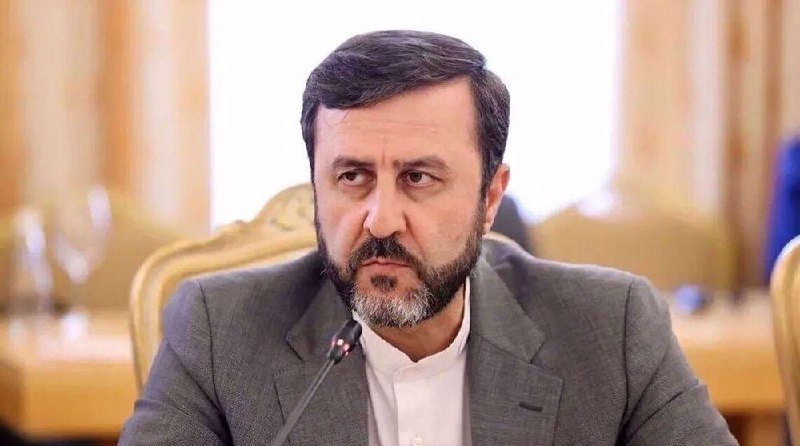
The United States and Iran exchanged fire in the Strait of Hormuz on May 8, 2026 — the most serious breach of a month-old ceasefire that both governments have scrambled to frame as contained. American officials confirmed the clash but said the situation did not reflect escalation intent. Iran described its actions as consistent with international law and said the situation had returned to normal. The incident landed amid an intensifying US diplomatic pressure campaign, with President Trump publicly telling reporters the two sides are in active negotiations.
The Strait of Hormuz is not incidental geography. Roughly 20 percent of the world's oil passes through the 33-kilometre-wide passage separating Oman from Iran. Any incident there — even a limited one — reverberates instantly through commodity markets, naval posture assessments, and the diplomatic calculations of every Gulf state. That the ceasefire's first major military contact happened precisely there is less coincidence than structural inevitability: the corridor is where Iranian and American operational horizons most directly intersect. A ceasefire premised on de-escalation, without a codified demarcation of红线 in those contested waters, was always going to face its first real test there.
The immediate question is whether the exchange was a deliberate signal from Tehran — a calibrated act to improve its negotiating hand — or the product of miscalculation by a subordinate commander acting outside central guidance. Iranian state media defended the actions as lawful and accused the United States of destabilising the region. Tehran's framing is consistent with a government that has forsworn direct conflict while reserving the right to project strength through ambiguous acts. The alternative reading — that this was a misread at the tactical level — cannot be dismissed either. Months of diplomatic pressure and targeted sanctions have narrowed Iranian options on every front; a show of resolve through controlled friction is a recognizable tactic in that context.
The diplomatic architecture surrounding the ceasefire was already under strain before May 8. The Trump administration has maintained a maximum-pressure posture through sustained economic sanctions even as it engaged in talks with Iranian officials. That tension — wanting a deal while simultaneously punishing the party you are negotiating with — has no clean precedent in recent diplomatic history and complicates any assessment of American intent. President Trump, speaking to reporters after the clash, described ongoing negotiations without specifying their terms or timeline. The message was deliberately ambiguous: a public signal to Tehran that the channel remains open while domestic hawkishness demands visible resolve.
What the available sourcing does not resolve is whether the administration has a clear threshold for what would constitute a deal-breaker. Secretary of State Hegseth described the situation as not escalated, a phrasing carefully chosen: the United States was not walking away, but neither was it absorbing the incident without notice. Iranian officials, for their part, have framed the same events through a sovereignty lens — their measures in the Strait as lawful, America's presence there as the source of instability. Neither side has provided specifics on what forces were involved or what the direct cause of the exchange was, which itself tells us something about the sensitivity of the operational details.
The regional stakes are considerable. Saudi Arabia, the UAE, and Qatar have all calibrated their own Iran relations against the trajectory of this ceasefire, and a collapse would accelerate a naval and diplomatic realignment across the Gulf. For European allies, the same ceasefire represents the most plausible mechanism for containing Iran's nuclear programme short of military action — a prospect that Britain, France, and Germany have repeatedly sought to avoid. Should this exchange represent the first in a pattern of escalating friction, those governments will face pressure to re-evaluate their own exposure to a region they have largely delegated to American management.
Tehran's calculus is not purely military. Iran's economy remains under sweeping US sanctions that have compressed living standards and eroded institutional capacity. A negotiated settlement that includes sanctions relief is, for the hardliners within Iran's governance structure, the only viable off-ramp from a deteriorating domestic situation. Trump, for his part, has a political investment in displaying a deal as a diplomatic trophy ahead of any electoral horizon. That mutual incentive to succeed does not eliminate the risk of miscommunication or miscalculation — it may, paradoxically, increase it. When both sides need a deal to survive domestically, the pressure to hold the line can produce exactly the kind of tactical gamble that destabilizes the very arrangement they are both trying to preserve.
What the sources make clear is that the ceasefire is intact in name but under genuine pressure in practice. Both governments have signalled they do not want escalation. Neither has provided a clear mechanism for preventing the next incident. The Strait of Hormuz, where operational space is narrow and the margin for error is measured in minutes, will remain the place where that gap between diplomatic posture and tactical reality is most likely to surface again — and where the next breach may not be as easy to contain.
This publication assessed the Hormuz exchange through the lens of operational risk and diplomatic fragility rather than through a securitization frame that treats any Iranian action as automatically provocative. The ceiling for tolerated incident in the Gulf has historically been higher than Western coverage suggests; the story here is the ceiling's erosion, not its existence.