US Navy Destroyers Complete Hormuz Transit Under Iranian Fire as Tensions Escalate
Three U.S. Navy destroyers completed a contested transit through the Strait of Hormuz on May 7, 2026, drawing Iranian fire and precipitating the seizure of a tanker days later, in what appears to be the most serious U.S.-Iranian naval confrontation since 2019.
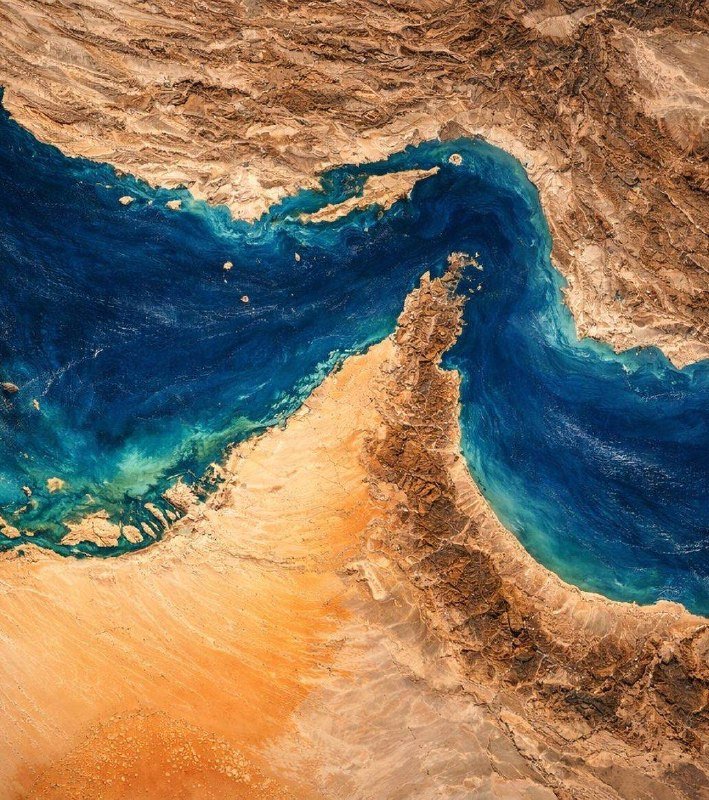
Three U.S. Navy destroyers completed a contested passage through the Strait of Hormuz on May 7, 2026, drawing fire from Iranian forces in what marked the most significant direct engagement between the two militaries since a similar series of incidents in 2019. President Donald Trump announced the transit as successful, while U.S. military officials characterized Iranian actions as unprovoked. By May 8, Iran had seized a third vessel in the waterway through which roughly a fifth of the world's oil moves, according to a statement from Iranian authorities.
The sequence of events along one of the world's most strategically sensitive maritime corridors exposes the fragility of de-escalation arrangements that have governed U.S.-Iranian naval behavior in the Gulf since at least 2016. Neither side appears willing to escalate to war, but both are testing thresholds with graduated provocations that risk miscalculation. The timing matters: global oil markets remain sensitive to supply disruption, and the transit occurred as nuclear negotiations between the United States and Iran have stalled.
What the Record Shows
The accounts from May 7 are consistent on the broad outline but diverge on sequence and causation. The U.S. military said Iranian forces carried out unprovoked attacks as the destroyers moved through the strait, a characterization that places responsibility squarely on Tehran. An Iranian military source, however, offered a different version of events: Iranian forces fired missiles after U.S. troops attacked an Iranian oil tanker in the waterway, and the U.S. vessels retreated with damage. That claim could not be independently verified. The Iranian account, if accurate, would represent a retaliatory action rather than unprovoked aggression — a distinction with significant diplomatic weight.
Trump, posting on social media, declared the three destroyers had "very successfully" transited the strait while under fire. The phrasing emphasized American resolve rather than the specifics of what was hit, how many projectiles were fired, or whether the vessels sustained any damage. It is, at minimum, an unusual way to describe a naval engagement: successful if the ships got through, regardless of what was fired at them and why.
The Iranian Counter-Narrative
Tehran's framing — that its forces responded to an attack on one of its own vessels — has historical precedent in the Gulf. Iranian state media and military sources have frequently characterized engagements in the strait as defensive, and the international community has historically given greater weight to the U.S. military's characterization of events. That asymmetry is structural: the U.S. military has a larger footprint in the Gulf, a broader network of regional allies, and a media apparatus that shapes how incidents are reported globally. Iranian accounts often surface in regional and Global South media outlets that receive less amplification in Western coverage.
The seizure of the Barbados-flagged oil tanker Ocean Koi on May 8, announced by Iranian authorities on Telegram, added a third vessel to the day's list of interdictions. According to the statement, the tanker was taken for violating Iran's strait permit system — a set of bureaucratic and security requirements that Iran has enforced with increasing frequency since 2021. The permit system is not recognized under international maritime law, which treats the strait as a transit corridor subject only to customary passage rights. Tehran, however, asserts navigational authority over the waterway it considers sovereign territory — a claim that has been a consistent source of friction with Western navies.
The Structural Picture
The Strait of Hormuz is a chokepoint, not merely a shipping lane. Approximately 21 million barrels of oil pass through it daily, and any significant disruption reverberates through global markets within hours. This gives Iran a structural leverage that its conventional military cannot match. It also creates an incentive for the United States to project presence in the strait regardless of diplomatic context — to assert the principle of unimpeded transit, and to remind Gulf allies that American naval power underwrites regional stability.
That imperative exists alongside another: avoiding a war neither side wants. The pattern in the Gulf since 2019 has been one of graduated pressure — seizures, interdictions, harassment, and tit-for-tat responses — calibrated to stay below the threshold of actual conflict. The destroyers' transit on May 7 fits that pattern. It was a show of force designed to demonstrate that the U.S. Navy will not cede the strait to Iranian enforcement of its permit regime. That Iran responded with fire is significant, but that the U.S. ships completed their passage and Iran did not pursue further escalation is equally significant.
Stakes and Forward View
The immediate risk is not war — both sides have shown consistent aversion to it — but accident. A warship taking fire, even small-arms or missile fire that causes no casualties, creates pressure on commanders to respond in kind. If one exchange escalates to a visible hit that kills crew, the political dynamics shift. The longer-term risk is entrenchment: each incident makes de-escalation agreements harder to negotiate and easier to abandon, and the strait becomes a zone of low-intensity but constant friction.
For global oil markets, the risk is reputational at present. The strait remains open. Ships continue to transit. But the Ocean Koi seizure signals that Iran intends to enforce its permit system, and if it begins interdicting vessels at a higher rate, insurers and shipowners will begin pricing in a risk premium. That cost, ultimately, falls on consumers.
The sources do not agree on whether the destroyers were struck, whether the Iranian oil tanker was in fact attacked by U.S. forces, or what specific munitions Iran used. The U.S. military's characterization of the Iranian action as unprovoked and the Iranian military source's account of retaliation are contradictory; both cannot be fully accurate. Readers should note that divergence in sourcing is itself significant — it reflects the difficulty of independently verifying naval engagements in contested waters where only the participants have full situational awareness.
Wire provenance
This editorial synthesis draws on the following public wire/social posts:
- https://x.com/polymarket/status/1920345862345830912
- https://x.com/unusual_whales/status/1920326898766623004
- https://x.com/unusual_whales/status/1920305823459283138
- https://t.me/myLordBebo/1423