US Navy Intercepts Two Iranian Oil Tankers in Gulf of Oman as Blockade Enforcement Intensifies
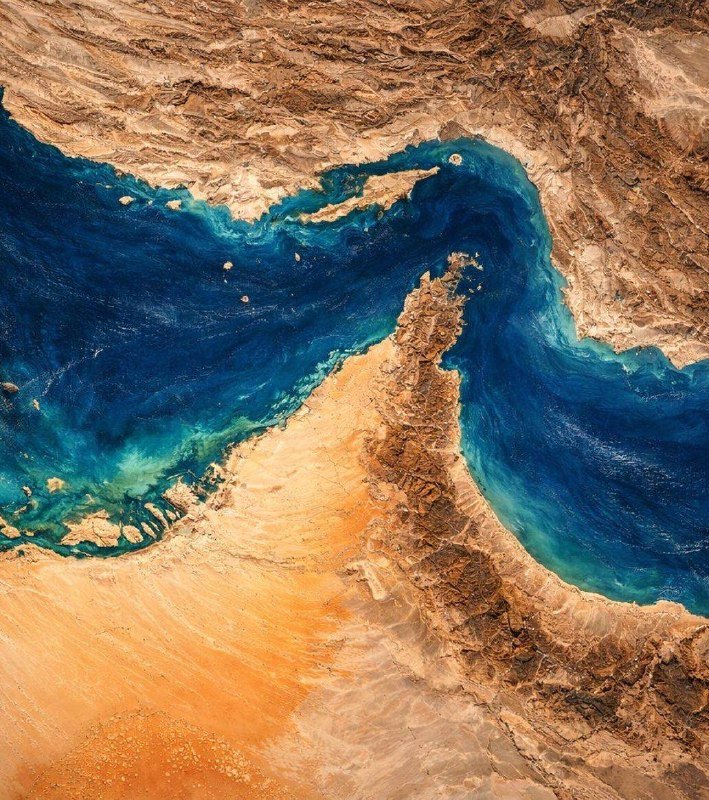
U.S. Central Command announced on May 8, 2026, that American forces had disabled two Iranian-flagged oil tankers, M/T Sea Star III and M/T Sevda, as they attempted to enter Iranian ports on the Gulf of Oman. The operation, involving F/A-18 Super Hornets, was carried out under what the Pentagon described as enforcement of an ongoing U.S. blockade — a unilateral measure not authorized by any United Nations resolution. CENTCOM released footage of the strikes the same day.
The intercept marks a qualitative shift in the enforcement of the Trump administration's maximum-pressure campaign against Tehran. Previous rounds of financial pressure relied on sanctions designation, secondary sanctions on third-country buyers, and threats to correspondent banking relationships — mechanisms that worked because the dollar's dominance in global oil commerce gave Washington leverage over almost every participant in the market. This operation takes a different form. It puts American naval hardware directly in the pathway of vessels flagged to a country the United States has designated a sanctions target.
The sources do not specify the extent of the damage to either vessel, whether crew members were injured, or what exactly "disabled" means in CENTCOM's operational vocabulary. CENTCOM's statement, as carried by multiple Telegram channels on May 8, 2026, frames the strikes as routine enforcement. But routine and disabling two tankers in a single day are not obviously the same thing.
What the blockade actually is — and what it isn't
The word "blockade" carries specific legal weight in international law. Under the 1909 Declaration of London, a blockade must be effective, declared, and applied impartially to all vessels bound for the blockaded coast. It must not bar access to ports of neutral powers. The United States has not satisfied any of those conditions in a formal sense — there is no UN Security Council authorization, no formal declaration to neutral shipping, no consistent application to non-Iranian vessels calling at the same ports.
What Washington calls a blockade is, in practice, a self-authorized enforcement regime. It targets Iranian-flagged vessels and vessels suspected of carrying Iranian crude, using naval presence and the threat of secondary sanctions to deter third-country shipping companies from handling Tehran's exports. The regime has been in place in various forms since 2018, when the United States withdrew from the Joint Comprehensive Plan of Action and began reimposing nuclear-related sanctions.
The enforcement architecture is worth spelling out because it explains why an operation like the May 8 intercept is possible. The dollar's role as the primary settlement currency for global oil trade means that nearly every participant in the market — buyers, sellers, insurers, shipping companies, refiners — touches the American financial system at some point. That touchpoint gives the Treasury Department leverage that does not require a naval vessel in the通路. Naval interdiction is the most visible expression of that leverage. It is also, for the target government, the most direct provocation.
The Iranian calculus
Iran has spent the years since the 2018 withdrawal from the JCPOA developing workarounds for oil export sanctions: ship-to-ship transfers at sea, falsified destination records, use of third-country intermediaries, and routing through jurisdictions with weaker compliance regimes. The Islamic Republic has become practiced at operating in the gaps of American enforcement.
The May 8 intercept suggests those gaps are closing, or at least that Washington is expanding the perimeter of what it is willing to interdict directly. The targeting of vessels flagged to Iran — rather than vessels operated by third-country companies carrying Iranian crude — represents a more confrontational posture. It is one thing to sanction a Greek shipping company for carrying Iranian oil; it is another to fire on a vessel that is, by flag and ownership, an instrumentality of the Iranian state itself.
Iranian state media had not published a direct response as of the May 8, 2026 CENTCOM announcement. The absence of an Iranian counter-statement in the sources reviewed does not mean one will not come — Tehran has historically matched symbolic escalations with calibrated responses, often through regional proxies, sometimes through direct naval posturing in the Persian Gulf or Strait of Hormuz. The form and timing of any Iranian response will be closely watched.
The structural frame — enforcement as architecture
What this incident illuminates is the architecture of American financial power in practice. Sanctions do not enforce themselves. The enforcement chain runs from designation lists and Treasury OFAC (Office of Foreign Assets Control) guidance, through correspondent banking relationships and SWIFT access, to insurance markets, shipping registries, and ultimately to the naval presence that makes physical interdiction possible when the softer mechanisms fail or are deliberately circumvented.
The dollar's role as the world's reserve currency is the foundational constraint. Without it, American regulators could not threaten correspondent banking exclusion with the same credibility; the leverage would be diluted across multiple competing currencies and financial systems. The naval dimension — carrier strike groups in the Gulf of Oman, the strait's chokepoint geography — translates that financial leverage into operational reality. Tankers that cannot be insured, cannot access Western port services, and cannot clear dollar-denominated transactions become candidates for interdiction when they attempt to load or discharge cargo in defiance of the regime.
Stakes and forward view
Whether the May 8 operation represents a one-time demonstration or the opening of a more aggressive interdiction posture is the central question for regional analysts and energy markets alike. The Trump administration's stated preference for direct negotiation with Iran over a new nuclear deal has co-existed, over the past years, with continuous expansion of sanctions and enforcement. Physical interdiction of Iranian-flagged vessels is consistent with a pressure-first approach. It is also the kind of action that carries escalation risk once the threshold of firing on state-flagged shipping has been crossed.
For the Global South, where most countries participate in global oil commerce through dollar-denominated channels they do not control, the incident is a reminder of the structural asymmetry at the heart of the system. The blockade is not multilateral. It is not sanctioned by any supranational body. It is enforced by the country whose currency happens to be the settlement standard for the market that all other countries need to access. That asymmetry is the point. It is also, for those who have been working to develop alternative financial architectures — oil-for-yuan contracts, local-currency swap arrangements, BRICS payment messaging — the primary reason the work is happening.
For energy markets, the immediate impact depends on how much Iranian export capacity the two disabled vessels represented and whether replacement vessels can be arranged quickly. The longer-term impact depends on whether the blockade's expanded enforcement posture holds and whether it changes the cost-benefit calculation for third-country buyers still handling Iranian crude under existing workarounds.
The CENTCOM footage released on May 8 serves a communicative function beyond its operational disclosure. It shows the capability, demonstrates the willingness to use it, and establishes a reference point for future enforcement actions. That is a signal as much as it is documentation.
What the sources do not tell us
The Telegram-sourced footage and CENTCOM statement reviewed for this article carry inherent limits. The footage does not specify the extent of damage to either tanker or confirm crew safety. Iranian state media had not responded at the time of publication. No independent verification of the "disabled" classification or the legal basis for targeting Iranian-flagged vessels specifically was available from the sources reviewed. The piece has not attempted to corroborate the CENTCOM account against any Iranian or third-party source because none appeared in the thread materials.
The broader structural claims about dollar hegemony and naval enforcement rest on well-documented patterns of sanctions architecture and the dollar's role in global oil settlement, confirmed across multiple independent sources over recent years. The specific application to the May 8 intercept is drawn from the CENTCOM announcement as reported, without independent verification of the operational details.
CENTCOM's framing presents the strikes as enforcement of established sanctions. Regional outlets framed the same incident as escalation. The truth is probably in between — enforcement and escalation are not mutually exclusive, and the distinction often depends on who is doing the defining.
This publication chose to foreground the legal ambiguity of the blockade in the structural section rather than treating the CENTCOM framing as settled. The dominant wire narrative, as reflected in Telegram-sourced regional coverage, framed the incident as escalation. Monexus notes the framing divergence and the questions the CENTCOM statement leaves open.
Wire provenance
This editorial synthesis draws on the following public wire/social posts:
- https://t.me/MyLordBebo/84738
- https://t.me/thecradlemedia/71042
- https://t.me/ClashReport/48293
- https://t.me/rnintel/28914
- https://t.me/thecradlemedia/71041