US Strikes Empty Oil Tankers in Oman Sea, Testing the Limits of Iran Sanctions Enforcement
The US military struck several empty Very Large Crude Carriers on 8 May 2026, marking a potential shift from financial pressure to direct maritime interdiction of Iranian oil commerce.
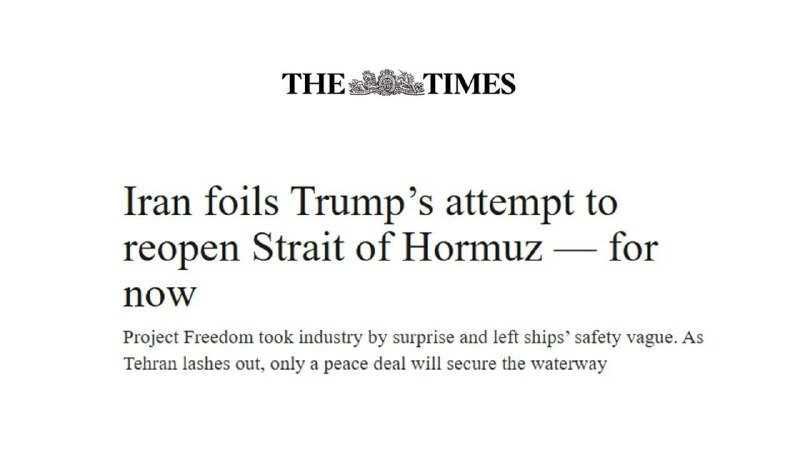
The United States military carried out airstrikes against several empty Very Large Crude Carriers in the Oman Sea on 8 May 2026, according to a senior US official who spoke to Fox News correspondent Jen Griffin. The vessels, described as massive tankers travelling without cargo, had attempted to run a blockade on Iranian oil exports. The strikes represent a material escalation in the way Washington enforces its maximum-pressure campaign against Tehran — moving from financial and diplomatic tools to direct physical interdiction at sea.
The senior US official said the vessels were VLCCs, a class of tanker capable of carrying up to two million barrels of crude oil. The fact that they were empty at the time of the strikes suggests they had already completed a discharge operation — likely transferring their cargo to buyers somewhere along the Iranian coast — and were returning to collect another shipment when intercepted. Washington's message, conveyed through the official comment, was blunt: even empty vessels facilitating the Iranian oil trade are legitimate targets.
What the strikes target and why
The distinction between a tanker carrying crude and one running empty matters commercially. VLCCs are among the most expensive vessels to insure and operate; a shipowner willing to dispatch an empty supertanker into contested waters is making a substantial investment in the Iranian supply chain. That Washington chose to strike vessels with no immediate cargo on board signals that the enforcement posture extends beyond the moment of transfer to the entire logistics chain. The operator, the flag state, the insurer, and the voyage-planning infrastructure all become implicated when an empty VLCC is treated as a legitimate target.
Previous administrations used sanctions designations, secondary blacklisting of entities involved in the Iranian oil trade, and diplomatic pressure on buyers to reduce Iranian crude purchases. The Trump administration's withdrawal from the Joint Comprehensive Plan of Action in 2018 and the reimposition of sweeping sanctions triggered a period of maximum economic pressure that has persisted in various forms across administrations. The 8 May strikes suggest that when financial pressure alone proved insufficient to cut Iranian oil exports to the levels Washington sought, the enforcement menu expanded.
The counterargument: law, safety, and escalation risk
There is a substantive debate about whether the strikes represent legitimate enforcement or overreach. From Washington's perspective, Iranian oil exports in violation of US sanctions are a direct challenge to the sanctions regime, and interdicting the vessels that enable those exports is a proportionate response. The senior US official's framing — that these were VLCCs "trying to make it back" to Iranian waters — treats the tanker runs as ongoing violations, not concluded ones.
From a countervailing standpoint, attacking merchant vessels at sea raises serious questions under international maritime law. Even vessels suspected of sanctions violations are typically subject to detention, inspection, and port-state enforcement rather than destruction. Civilian mariners aboard an empty tanker have no combat function; the humanitarian and legal thresholds for striking them are not trivially met by reference to the flag state's sanctions exposure. There is also the escalation calculus: Iran has the capability to respond in kind in the Gulf, where US naval assets operate in close proximity to Iranian forces and its network of regional proxies.
The sources do not specify whether the strikes were carried out by carrier-based aircraft, surface vessels, or standoff weapons, nor do they confirm whether there were casualties among tanker crews.
A structural shift in the enforcement architecture
What is observable here is a change in the character of the enforcement mechanism, not merely its intensity. For decades, dollar-denominated oil markets gave the United States an extraordinary degree of leverage over global petroleum commerce without requiring physical presence in every shipping lane. Sanctions against Iranian oil worked partly because buyers, insurers, and banks — operating in dollars — had strong commercial reasons to self-censor. The regime was effective not because it deployed ships and aircraft, but because it made the commercial infrastructure of the oil trade too costly to access for a sanctioned actor.
The strikes suggest that regime has reached its limit — or that Washington judges it has. If VLCCs are running the financial architecture and making the delivery anyway, the next lever is physical interdiction. This is a qualitatively different posture: it requires sustained military presence, it generates incidents with civilian consequences, and it moves the confrontation from the domain of financial regulators and compliance officers into the domain of combatant commanders. The countries of the Gulf watching this unfold — Oman, the UAE, Saudi Arabia — have strong interests in keeping their shipping lanes from becoming a theatre of US-Iran confrontation.
Stakes and what comes next
The immediate stakes are commercial and operational. Iranian oil revenues fund a significant portion of the Islamic Republic's budget and its support for armed groups across the region. If VLCC operators conclude that the Oman Sea is no longer navigable for the Iranian trade, the effective export capacity falls — potentially below the threshold Tehran needs to sustain its economic and military posture. That is the outcome Washington is pursuing.
The countervailing pressure is Iran itself: the Islamic Republic has navigated US sanctions before, and its惯用の response to maximum pressure has been to deepen ties with non-Western buyers, rely on a shadow fleet of opaque vessels, and accept a higher degree of commercial and legal risk in exchange for maintained export volumes. There is no sign that Tehran intends to capitulate; the more likely near-term response is a calibrated retaliation in the Gulf — against US naval vessels, regional allies, or commercial shipping — calibrated to impose costs without triggering a spiral neither side can control.
What remains unclear from the available reporting is whether the 8 May strikes mark the beginning of a sustained interdiction campaign or a targeted demonstration. The volume of Iranian oil still flowing to buyers in Asia — despite years of sanctions — suggests the financial architecture was bending, not breaking. The addition of physical interdiction changes the arithmetic. Whether it changes it enough to alter Tehran's behaviour, or merely adds a new flashpoint to an already volatile region, is the central question the coming weeks will answer.
This publication sourced the Fox News reporting via multiple Telegram channels carrying the Jen Griffin dispatch. The sources do not include a primary US military or State Department statement confirming the strike parameters, casualty figures, or the legal basis invoked.
Wire provenance
This editorial synthesis draws on the following public wire/social posts:
- https://t.me/rnintel/2847
- https://t.me/wfwitness/4121
- https://t.me/osintlive/1883
- https://t.me/wfwitness/4120