US Trade Court Invalidates Trump's 10% Global Tariffs, Calling Them Unlawful
A federal trade court ruled on Thursday that President Donald Trump's 10% baseline tariff on most US imports was illegal, finding the administration overstepped its authority under a 1970s emergency powers law. The decision marks the most significant legal challenge yet to the administration's sweeping trade agenda.
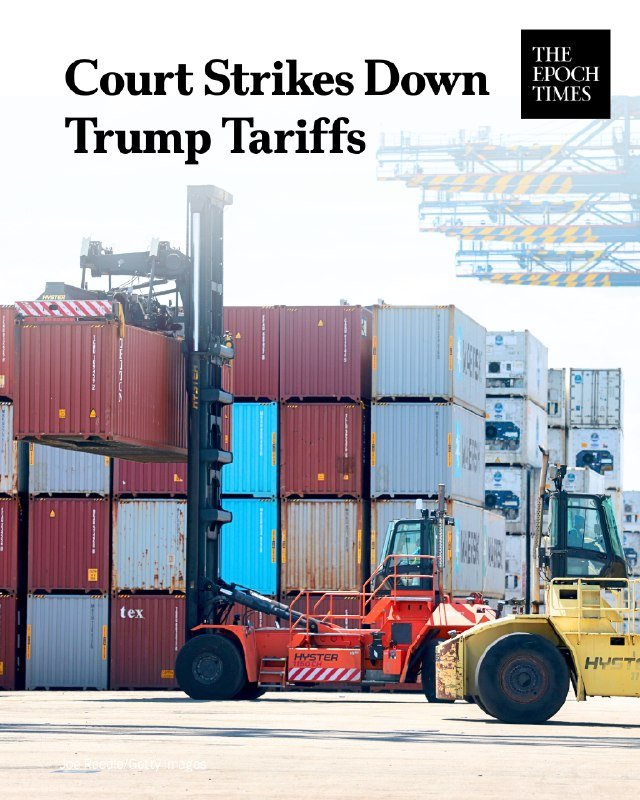
A federal trade court ruled on Thursday that President Donald Trump's 10% baseline tariff on most US imports was illegal, delivering the most significant legal setback yet to the administration's sweeping trade offensive and raising immediate questions about the durability of measures that have disrupted global commerce since their February imposition.
The US Court of International Trade, a specialized federal tribunal handling disputes over customs and trade law, found that Trump's invocation of the International Emergency Economic Powers Act — a 1977 law giving presidents authority to regulate commerce during national emergencies — did not provide legitimate cover for broad, non-discriminatory tariffs applied across virtually all US trading partners. The three-judge panel concluded the administration had overstepped statutory authority and that the tariffs must be invalidated, according to reporting by CGTN and Deutsche Welle on 8 May 2026.
The ruling does not automatically dismantle the tariffs. The administration is expected to appeal to the US Court of Appeals for the Federal Circuit, and legal analysts say the case could ultimately reach the Supreme Court, where it would resolve questions about executive trade authority that have never been definitively settled.
What the Court Found
The administration imposed the 10% baseline tariff in early February 2026, arguing that persistent US trade deficits and what officials called "structural unfairness" in global trade arrangements constituted an economic emergency justifying emergency powers. The tariffs supplemented steeper levies on Chinese goods and retaliatory measures already in place against a range of trading partners.
Hindustan Times reported that the court found the broad global tariffs were not justified under the trade law from the 1970s — a reference to IEEPA's narrow scope, which was designed to target specific foreign adversaries during genuine crises, not to impose indefinite, economy-wide trade restrictions.
Business groups and trading partners that had challenged the tariffs welcomed the ruling. Several US trading partners, including allies in Europe and Asia, had characterized the February tariffs as illegitimate under international trade norms and had imposed reciprocal measures. The court decision strengthens their negotiating position considerably.
The Administration's Counter
White House officials disputed the ruling immediately. Press secretary statements, carried by wire services, argued the president retains broad constitutional authority over foreign commerce and that economic threats to US industries justified the use of emergency powers. The administration characterized the court's decision as an overreach by unelected judges interfering with executive prerogatives on matters of national economic security.
The legal dispute centers on how expansively courts interpret IEEPA. The law was designed to give chief executives flexibility in responding to acute crises — embargoes, sanctions, hostile foreign actions — but has rarely been used as the sole legal basis for sustained, economy-wide tariff regimes imposed against allies and adversaries alike. The administration argued that chronic trade deficits constitute an ongoing economic emergency; the court evidently disagreed.
The Structural Stakes
The ruling exposes a fundamental tension in US trade governance. Congress has historically delegated significant tariff authority to the executive, particularly under Section 232 of the Trade Expansion Act (national security tariffs on steel and aluminum) and various bilateral and multilateral agreements. But that delegation has always assumed presidential action would be targeted and time-limited, not a permanent restructuring of trade relations with the entire world.
The administration attempted to stretch IEEPA to cover circumstances its drafters never anticipated. The law's legislative history suggests it was meant for discrete crises — Iranian hostage-taking, Soviet grain embargoes — not as a general-purpose tool for rewriting trade balances with dozens of countries simultaneously. The court's ruling confirms that stretching statutory authority to fit a policy preference does not make it lawful.
The ruling also raises questions about the administration's broader negotiating strategy. US trade negotiators have used the threat of sustained tariffs as leverage to force trading partners to the table; if those tariffs are now legally vulnerable, the credibility of that leverage is diminished. Trading partners watching the appeal process unfold may feel less pressure to make concessions during bilateral talks.
What Happens Next
The administration will almost certainly appeal. The case would then move to the Federal Circuit, a specialized appellate court with expertise in trade law, before potentially reaching the Supreme Court. The timeline for resolution — even if the administration seeks an expedited path — likely extends well into 2027.
In the meantime, the tariff status remains ambiguous. Importers face uncertainty about what duties they owe; customs enforcement will need to determine whether to continue collecting tariffs during the appeal. Some legal scholars argue the tariffs remain in effect until formally struck down by a court with binding authority; others contend the ruling's logic means the tariffs should cease immediately.
Markets reacted with caution. Import-dependent sectors rose on hopes the tariffs might be removed; export-facing industries faced uncertainty about whether trading partners would maintain retaliatory measures even if US tariffs fall. The dollar showed modest volatility against major currencies as traders assessed the ruling's implications for US trade policy stability.
The sources do not indicate whether the administration has filed its notice of appeal, nor do they specify which specific provisions of IEEPA the court found most problematic. A full legal text of the ruling has not yet been published in the source materials reviewed for this article.
Desk note: The wire services framed this primarily as a legal story — courts ruling against executive overreach. This publication treats it as a structural story about whether the US executive has found a workable legal pathway to sustained trade coercion against its own allies, and what the answer says about the durability of the post-war trade order that Washington spent decades building and is now dismantling.