Venice Biennale Faces Backlash Over Alleged 'Artwashing' of Conflict — Hundreds Protest as Artists Debate Institutional Complicity
Hundreds of artists and cultural workers gathered on 8 May to demand the Venice Biennale take a stance on the assault on Gaza, intensifying a debate about whether large-scale cultural institutions lend legitimacy to governments implicated in atrocities.
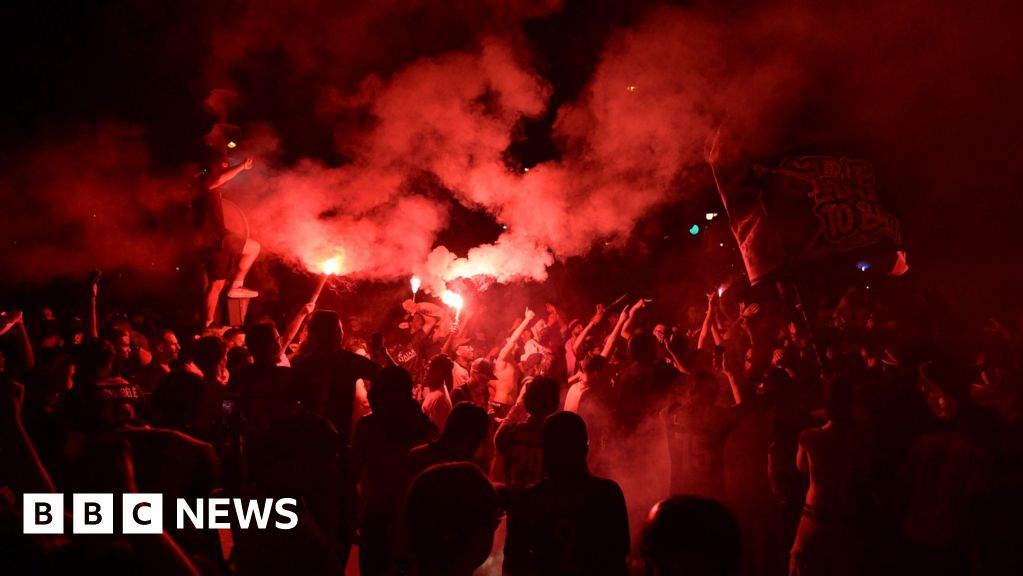
On 8 May 2026, hundreds of protesters gathered outside the Giardini and Arsenale venues of the Venice Biennale, demanding the institution take a clear position on what they describe as complicity in the assault on Gaza. Banners reading "No artwashing genocide" and "No genocide pavilion" were visible among the crowd, according to Middle East Eye's reporting on the demonstration. Artists and artworkers exhibiting and working at this year's Biennale delivered speeches framing the event as a platform that lends diplomatic legitimacy to participating governments, regardless of their human rights record.
The protest marks the most coordinated demonstration yet against an institution that has found itself increasingly entangled in geopolitical controversy. The Biennale, which has operated since 1895 and remains the world's preeminent contemporary art event, occupies a unique position as a showcase for national cultural presences — pavilions funded by participating governments, a structure that critics say makes the event inherently political in ways its organizers have long been reluctant to acknowledge.
Immediate Context: A Biennale Under Pressure
The 2026 edition opened against a backdrop of sustained pressure from cultural workers globally. Since October 2023, arts institutions across Europe and North America have faced calls to cut ties with Israeli cultural bodies and to refuse sponsorship from companies with ties to military operations. The Venice Biennale, as a state-level rather than corporate event, occupies a different position — national pavilions are themselves manifestations of foreign policy — but critics argue the structure is identical: cultural prestige conferred on governments regardless of their actions.
This year's edition has seen several high-profile withdrawals. While the Biennale's official count of participating nations remains substantial, artists from multiple countries have publicly refused to attend opening ceremonies or have staged their own forms of quiet protest within their national pavilions. The demonstration on 8 May consolidated these individual acts into a coordinated demand.
The Counter-Narrative: Cultural Engagement as Resistance
Not all artists share the protesters' analysis. A smaller but vocal contingent argues that withdrawal cedes ground to those who would prefer cultural voices absent from difficult conversations. For these artists, the Biennale's value lies precisely in its reach — millions of visitors, global press coverage, and a rare moment when Palestinian cultural production can be seen by the same audiences that consume Western government statements.
This position has roots in longstanding debates about the efficacy of cultural boycotts versus internal critique. Some artists within national pavilions have used their platforms to address the conflict directly, embedding references to Gaza in their work rather than refusing the institutional frame altogether. Whether this constitutes meaningful resistance or co-option remains fiercely contested among the arts community itself.
The Structural Frame: Prestige as Political Currency
What the protest surfaces is a structural feature of major international cultural events that has long been understood but rarely stated so plainly: prestige is a form of diplomatic currency. National pavilions at the Venice Biennale are not accidental — they are applications for cultural legitimacy that require state backing to construct, staff, and maintain. When a government facing war crimes allegations sends an officially sanctioned pavilion to Venice, the institution, intentionally or not, provides a mechanism of normalisation.
This is not unique to Venice. The Cannes Film Festival, the Olympian arts programme, the World Cup — all have faced similar pressures when hosted by or featuring representatives of governments implicated in atrocities. The pattern is consistent: institutions built on the premise of cultural neutrality discover that neutrality in a politically charged environment functions as endorsement. The Biennale has always operated in this political economy; what is new is the willingness of artists to name it directly.
Stakes: What Happens Next for Cultural Institutions
The immediate question facing the Biennale's leadership is whether to formally respond to the demands. Organisers have thus far maintained that the event provides space for all voices, a position that satisfies no one. Critics want a formal commitment — a statement, a cancellation of a national pavilion, a public accounting of the institution's funding sources and their connections to military operations. The Biennale has shown no appetite for such specificity.
The longer-term question is whether the art world's institutional architecture can accommodate ethical commitments without becoming a different kind of politics. Major cultural events derive their authority partly from universality — the claim to represent human creativity rather than any particular national interest. If that universality is revealed as a cover for state power, the events themselves may become fixtures of soft-power competition rather than spaces of cultural critique. For now, the Biennale faces a summer of protests and internal debate, with the outcome likely to shape how major cultural institutions navigate political controversy for years to come.
The desk notes that Monexus framed this story around institutional complicity and the political economy of prestige — a lens that foregrounds the Biennale's structural entanglement with state power rather than treating the protest as an isolated cultural moment. The wire coverage from Middle East Eye provided the immediate scene; the structural analysis draws from patterns visible across multiple arts institutions navigating political pressure over the past two years.