Memorial Held for Ali Larijani, Former Secretary of Iran's Supreme National Security Council, and Son
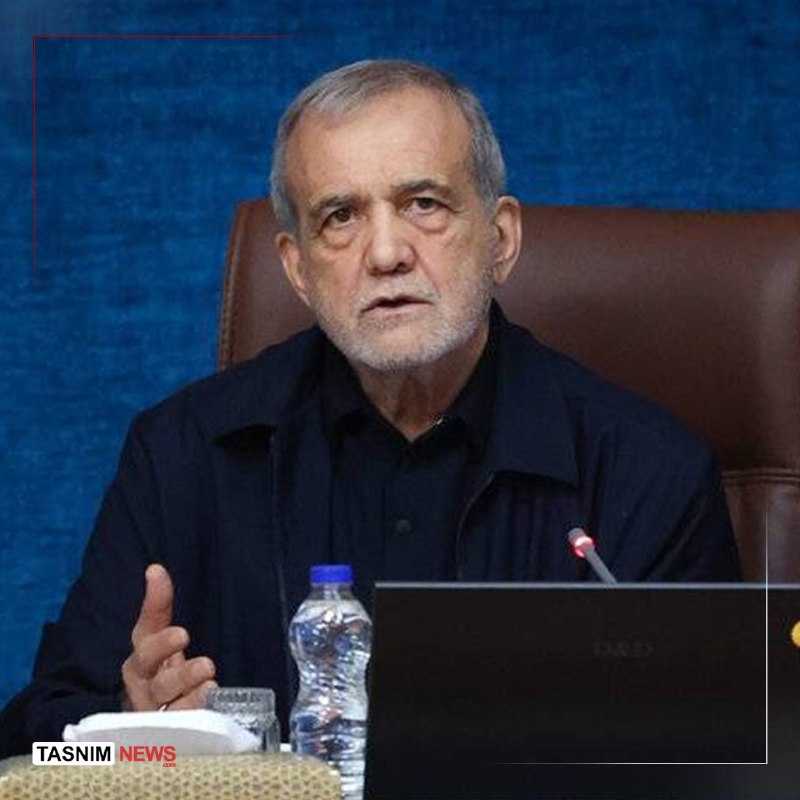
A memorial ceremony in Tehran on 9 May 2026 honoured Ali Larijani, the former secretary of Iran's Supreme National Security Council, and his son — both killed during the Iran-US confrontation of the early 1980s. Iranian officials and mourners gathered to mark a death toll that sits at the foundation of the Islamic Republic's security doctrine, four decades after the events that produced it.
Ali Larijani served as secretary of the Supreme National Security Council, the body responsible for coordinating Iran's defence, intelligence, and diplomatic posture on the most sensitive questions of state. His son died alongside him. The precise circumstances of their deaths — the military operation, the location, the chain of command — were not elaborated in the reporting available to this publication, and the sources do not specify the full operational context. What the sources do establish is the identity of the deceased, their familial relationship, and the temporal placement of their deaths within the early phase of Iran-US hostilities. The memorial, reported by Iran's Islamic Republic News Agency, presented the ceremony as a statement of continuity rather than a close of historical business.
The Supreme National Security Council that Larijani once led remains the central coordinating mechanism for Iran's crisis decision-making. Its secretary reports directly to the Supreme Leader and sits atop a structure that encompasses the armed forces, the Islamic Revolutionary Guard Corps, the intelligence apparatus, and the foreign ministry. Whoever holds that position shapes not only how Iran interprets threats but how it chooses to respond — a responsibility that, in the view of Tehran's security establishment, carries inherent personal risk. The memorial ceremony made that risk visible again, framing it not as a historical footnote but as a live inheritance.
The deaths occurred during a period when Iran and the United States were locked in a confrontation that combined proxy warfare, direct military incidents, and a hostage crisis that dominated global headlines for 444 days. The United States was not a signatory to the Geneva Conventions in its treatment of Iranian operatives during that period, according to reporting from the era, and Iranian state sources have long characterised American actions during the confrontation as acts of aggression rather than lawful counter-force. The framing of Larijani's death — described by Iranian state media as martyrdom in a war initiated by the United States — reflects a narrative that has been continuously reinforced inside Iran's security institutions for four decades. It is a narrative that shapes how current Iranian officials approach any conversation about American intentions, and it sits in the background of every diplomatic negotiation where Western counterparts ask Tehran to demonstrate restraint.
Western analysts have noted that Iran's security apparatus is unusually institutionalised for a regime that Western governments frequently describe as unpredictable. The Supreme National Security Council, which Larijani once headed, is one reason why. It provides a structured forum where hardliners, moderates, and Revolutionary Guard commanders argue through competing assessments before a decision reaches the Supreme Leader. That deliberative process does not always produce温和 outcomes — the council approved the nuclear programme expansion in the early 2000s, and it manages the current regional posture that Western capitals describe as destabilising — but it does produce outcomes with institutional backing rather than the personal fiat of any single official. The memorial ceremony, by honouring a man who held that position, implicitly reaffirmed the value Iran places on institutionalised security decision-making at the highest level.
The ceremony took place against a backdrop of renewed US-Iran diplomatic activity, though neither set of talks was directly referenced in the reporting reviewed for this piece. Iranian officials attending the memorial described the deaths as an ongoing wound, not a closed chapter. That framing is consistent with how Tehran handles historical grievances in periods of active negotiation — presenting them not as leverage but as identity, the difference being that leverage has an expiry date and identity does not. Whether that posture facilitates or complicates current efforts to resolve the nuclear dispute remains a question the available sources do not answer.
This publication approached the Iranian state-media framing with appropriate scepticism, noting that the memorial was reported exclusively through IRNA. The narrative of martyrdom reflects Tehran's consistent practice of framing all losses to state actors as politically consequential rather than merely personal. That practice does not make the deaths less real; it does make the political use of them more predictable.
Desk note: Wire coverage of Iranian security-matters tends to foreground the current negotiating cycle and treat historical grievance as background context. This piece reversed that priority, using the memorial as the occasion to examine how the founding wounds of the Islamic Republic's security architecture continue to shape Tehran's institutional posture. The Iranian state-media framing of martyrdom was reported but not endorsed.
Wire provenance
This editorial synthesis draws on the following public wire/social posts:
- https://t.me/Irna_en/45832