ASEAN Navigates Iran War's Economic Shockwave as US-Iran Diplomacy Stalls
Southeast Asian leaders are implementing trade and currency measures to insulate their economies from the Iran conflict's spillover, while Tehran remains skeptical of Washington's capacity to broker a resolution.
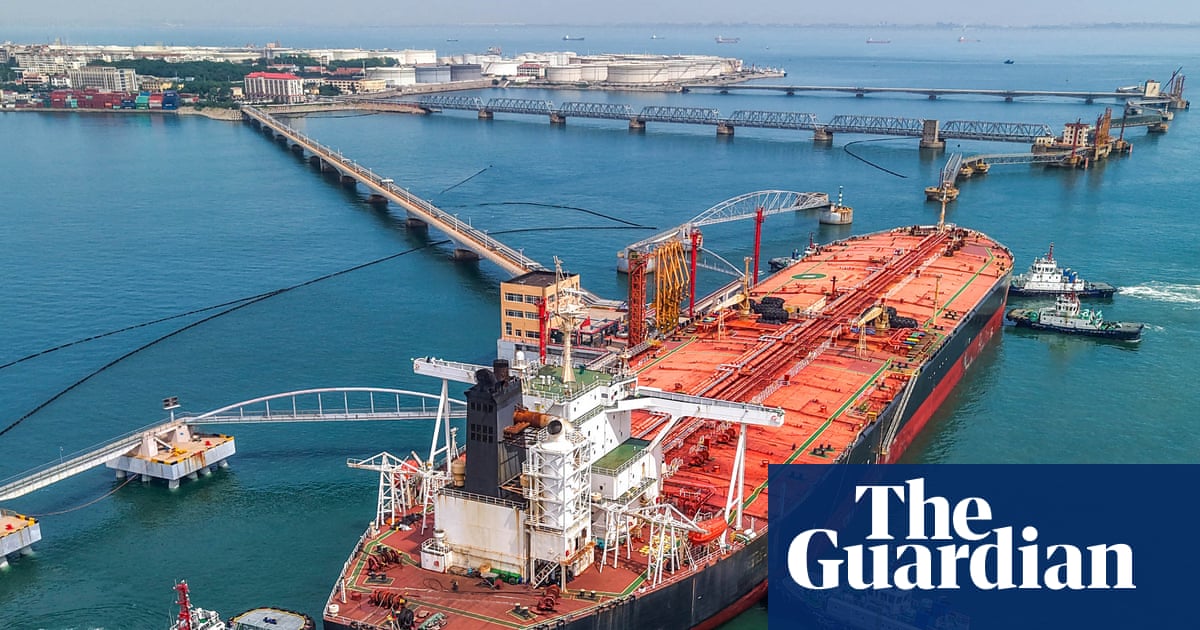
Southeast Asian governments are moving to shield their economies from disruptions tied to the Iran war, adopting targeted measures to stabilise supply chains and ease pressures on regional trade as the conflict grinds into its second year.
ASEAN leaders convened emergency consultations in late April and early May, according to a readout shared via the bloc's official communications channel, adopting a package of coordinated responses to address mounting economic strain. The measures include simplified customs procedures for essential goods, bilateral currency-swap arrangements between select member states, and a commitment to pool strategic reserves of key commodities. The goal, officials said, is to prevent the conflict's knock-on effects — particularly in energy and shipping — from cascading through Southeast Asian markets already contending with slowing global demand.
The effort reflects a broader recalibration among middle-power economies in Asia. They are not positioning themselves as either hostile or aligned to either side of the conflict. Rather, they are building buffer capacity to absorb shocks without being compelled to make binary political choices. That posture carries its own risks: it requires the bloc to maintain functional relationships with all major parties simultaneously, a balance that becomes harder to sustain as the conflict deepens and external pressure on regional capitals mounts.
Tehran's Assessment of American Leverage
Iran's official response to the ongoing diplomatic engagement reflects a sharply different calculus. Iranian officials, speaking in statements carried via state-linked channels and picked up by Western wire services monitoring the region, have described the United States as fundamentally incapable of grasping the contours of the situation or proposing an exit that Iran would find credible. The assessment, articulated on 8 May 2026, characterises Washington's approach as reactive — responding to symptoms rather than addressing the structural conditions that produced the conflict.
The statements from Tehran appear calibrated for both domestic and international audiences. Domestically, framing the United States as institutionally unable to comprehend the situation reinforces a narrative of Western irrelevance and reinforces state messaging around national resilience. Externally, it signals to non-aligned nations that continued engagement with Washington's preferred frameworks is unlikely to produce outcomes that serve their interests. Whether that framing resonates beyond the immediate audience is unclear; the sources do not offer independent corroboration of the claim's reception in third-country capitals.
Iran also confirmed on 8 May 2026 that it is reviewing a proposal reportedly put forward by the United States regarding the conduct and potential resolution of the Iran war. The statement acknowledged receipt of the document without endorsing its substance. The terms of the proposal, if it exists, have not been made public. The gap between confirmation of review and confirmation of acceptance is significant: it suggests Tehran is keeping the diplomatic channel open while reserving the right to reject any framework it perceives as imposed rather than negotiated.
The Diplomatic Gap
The discrepancy between what Washington reportedly proposed and what Tehran is willing to accept illuminates a persistent structural problem in the US-Iran diplomatic relationship. American approaches to the conflict have emphasised containment and pressure. Iranian responses have centred on sovereignty and resistance to external coercion. The two frameworks share very little common ground, and the proposal currently under review in Tehran appears, from the available evidence, to lean toward the American framing.
What is less clear from the public record is whether the proposal contains any explicit concessions or whether it primarily outlines conditions for a ceasefire. Sources monitoring the situation have noted that previous diplomatic overtures have stalled on precisely this divide: Washington has sought guarantees on nuclear programme limitations and regional behaviour, while Tehran has insisted on sanctions relief and recognition of its right to defensive capabilities. Neither side has publicly signalled willingness to move first, and the current proposal does not, on the available evidence, resolve that deadlock.
For ASEAN, this deadlock is not abstract. Southeast Asian economies are deeply integrated into global shipping and energy markets. Disruptions to the Strait of Hormuz — through which significant volumes of LNG and crude oil pass en route to Asian buyers — would propagate quickly through regional supply chains. The bloc's response measures reflect a calculation that the conflict may persist long enough to produce second-order economic consequences that require coordinated preparation rather than reactive crisis management.
Structural Consequences for Regional Architecture
What ASEAN is building, in practical terms, is an economic firewall — not against any particular party, but against the volatility that prolonged conflict introduces. The currency arrangements under discussion would reduce reliance on dollar-denominated settlement channels, a consideration that has grown more salient as secondary sanctions regimes have expanded their reach. Bilateral swap lines between, for example, the baht and the rupiah, or the rupiah and the dong, do not replace the dollar system but they create alternatives for intra-regional trade in the event that dollar-access becomes constrained.
This is not a political statement. It is a logistics and risk-management exercise. The bloc has been clear that it is not seeking to undermine existing financial architecture but to ensure that regional trade can continue even under conditions of external disruption. Whether that ambition is fully achievable is uncertain — the dollar remains dominant in global commodity markets, and Southeast Asian economies lack the energy self-sufficiency to fully insulate themselves from supply shocks. But the direction of travel matters: regional governments are investing in optionality rather than alignment.
That optionality is the point. As the conflict in Iran continues without a resolution in sight, the pressure on middle powers to choose sides will intensify. The measures ASEAN is adopting — modest in scope, practical in design — represent an attempt to retain the capacity to stay unchosen for as long as possible. Whether that remains viable as the conflict expands in scope or severity is the question that will define the next phase of Southeast Asian economic policy.
The sources do not yet indicate whether member states are in agreement on the specifics of the package, nor do they confirm whether implementation timelines have been set. What the record shows is that the threat assessment is shared: the conflict is not a passing disruption. It is a structural condition that will reshape regional economic planning for the foreseeable future.
ASEAN's economic resilience strategy represents a quiet but significant departure from the bloc's historical posture of preferring broad multilateral frameworks over bilateral hedges. The current measures align with earlier-pattern responses to US-China trade friction, suggesting that Southeast Asian governments are applying lessons from that earlier episode to the present situation.
Wire provenance
This editorial synthesis draws on the following public wire/social posts:
- https://t.me/aljazeeraglobal
- https://x.com/unusual_whales/status/1921965735277269273
- https://x.com/unusual_whales/status/1921955129242616172