The Ceasefire That Wasn't: Inside Trump's 72-Hour Pause and What It Reveals About the State of the War
Trump's declared three-day ceasefire from May 9-11 offers a fragile window for prisoner exchanges and inspections, but the structural gaps in enforcement and the geopolitical symbolism of timing reveal how far either side remains from a genuine cessation of hostilities.
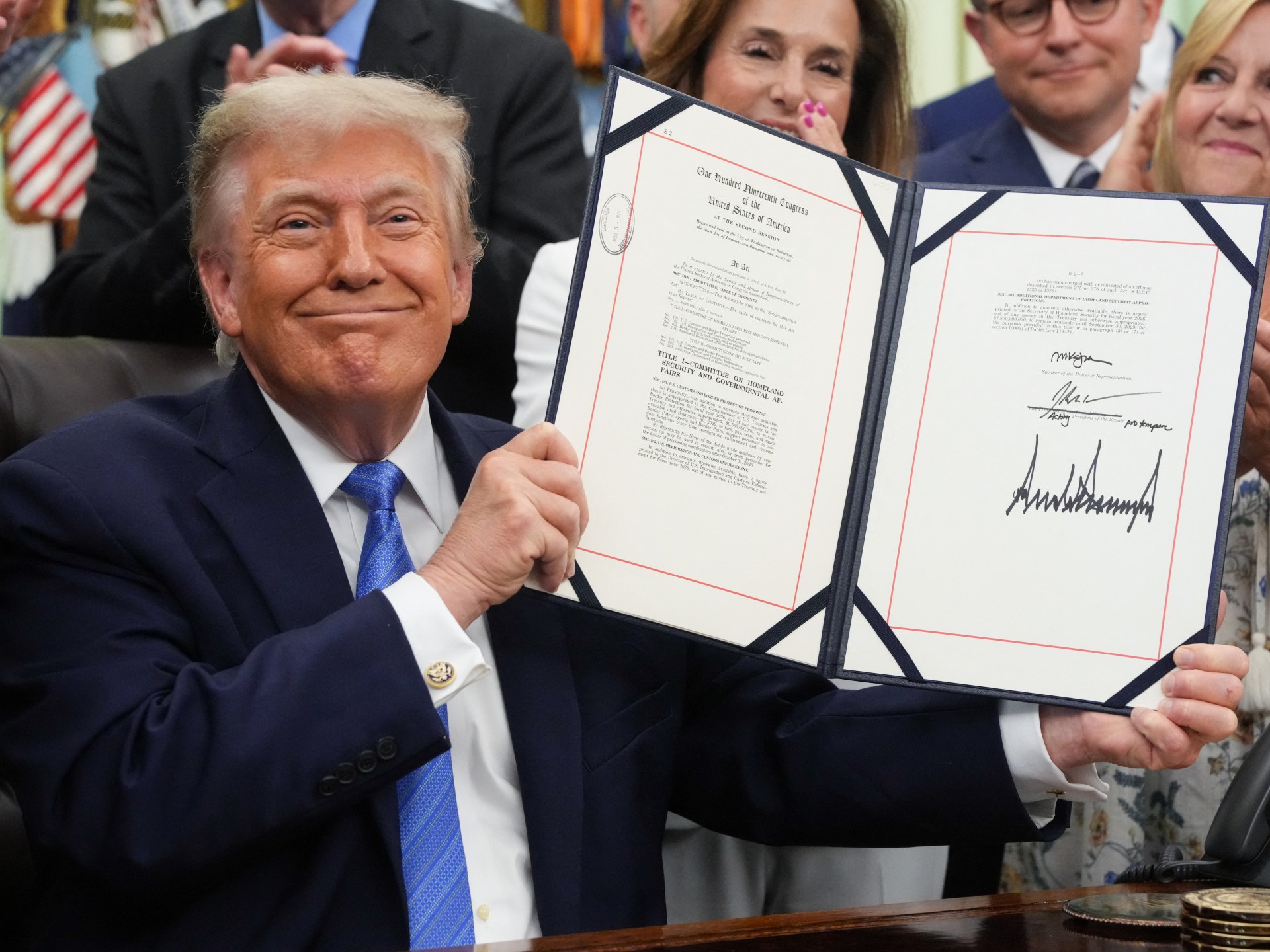
The announcement came without ceremony, delivered in a evening post to social media from Washington and picked up simultaneously by Polymarket's wire feed and Al Jazeera English's Telegram channel: a seventy-two-hour ceasefire beginning on May 9, running through May 11, in the war between Russia and Ukraine. Donald Trump, in the post, gave no detailed conditions, no enforcement mechanism, and no explanation of what would happen when the seventy-two hours expired. Within hours, Polymarket's separate wire service confirmed what Kyiv and Moscow had quietly signalled to intermediaries: each side would release approximately one thousand prisoners of war during the pause.
It is a pattern the international system has seen before — the announced pause, the symbolic prisoner exchange, the photograph op at the negotiating table — and it has almost always ended the same way. The ceasefire that holds for three days does not become a ceasefire that holds for thirty. The question is not whether this particular arrangement will survive the weekend. The question is what its announcement tells us about where the war now sits, and who benefits from the optics of a pause.
The Timing and the Symbol
May 9 is not an arbitrary date. It is Victory Day in Russia, the anniversary of the Soviet Union's triumph over Nazi Germany in 1945, and an occasion the Kremlin has leaned on heavily throughout the invasion to frame the conflict in quasi-religious terms — a continuation of the great patriotic struggle, with Ukraine cast as a Nazi-aligned adversary. That Trump chose to anchor the ceasefire window to this date is not incidental. It signals, at minimum, a recognition that Moscow's domestic political calendar carries weight in any diplomatic calculation, and at maximum, an attempt to offer the Kremlin a propaganda win without appearing to extract concessions in return. Whether that calculation was made consciously or arrived at through the accumulated drift of negotiation is impossible to determine from the public record, but the effect is the same: a ceasefire draped in Russian historical symbolism.
Ukraine's position on this is complicated. Kyiv has its own commemorative calendar, its own losses to honour, and its own political leadership that cannot afford to appear as the side that refused a pause when prisoners were at stake. The prisoner exchange — one thousand for one thousand — is concrete, human, and politically difficult to refuse. Families of servicemen and women held in Russian captivity have organised persistently throughout the conflict, and the optics of turning down an exchange on offer would be politically damaging regardless of what Kyiv thinks of the broader ceasefire framing.
What the sources do not specify is whether Ukrainian officials were consulted before the announcement was posted, or whether they were informed after the fact. That gap matters. A ceasefire announced by one party to a conflict, with the other party's acquiescence but not participation in the announcement, is not the same as a jointly declared pause. It carries fingerprints — and those fingerprints have consequences for how each side interprets its obligations.
What the Ceasefire Actually Requires
The terms, as publicly described, are thin. A three-day cessation of hostilities, with a prisoner exchange as the stated deliverable. There is no mention in the public record of ceasefire verification mechanisms, no description of what happens if either side reports a violation, and no indication of what mediation body would adjudicate disputes during the window. In the past, when similar short-term arrangements have been announced in this conflict, the absence of verification infrastructure has proved disabling. Ceasefires require eyes on the line — international monitors, agreed communication channels, rapid-response mechanisms for reported breaches. The announcement as it stands contains none of that.
The prisoner exchange itself presents logistical questions the sources do not resolve. One thousand for one thousand implies a matched list, agreed in advance, with transport and verification protocols in place. Whether those protocols have been tested, whether both sides have confirmed the same individual identities on their respective lists, and whether there is an agreed handover location — all of these details will determine whether the exchange actually happens or becomes another item in a longer negotiating ledger. The Polymarket wire report, sourced to the evening of May 8, confirms the exchange was "on the table" in the diplomatic back-and-forth, but does not confirm it has been operationalised. The distinction between agreed and executed is one that has derailed previous arrangements in this conflict.
There is also the question of geographic scope. The announcement speaks of a ceasefire in the "war between Russia and Ukraine." It does not specify whether it covers the full frontline — from Kharkiv to Zaporizhzhia to Kherson — or only specific sectors. In a conflict where artillery duelling and drone strikes have continued through multiple previous attempts at localised pauses, the absence of geographic specificity is not a technicality. It is a structural weakness that either side could exploit, depending on their assessment of where the military balance sits at the start of the window.
The Geopolitical Arithmetic
To understand why this ceasefire was announced now rather than six months ago or six months from now, it is necessary to look at the layered interests that converge on a seventy-two-hour pause. Trump, in the post, did not frame this as a US policy achievement. The framing was more incidental — a diplomatic result, a humanitarian gesture, a break in a war that has no obvious end-state. But the political calculus inside the White House is not incidental. The continued high cost of military aid to Ukraine, the domestic political fatigue with the conflict's duration, and the desire to demonstrate some form of diplomatic progress before the mid-point of the year all push toward an outcome that can be sold as movement. A ceasefire, even a temporary one, provides that.
Russia's calculus is different but not incompatible. Moscow has been pressing for international recognition of a frozen conflict line as a basis for eventual negotiation — a posture that benefits from a temporary ceasefire that can be cited as evidence that Ukraine is willing to talk. Whether Russia intends to use the three-day window to reposition forces, reinforce contested sectors, or simply reduce casualties during a period of reduced scrutiny is unknown from the public record. But Russian military operations in previous temporary arrangements have shown a consistent pattern of tactical exploitation of pauses. That is not an allegation — it is a documented characteristic of how the Russian command has historically managed short-term ceasefire windows.
Ukraine, for its part, carries a structural incentive to demonstrate that ceasefire announcements without substance are not genuine peace moves. A three-day pause, with no security guarantees and no progress toward a just resolution, is not the same as progress toward ending the war. Kyiv's leadership has been consistent on this: they are not opposed to negotiations, but they are opposed to arrangements that freeze the current territorial configuration as a de facto outcome while Russia retains the capacity to resume operations when it suits them. Whether the current announcement triggers those concerns depends on how the ceasefire is framed in the coming days and whether any security assurances — however informal — are communicated alongside the public post.
The Structural Problem Beneath the Announcement
What the ceasefire announcement reveals, more than anything, is the absence of a viable framework for ending this conflict. A seventy-two-hour pause is not a peace process. It is a humanitarian interval — welcome as far as it goes, meaningful in so far as it returns prisoners to families and reduces the immediate risk of artillery exchanges in contested zones. But it does not address the territorial question, the security question, the reconstruction question, or the accountability question. Each of those remains where it was before May 8, unresolved and in some cases actively deteriorating.
The structural pattern here is not unique to this conflict or this moment. When negotiations stall and military positions harden, temporary arrangements tend to substitute for genuine progress. They are easier to announce, politically easier to accept, and operationally easier to manage than comprehensive settlements. They also carry lower risk for the party that believes time is on its side — which, in this conflict, has historically been Moscow. A ceasefire that expires on May 11 without a replacement framework returns the parties to the same positions they occupied before May 9, with the added complication that any resumed offensive operations can be framed as responses to violations that the original announcement was not specific enough to prevent.
The international system, meanwhile, has limited tools to compel adherence. The United States, Europe, and the United Nations all have interests in seeing the ceasefire hold, but none have indicated a willingness to deploy verification monitors or create binding enforcement mechanisms. Without that infrastructure, the ceasefire is a statement of intent, not a guarantee of behaviour. And intent, in this conflict, has proven to be the least reliable variable in the equation.
What Happens on May 12
The most honest answer is that the sources do not specify. The announcement covers seventy-two hours. There is no publicly available indication of what follows. Trump has not linked the ceasefire to any broader negotiating framework. Kyiv has not committed to extending it. Moscow has not indicated that Victory Day symbolism will translate into a broader appetite for de-escalation. The ceasefire, in other words, is a discrete event — not a step in a defined process.
What can be said with confidence is that the prisoners, if exchanged, will not return to captivity when the clock runs out. That is real. Everything else — the territorial lines, the future of the conflict, the prospects for a sustained peace — remains where the conflict left it. The announcement of May 8 or 9 may eventually be described in diplomatic histories as a first step. It may equally be described as a footnote. The sources do not allow a determination between those outcomes. What they allow is a clear view of what the announcement is: a humanitarian pause with political utility, a geopolitical signal dressed as a diplomatic result, and a reminder that temporary arrangements in wars of position tend to benefit the party that is playing for time rather than the party that needs a result.
The ceasefire runs from May 9 through May 11. Whether it extends beyond that window depends on conversations the public record does not yet contain. What is already visible is the gap between what was announced and what would be required to make a ceasefire mean something beyond its own duration. That gap has not narrowed. It has, for now, been papered over. Whether that is enough will become apparent on the morning of May 12.
This publication covered the ceasefire announcement with a focus on structural mechanics and geopolitical arithmetic rather than treating the announcement itself as evidence of diplomatic progress. The wire services led with the break; this analysis asks what the break is built on.
Wire provenance
This editorial synthesis draws on the following public wire/social posts:
- https://t.me/aljazeeraglobal/38419
- https://x.com/polymarket/status/1920898766234214924
- https://x.com/polymarket/status/1920892766234123124
- https://x.com/unusual_whales/status/1920887346233892736