Iran Leans East: Araghchi's Beijing Trip and the Diplomatic Case Against Western Isolation
Foreign Minister Araghchi's visit to Beijing this week confirms what analysts have long suspected: Iran's strategic pivot eastward is no longer aspirational but institutionalised. The question now is whether Washington and European capitals are prepared to accept that their leverage toolkit has a structural ceiling.
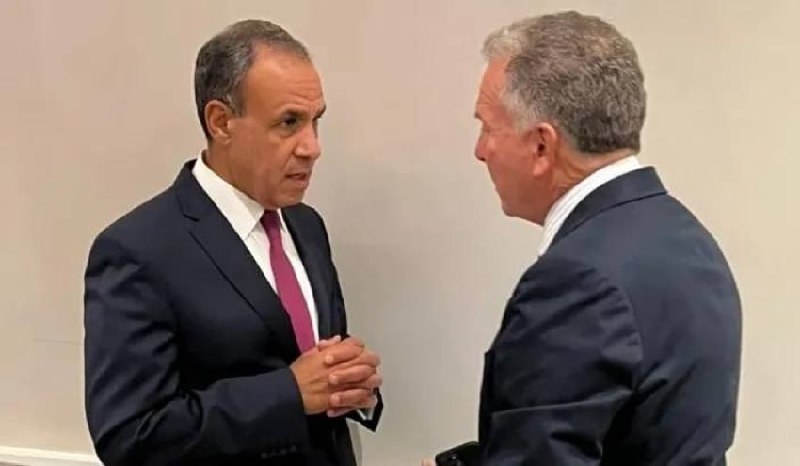
Foreign Minister Seyed Abbas Araghchi arrived in Beijing during the first week of May 2026 for a series of meetings with Chinese counterparts — the latest in a diplomatic cadence that has accelerated steadily since the collapse of the Iran nuclear deal in 2018. The visit produced no headline announcements. What it produced was something more significant: a formalised reporting structure that Tehran's leadership intends to maintain permanently. Araghchi briefed officials in the Iranian capital on what he called the importance of "continuous consultation with China," according to Iranian state media covering the trip. The language was institutional — the vocabulary of a relationship being cemented into the foreign policy architecture rather than improvised around crises.
This is not a new story in the sense of being unexpected. What makes the May 2026 visit notable is the framing Tehran is attaching to it. Rahmani Fazli, Iran's ambassador to China, told audiences in Tehran that relations with Beijing would become "broader and deeper" in the era after what he characterised as "the war imposed by America." The phrase — deliberately chosen, deliberately amplified through state media — signals that Iran's leadership is drawing a direct line between Western sanctions pressure and the institutionalisation of the China partnership. The ambassador is not describing a contingency arrangement. He is describing a strategic architecture.
The Visit in Context
Araghchi's itinerary in Beijing, as reported by Fars News, included formal consultations with his Chinese counterpart — a bilateral format that has become standard practice since 2021 but which has gained additional weight as Western capitals have hardened their positions on Tehran's nuclear programme. The foreign ministers met against a backdrop of stalled negotiations over Iran's nuclear file, renewed US Treasury designation activity targeting Iranian oil shipping networks, and a European Union framework that maintains the nuclear deal's restrictions while providing no clear pathway back to full compliance by Tehran.
The institutional framing of "continuous consultation" matters here. What Tehran is describing is not episodic outreach but a permanently staffed diplomatic channel — one that allows for real-time coordination on shared interests without the mediation of Western-aligned multilateral institutions. For a government that has spent five years navigating a sanctions regime designed to isolate it from global financial infrastructure, the existence of a reliable counterpart with significant economic weight is not merely useful. It is foundational to the strategy.
The Western Counterpoint
It would be incomplete to write this story without acknowledging what Western capitals would say in response. The United States has consistently argued that the maximum-pressure campaign — the sanctions architecture rebuilt after the 2018 withdrawal from the JCPOA — has meaningfully constrained Iran's oil revenues, reduced its access to dual-use technology, and created diplomatic friction that has made normalisation with Gulf states more difficult. American officials point to the decline in Iran's oil export figures between 2018 and 2022 as evidence of leverage.
Europe's position has been more nuanced. The continent has maintained the JCPOA's nuclear restrictions on paper while publicly condemning Iran's missile programme and regional activities. Several European governments have pursued what analysts describe as a selective engagement track — quiet channels on detained nationals, on financial humanitarian exemptions, on energy cooperation at the margins — that stops well short of normalisation but stops well short of full alignment with the American hardliner position.
The counterpoint that Western capitals struggle to answer, however, is structural. The sanctions toolkit was designed on an assumption that has increasingly proven false: that global commerce flows through Western financial infrastructure so comprehensively that any economy cut off from SWIFT and dollar-clearing would face systemic collapse. Iran has not collapsed. It has adapted. The China partnership — built on CNY-denominated trade, non-dollar payment systems, and infrastructure investment that bypasses the Western banking stack — has provided the alternative pathway that prevents the predicted pressure from delivering the predicted outcome.
The Structural Pattern
What is happening between Iran and China sits inside a larger pattern that is reshaping how middle powers and secondary powers navigate the global order. The dollar's role as the dominant reserve currency and the primary vehicle for international settlement has long provided Washington with what strategists call structural power — the ability to sanction entities across the world by cutting them off from a system they cannot avoid. That power has not disappeared. It has been partially circumvented.
China's willingness to offer an alternative — one built on CNY swap lines, on regional currency arrangements, on infrastructure investment denominated outside the dollar system — has given a growing number of states a route to economic activity that does not require Western approval. Russia under Western sanctions has used it. Iran has used it. The Gulf states, while publicly aligned with Washington, have quietly expanded their own CNY arrangements and non-dollar trade frameworks over the past three years.
For Iran, the structural significance of the China relationship is that it provides insurance against the worst-case scenario of complete Western isolation. But it is also more than insurance. It is a diplomatic anchor that gives Tehran confidence in negotiating positions it would otherwise lack. A government that believes it has no alternative to Western engagement negotiates differently than one that believes it has a genuine counterpart on the other side of the table.
Stakes and Forward View
The stakes of this deepening alignment are clearest for Western capitals whose policy architecture assumes the sanctions toolkit remains effective. If the Iran-China relationship continues to institutionalise — through permanent diplomatic mechanisms, through expanded CNY trade frameworks, through energy and infrastructure cooperation that reduces Iran's dependence on Western-adjacent markets — the maximum-pressure campaign's core premise erodes further. The policy was designed to create cost so severe that Tehran would either capitulate or collapse. Neither has occurred.
For Beijing, the calculation is more transactional but no less significant. China's energy security depends on diversified supply chains, and Iranian oil — discounted by the sanctions environment — offers a reliable source that is less exposed to the maritime chokepoints that make Gulf supply structurally fragile. The Belt and Road framework also benefits from a stable Iranian logistical corridor that connects Central Asia to the Persian Gulf. Beijing is not pursuing a geopolitical charity project. It is pursuing commercial and strategic interests that align with Tehran's.
What remains uncertain — and what the current source material does not fully illuminate — is the depth of Beijing's commitment when it conflicts with American commercial and diplomatic interests. China's overall trade relationship with the United States remains vastly larger than its Iran relationship. The question of whether Beijing would absorb significant American pressure on behalf of Tehran in a crisis remains genuinely open. The May 2026 visit confirms the trajectory. It does not confirm the ceiling.
This publication covered the Iran-China diplomatic alignment through Iranian state-adjacent sources, framing the deepening partnership against the structural backdrop of sanctions adaptation and dollar-system circumventing — a dynamic that Western wire coverage typically treats as secondary to the nuclear programme narrative.
Wire provenance
This editorial synthesis draws on the following public wire/social posts:
- https://t.me/FarsNewsInt
- https://t.me/tasnimnews_en