The Myth of Permanent Escape: Jordan Peterson and the Cultural Hunger for Accountability
Jordan Peterson's claim that no one ultimately escapes consequences resonates in an era of rising populism and institutional distrust. But the harder question is why so many people desperately want to believe it.
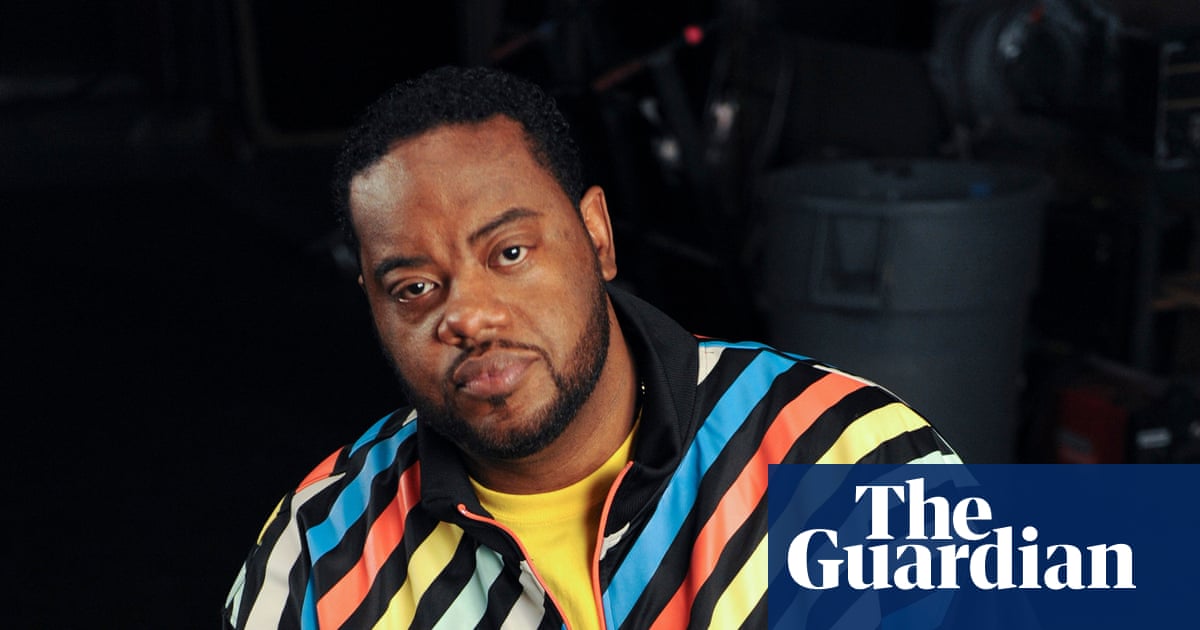
In a video posted to X on 8 May 2026, clinical psychologist and public intellectual Jordan Peterson offered what he framed as a hard-won insight into the human condition. "I've never seen anyone get away with anything," he said. "Not even once." The line has since accumulated millions of views, countless shares, and the particular kind of reverence that attaches to statements people desperately want to be true.
The appeal is not hard to understand. Peterson is speaking to an audience that has watched powerful figures appear to dodge accountability for decades — executives whose negligence produced financial crises without prison sentences, officials whose policy failures killed thousands without career consequences, institutions that absorbed scandals and emerged functionally unchanged. The phrase lands like a verdict on a system many experience as rigged. It promises that the ledger always balances, that justice is cosmic rather than negotiated, that the powerful are not, in the end, exempt.
The problem is that the evidence does not uniformly support the claim.
What the Ledger Actually Shows
The history of unaccounted-for power is not a marginal phenomenon. In 2008, executives at major financial institutions sold mortgage-backed securities they knew to be toxic, collected bonuses calculated on short-term gains, and watched their firms receive government bailouts that preserved shareholder value while individual accountability remained largely theoretical. The Financial Crisis Inquiry Commission documented the chain of decisions; criminal prosecutions followed in only a handful of cases, and prison sentences for senior decision-makers were rarer still.
The pattern recurs across jurisdictions and sectors. Opioid manufacturers and distributors shipped billions of pills into communities that were, in internal documents, explicitly understood to be high-risk, without the corporate executives responsible facing meaningful criminal exposure. Pharmaceutical giant Johnson & Johnson received a settlement in 2024 that amounted to roughly two years of annual revenue — a sum large in absolute terms but calibrated to leave the firm's structure intact. No senior executive went to prison.
These are not isolated examples. They represent a structural feature of how advanced democracies handle elite misconduct: large financial settlements, regulatory settlements, and civil damages that function as operating costs rather than consequences that alter behaviour or careers. The language of accountability is used; the reality is often closer to negotiated resolution that preserves institutional continuity.
The Demand for Cosmic Justice
Peterson's framing — that no one ultimately escapes — is doing different work than a dispassionate audit of outcomes. It is offering certainty to people navigating genuine uncertainty about whether the systems governing their lives are just. In that sense, the appeal of the claim is almost entirely separate from its empirical validity.
The cultural moment in which this resonates is specific. Trust in institutions — courts, parliaments, legacy media, major corporations — has declined across the democratic world for two decades, according to Edelman Trust Barometer data that has been consistently replicated in regional surveys. When people stop believing that formal mechanisms deliver accountability, they tend to look for alternative frameworks that restore a sense of cosmic order. The idea that consequences are inescapable — that the universe keeps its own ledger — serves that psychological function even when legal systems demonstrably do not.
Peterson is not alone in offering this kind of reassurance. A cottage industry of podcasters, authors, and commentators has built large audiences partly on the promise of explaining why the official story of justice is incomplete. The appeal is not primarily intellectual; it is emotional. People want to be told that the system is less rigged than they fear, that power does not ultimately escape judgment, that fairness is built into the structure of reality rather than negotiated by interested parties.
The More Uncomfortable Claim
If Peterson's statement is examined without the confirmatory bias his audience brings to it, a different — and more analytically useful — claim emerges. The question is not whether anyone ever escapes accountability. History is littered with examples that suggest yes, they sometimes do. The more productive question is what conditions make accountability possible and what conditions foreclose it.
Accountability tends to follow predictable patterns. It is more likely when institutions are independent, when information flows freely, when legal systems have resources and political insulation, and when there exists a motivated constituency that will accept short-term costs in pursuit of longer-term justice. It is less likely when powerful actors can litigate opponents into exhaustion, when jurisdictions compete to offer regulatory refuge, when investigations are underfunded, and when political will is absent.
These conditions are not fixed. They respond to political pressure, to investigative journalism, to the slow accumulation of evidence that eventually overwhelms institutional resistance. The executives who escaped accountability for the 2008 crisis did so partly because of the political economy of the moment. The mechanisms that allowed that escape have since been examined, litigated, and — in limited ways — reformed. The opioid settlements, however imperfect, represent an outcome that would have been harder to imagine twenty years earlier.
What This Says About Our Moment
The viral resonance of Peterson's claim is itself a data point. It tells us that large numbers of people have concluded — based on genuine experience of institutional behaviour — that formal accountability mechanisms are unreliable. It tells us that there is an audience hungry for frameworks that restore a sense of moral order even when those frameworks are not rigorously tested against evidence.
The harder conversation — about what makes accountability achievable, about which institutional reforms have worked and which have failed, about the gap between the justice people experience and the justice they expect — is less satisfying and less viral. It does not offer the comfort of a closed ledger. It offers instead the discomfort of an open question: under what conditions does accountability become more rather than less likely, and what would need to change for that to happen?
Peterson's claim that no one escapes consequences is, in its most charitable reading, a motivational assertion — a bid to encourage people to act as though justice will eventually arrive because the alternative is nihilism. The evidence does not fully support it. What it does support is more demanding: that accountability is not automatic, that it must be constructed, and that the demand for it — however messy and unsatisfying — is precisely what keeps the machinery from fully seizing.
This publication covered Peterson's framing as a cultural signal rather than a philosophical thesis, focusing on the conditions that make accountability achievable rather than on the comfort of assumed inevitability.
Wire provenance
This editorial synthesis draws on the following public wire/social posts:
- https://x.com/newstart_2024/status/2052878912456212485