Russia and Ukraine Agree Three-Day Ceasefire, 1,000 Prisoner Swap Per Side
Both Moscow and Kyiv confirmed a short-term truce announced by the White House on May 8, with a 1,000-for-1,000 prisoner exchange at its centre — but the ceasefire's durability beyond May 11 remains the central question.
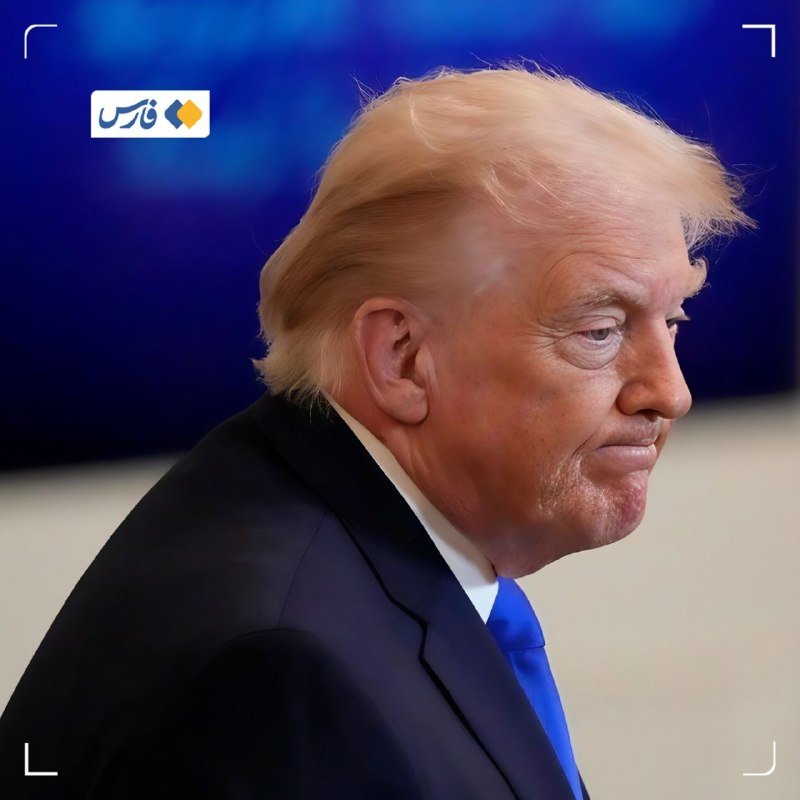
Russia and Ukraine confirmed on May 9, 2026, that they had agreed to a three-day ceasefire running from May 9 through May 11, with each side releasing up to 1,000 prisoners of war. The announcement originated from the White House, where U.S. President Donald Trump said he had requested the truce and that both governments had accepted. The deal marks the most concrete diplomatic result of Washington's renewed engagement with the conflict since the last major ceasefire collapsed in early 2026, though its fragility was immediately apparent.
Trump described the arrangement as a potential first step. "I'd like to see it stop," he told reporters at the White House on May 8, referring to the conflict he called "the worst thing" he had encountered in his presidency. He also said the ceasefire could be extended beyond the three-day window if the parties agreed. The scale of what would be exchanged — 1,000 Ukrainian prisoners held by Russia and 1,000 Russian prisoners held by Ukraine — represents a substantial but partial concession from both sides, and one that sits within a wider framework neither government has publicly endorsed.
The Verification Problem
The immediate challenge facing the truce is not diplomatic, but operational. Frontline verification in a conflict stretching across more than 1,000 kilometres of contested terrain is technically demanding and politically sensitive. Neither Ukraine nor Russia has consistently honoured short-term pauses in recent years — temporary silences have been used to reposition forces, and local commanders on both sides have repeatedly alleged violations within hours of announced ceasefires.
Ukrainian military commanders have in past rounds called for internationally monitored ceasefires with credible enforcement mechanisms. The current arrangement, as described by both sides on May 9, does not appear to include a third-party monitoring body. Whether the ceasefire holds at the local level — in towns like Toretsk, Vovchansk, and Kurakhove, where combat has been continuous for months — will be the first real test of whether the agreement represents a genuine pause or a political gesture.
Washington's Diplomatic Footprint
The announcement places the United States at the centre of the diplomatic architecture around the conflict in a way it has not been since early negotiations collapsed in 2025. Trump's framing on May 8 was explicit: he said he had settled nine conflicts and was prepared to make this his tenth. The comment signals an administration willing to be measured by outcomes rather than by process — a posture that appeals to domestic audiences but creates pressure on the Ukrainian side, which has consistently insisted that any ceasefire must lead to a just and lasting peace, not simply a pause in fighting.
What the announcement did not include was any reference to the broader framework — territorial questions, security guarantees, reconstruction funding — that Kyiv regards as inseparable from any durable resolution. A three-day ceasefire focused on a prisoner exchange is a humanitarian gesture; it does not resolve the underlying conflict, and both governments' official communications stopped well short of suggesting otherwise.
What Comes Next
The 72-hour window gives both governments time to test whether a broader cessation of hostilities is possible. For Ukraine, the exchange of 1,000 prisoners is a significant humanitarian outcome regardless of what follows — families of personnel held since 2022 and 2023 will see their loved ones return. For Russia, it reduces the political cost of participating in the arrangement while avoiding any acknowledgment of broader concessions.
If the ceasefire extends beyond May 11, it will require a new round of confirmation from both governments, and likely additional engagement from Washington. The absence of a EU or NATO monitoring mechanism within the terms announced creates a structural gap that any extension will need to address. European officials have so far been cautious in their public statements, a signal that the arrangement is primarily American-driven and that Europe's role in what follows remains undefined.
The 25,000 to 30,000 casualty figure Trump referenced on May 8 — a range he offered without attributing it to a specific source — reflects the scale of what a durable peace would need to address. That figure, if it approximates reality, represents a fraction of the total conflict dead and wounded since February 2022, but it frames the immediate stakes in terms the White House audience can absorb.
The Structural Logic of a Short Pause
Temporary ceasefires in long wars serve specific functions beyond their surface purpose. They allow forces to resupply, give commanders a chance to regroup, and provide political space for governments to signal willingness without formally committing to a settlement. They also allow outside powers — in this case Washington — to demonstrate that engagement produces results, even results that are limited in scope.
Whether this arrangement serves those functions depends entirely on what happens when the 72 hours expire. A ceasefire that collapses on May 11 will be read as a failed American initiative; one that extends will be cited as evidence that sustained diplomacy can produce incremental progress. The gap between those two outcomes is not wide, but it is real — and it rests on variables that no announcement on May 8 could determine.
This publication covered the ceasefire as a White House-originated announcement confirmed by both parties, prioritising Kyiv Post, Reuters, and Ukrainian government sources as primary verification points. Wire framing in competing outlets centred on the American diplomatic win; this article foregrounds verification uncertainty and the structural gap in enforcement.
Wire provenance
This editorial synthesis draws on the following public wire/social posts:
- https://x.com/i/status/1929283477569347806
- https://x.com/i/status/1929283477569347806
- https://t.me/wfwitness
- https://t.me/wfwitness
- https://t.me/wfwitness