Russia's Veto Threat Exposes the Limits of US Pressure on Iran
As Washington revises a UN resolution on Iran's nuclear programme and Moscow signals it will block collective enforcement, the architecture of US pressure is showing its seams. Iran, meanwhile, is building alternative routes that no Security Council vote can close.
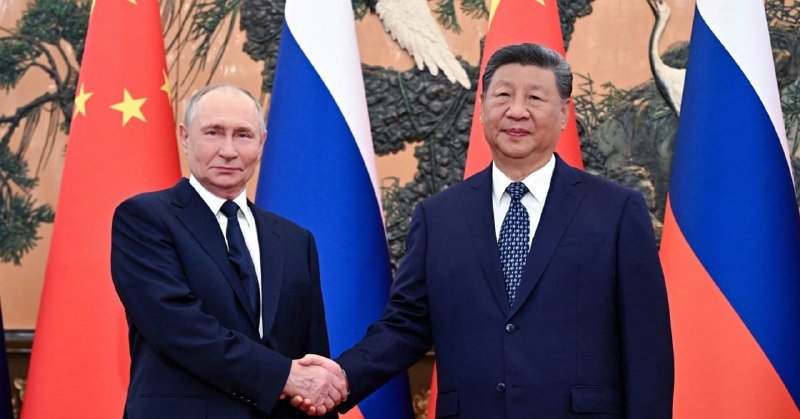
When Russia's foreign minister tells his Emirati counterpart that Moscow sees value in supporting talks between Washington and Tehran, the signal is not mere diplomatic courtesy. It is a statement of position — and an unmistakable warning to the United States that any move to internationalise pressure on Iran will run into a wall at the United Nations Security Council.
That warning arrived on 9 May 2026, the same morning US diplomats circulated a revised resolution on Iran's nuclear programme at the Security Council. According to two Reuters reports filed that morning, Russia told the UAE it viewed the talks as worth backing — a framing that carries the implicit threat that Moscow will follow through on its veto if the final text does not satisfy Russian interests.
The result is a diplomatic cul-de-sac. Washington wants multilateral authority for its pressure campaign. Russia and China are signaling they will block it. And Iran, watching both dynamics from the sidelines, is quietly building infrastructure that makes the multilateral question almost beside the point.
The veto as diplomatic leverage
The US revision to its draft resolution — reported by Reuters on the morning of 9 May — reflects an attempt to secure enough Council votes to legitimise the pressure campaign, even if a veto is ultimately unavoidable. That is a familiar US playbook: seek institutional cover, accept a Russian veto as a political problem rather than a legal one, and proceed with unilateral action backed by the appearance of multilateral good faith.
But the veto itself is the story. Moscow and Beijing voting in lockstep to block a US-backed resolution on Iran is not simply a Russia-China friendship exercise. It reflects a deliberate calculation that US-Iran rapprochement — if it proceeds on Washington's terms, without Russian and Chinese input — would exclude two powers that have substantial interests in the region's architecture.
Russia's Lavrov, speaking through the UAE channel, was not merely defending Iran as a client. He was reminding Washington that any deal inked without Moscow's blessing will lack the geopolitical weight to enforce itself. A nuclear agreement that Russia and China treat as illegitimate is an agreement with a structural hole in its foundation.
Iran builds around the blockade
The diplomatic theatre at the UN is unfolding as Iran accelerates a workaround to the core US strategy — the blockade of its ports. According to reporting carried via the unusual_whales feed on 8 May, which cited Bloomberg, Tehran is ramping up rail freight through Central Asia as a substitute for maritime trade that US sanctions have made increasingly costly and uncertain.
The numbers, where reported, are not yet publicly consolidated into a single figure. But the direction is clear: Iran is reducing its dependence on shipping lanes that Washington can interdict and replacing them with overland routes that run through Kazakhstan, Turkmenistan, and into China's western provinces. This is not a pivot of desperation. It is the kind of infrastructure investment a state makes when it expects the blockade to be permanent.
For the United States, this is a problem without a Security Council solution. Even a resolution passed by a vote of 13-2 — with Russia and China isolated — would not close the rail corridors. It would not build the warehouses, hire the drivers, or sign the bilateral transit agreements that Iran is negotiating bilaterally and quietly.
The sanctions architecture under pressure
The US strategy on Iran has rested on two pillars: diplomatic isolation through UN mechanisms, and economic pressure through secondary sanctions on third-country buyers and shippers. Both pillars are weakening simultaneously.
On the diplomatic side, the Security Council route is functionally blocked as long as Russia and China hold vetoes they are willing to use. The US can pass resolutions in other forums — the IAEA, bilateral agreements with European partners — but these lack the same legal weight and geopolitical reach.
On the economic side, the rail alternative demonstrates that Iran can route a meaningful share of its trade through corridors where US secondary sanctions are harder to apply. A Kazakh freight operator moving containers overland is a very different enforcement target than a Hong Kong-flagged vessel entering the Gulf. The US can sanction individuals; it cannot sanction geography.
This does not mean US pressure has no effect. Iranian oil exports remain constrained; the rial remains under pressure; Iranian households feel the bite of inflation that the blockade amplifies. But the structural question — whether pressure can force a nuclear concession — looks increasingly hard to answer in the affirmative when the target is actively building redundancy into its trade architecture.
What this means for the talks
The US-Iran talks themselves remain ongoing, and neither side has signalled a willingness to walk away. But the context around the talks is hardening. Russia wants a seat at the table, not just a veto in the corner. China is already integrated into Iran's trade infrastructure in ways that are not reversible on any short timeline. And Iran, watching the Council dynamics, has every incentive to extract maximum concessions before any deal that Washington might present — knowing that a future US administration could re-impose pressure with or without a UN mandate.
The counter-argument — that US-Iran détente is possible without resolving great-power competition — deserves serious weight. A bilateral nuclear agreement, signed and implemented, would slow Iran's enrichment programme and reduce the immediate risk of escalation, regardless of what Russia and China think about it. The security case for a deal is real, and it does not disappear because the diplomatic context is complicated.
But the complication is not incidental. A deal reached without Russian and Chinese buy-in will face sabotage at the margins — through intelligence sharing, through technology transfer, through the kind of quiet encouragement that keeps Iran's options open without crossing any bright legal lines. The veto is the most visible tool, but it is not the only one.
The United States enters this negotiation with substantial leverage — military presence in the Gulf, control of SWIFT rails, alliance architecture with European and Gulf partners. But the structural limits of that leverage are becoming visible at the same time as the talks progress. Washington can pressure Iran; it cannot, on its own terms, isolate it. And as long as that gap persists, the talks will be shaped by actors who were not in the room when the agenda was set.
The Security Council vote, when it comes, will be recorded. The rail freight moving through Central Asia will not be counted — but it will keep moving.
Wire provenance
This editorial synthesis draws on the following public wire/social posts:
- http://reut.rs/3Pc5z0Q
- http://reut.rs/4nlh56Q
- https://twitter.com/unusual_whales/status/1921987409676099617
- 16 MayThe Can and the Crucible: How Iran Tensions Are Reshaping Global Supply Chains
- 15 MayThe Veto That Wasn't: US-Iran Diplomacy Enters Its Reckoning
- 14 MayTrump's Dual Iran Strategy Tests the Limits of Gulf Diplomacy
- 13 MayThe Dollar Under Siege: How US Sanctions Architecture Is Being Tested on Three Fronts at Once
- 12 MayGeopolitical Fault Lines: How the Iran Crisis Is Fracturing Global Supply Chains and Dollar Architecture