Sanders Slams Iran War's Economic Toll on American Families
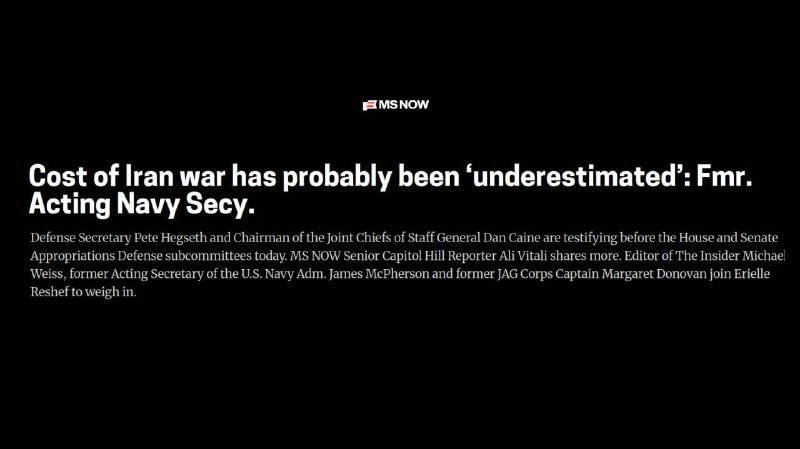
Independent Senator Bernie Sanders escalated his criticism of the Trump administration's Iran policy on 9 May 2026, characterizing the ongoing confrontation as an illegal war and warning that its domestic economic fallout is falling hardest on American working families.
Speaking on Capitol Hill, Sanders cited what he said were the direct consequences for household budgets: according to his office, gasoline prices have climbed from $2.98 to $4.55 per gallon since the current phase of maximum pressure operations began. "American families cannot afford these expenses," Sanders said, calling for an immediate cessation of hostilities. "This war must end now." The senator, who ran twice for the Democratic presidential nomination as an independent, has historically opposed US military interventions abroad, but his public framing of the Iran policy as an illegal war marks a significant escalation in his language against a sitting administration's foreign policy.
The Economic Arithmetic
Sanders' specific focus on fuel prices reflects a broader anxiety coursing through Washington policy circles. The White House has maintained, and expanded, a web of sanctions and secondary-pressure measures targeting Iran's oil exports, its banking sector, and its shipping networks. The stated aim is to force Tehran to the negotiating table on its nuclear programme and to curb its regional missile activities. The practical effect, critics argue, has been to remove barrels from an already tight global supply picture, with prices at the pump rising in step with each escalation.
Sanders is not alone in raising the domestic-cost argument. Several moderate Senate Democrats have quietly pressed the administration to distinguish between strategic goals achievable through sanctions and those that require kinetic action, fearing that conflating the two risks an open-ended conflict with no clear exit. The senator's intervention puts that internal debate into public view, at a moment when the administration's national security team has given no indication that it intends to scale back either the economic or the military dimensions of its approach.
Whose Illegal War?
The phrase "illegal war" is not one the US government uses about its own actions, and Sanders' choice of it is deliberate and political. Under international law, the question of whether a given use of force is lawful turns on Security Council authorization or a credible self-defense claim — a threshold the Trump administration has not publicly argued applies here. What Tehran calls the "resistance economy" and Washington calls "malign activity" occupies a contested legal space that both sides have an interest in defining favorably.
What the sources do not establish is whether Sanders' cited price figures correspond precisely to the national average as measured by the Energy Information Administration, or whether they reflect a specific regional sampling. The dollar amounts appear as Sanders' own figures, presented without independent corroboration from an official government fuel-price tracker. Monexus has not verified the specific baseline-to-current calculation against EIA data, and readers should treat those figures as Sanders' framing rather than a confirmed statistic.
The Structural Pattern
Maximum-pressure campaigns against Iran are not new. The Trump administration withdrew from the Joint Comprehensive Plan of Action in 2018; the Biden administration restored some sanctions relief but ultimately failed to restore the deal. What the current moment shares with those precedents is the familiar dynamic: economic pain imposed on a target state, with domestic costs absorbed by consumers in the imposing country. The mechanism is structural, not accidental. Sanctions reduce supply; reduced supply raises prices; higher prices affect importers and consumers. That the pain is real for American drivers does not make it unintended — but it does make it politically salient.
The counterargument from administration allies is that the alternative — allowing Iran's oil revenues to flow unrestricted — carries its own costs, measured not in dollars per gallon but in regional stability, in the survivability of non-proliferation norms, and in the credibility of US security commitments to Gulf allies. That case has not been made in detail to the American public, which is one reason Sanders' economic framing resonates: it speaks to something voters can verify at the gas station.
What Comes Next
The political crosscurrents are significant. Sanders' intervention puts pressure on any Democrat considering a 2028 presidential bid to stake out a position on Iran — a debate the party has largely avoided since the collapse of JCPOA revival talks. It also complicates the administration's argument that it has bipartisan support for its approach. The traditional anti-interventionist flank of the Republican coalition has largely backed the White House, but growing public anxiety about pump prices could erode even that backing.
The stakes are concrete: a sustained further escalation — whether through expanded sanctions designations, additional military positioning, or direct strikes — risks a supply shock that would dwarf the price increases Sanders cited. American households, already navigating elevated costs across multiple categories, would bear the first-order effect. Iranian civilians and the broader regional order would absorb the rest. Sanders' case, whatever its rhetorical force, points toward a structural reality both sides of the aisle would prefer to ignore: that unlimited pressure, without a defined political objective and an exit ramp, tends to produce unlimited consequences.
This article draws on reports from Tasnim News Agency and Tasnim Plus, Persian-language outlets with pro-Iran editorial lines. Sanders' statements are reported as his characterisation of administration policy. Gasoline price figures are drawn from Sanders' own public remarks; Monexus has not independently verified the specific baseline-to-current calculation against Energy Information Administration data.
Wire provenance
This editorial synthesis draws on the following public wire/social posts:
- https://t.me/tasnimnews_en/876543
- https://t.me/tasnimplus/654321
- https://t.me/alalamfa/123456
- The Price of War: How Trump's Iran Confrontation Is Reshaping the American Energy Math16 May
- Bernie Sanders Sounds Alarm on Iran War Economic Fallout as Gas Prices Surge Past $4.5016 May
- The Price of Confrontation: Bernie Sanders and the Domestic Costs of Trump's Iran Policy15 May
- The Pump Paradox: How America's Iran Pressure Campaign Created Its Own Political Headwind14 May
- Bernie Sanders Calls Trump's Iran Policy an 'Illegal War' as US Gas Prices Surge14 May