The Tenerife Standoff Reveals a Deeper Anxiety About Who Controls Port Access
When the MV Hondius neared Tenerife this week, residents reached for familiar fears — but the tension between economic necessity and viral caution runs deeper than a single ship.
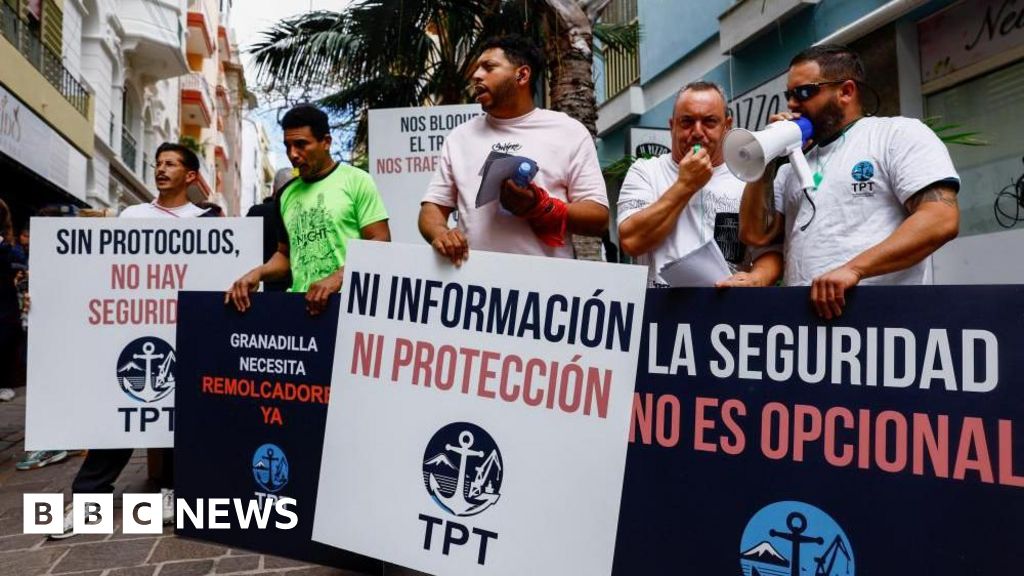
Something between resignation and alarm has settled over Tenerife as the MV Hondius drew near. The vessel, flagged in reports from BBC World News on 9 May 2026, was carrying what residents described, in comments circulating across local channels, as a potential health threat. By the time the ship was hours from the Canaries, the island had settled into a familiar posture: wait, watch, worry.
The immediate question is whether hantavirus — a rodent-borne pathogen that can cause severe respiratory illness in humans — poses a credible transmission risk via maritime contact. Public health authorities in Spain and at the European level have maintained for years that cargo vessels with intact crew quarters and sealed cargo holds represent low-risk environments for respiratory pathogen spread. The hantavirus family, in its various strains, typically transmits through contact with urine, droppings, or saliva from infected rodents, not through the kind of airborne exchange that defines influenza or coronavirus. A ship docking in Tenerife does not automatically become a vector event. And yet the fear persists, in part because the architecture of dread has been built up over successive crises — Ebola, MERS, COVID — and port cities have learned that caution is cheap compared to an outbreak.
The deeper tension here is not really about hantavirus. It is about who has the authority to say when a port is safe, and whose judgment the island should trust.
For decades, European port cities have operated under a delicate bargain: commerce flows through their waters, and in exchange, the economic benefits — jobs, tax revenue, supply chain activity — justify the routine risks of maritime traffic. Tenerife's port authority and the regional government of the Canary Islands have strong incentives to keep vessels moving. Tourism accounts for roughly a third of the Canaries' GDP, and a prolonged health scare — even an unfounded one — could slow booking cycles and airline routing decisions that take months to reverse. The Spanish government's messaging apparatus has been careful in recent days, neither dismissing resident concerns outright nor amplifying them, which suggests a bureaucratic instinct to manage rather than resolve.
But residents have watched this script before. COVID-era restrictions on cruise ships left passengers stranded offshore for days before ports relented. H5N1 avian influenza alerts prompted intermittent bans on certain classes of fishing vessels in the Mediterranean. The pattern is consistent: authorities respond slowly, then overcorrect, then offer retrospective explanations that do little to restore confidence before the next crisis. In that light, the anger on Tenerife is less about the MV Hondius specifically and more about a cumulative sense that the people who live closest to the risk have the least say in how it is managed.
There is a structural parallel worth drawing here. Communities on the edges of global supply chains — island economies, frontier ports, transit hubs — absorb externalities that metropolitan centers generate and rarely experience. Tenerife's residents are being asked to accept the noise, the traffic, and the residual health uncertainty of a global shipping route that primarily serves Northern European consumers and Asian manufacturers. The MV Hondius may be carrying nothing more consequential than routine cargo, but the ship stands in for a set of arrangements that these communities did not design and cannot easily renegotiate. When residents express resignation, they are expressing something real about their position in a system that treats their concerns as a secondary consideration.
The hantavirus framing, even if technically overblown, also serves a political function. It gives residents a legitimate vocabulary to articulate a grievance that might otherwise sound like mere NIMBYism. A port city opposing a vessel on public health grounds is participating in a regulatory conversation. Opposing it because you dislike the smell of diesel or the view from your balcony is not. The distinction matters because the health frame is one of the few tools available to communities seeking to slow or redirect traffic they believe imposes costs on them without adequate compensation.
What happens next depends on what the ship's manifests show and whether Spanish health officials find any evidence of actual rodent contamination in the vessel's quarters. If the MV Hondius clears inspection without incident, the episode will fade quickly — another false alarm in a world conditioned to expect them. If traces are found, or if the crew reports symptoms consistent with hantavirus transmission, the political calculation on Tenerife shifts immediately. In either case, the underlying question — how much voice local residents get in decisions that determine what passes through their waters — will remain unresolved.
The answer to that question will not come from the MV Hondius. It will come from whatever regulatory architecture European port cities choose to build around community input, inspection transparency, and the distribution of risk and reward along maritime supply chains. Until that structural reform arrives, each ship that enters a port will inherit the anxiety of the last one that did not.
Wire provenance
This editorial synthesis draws on the following public wire/social posts:
- https://t.me/BBCWorldoffl
- https://t.me/BBCWorldoffl