Trump's Contradictory Gulf Signal: Carrier Posture Meets Baghdad Celebration
The President says he has 'no reaction' to a US carrier moving toward the Strait of Hormuz while simultaneously celebrating Iraq's new Prime Minister — a pair of signals that expose the incoherence at the heart of his administration's Gulf diplomacy.
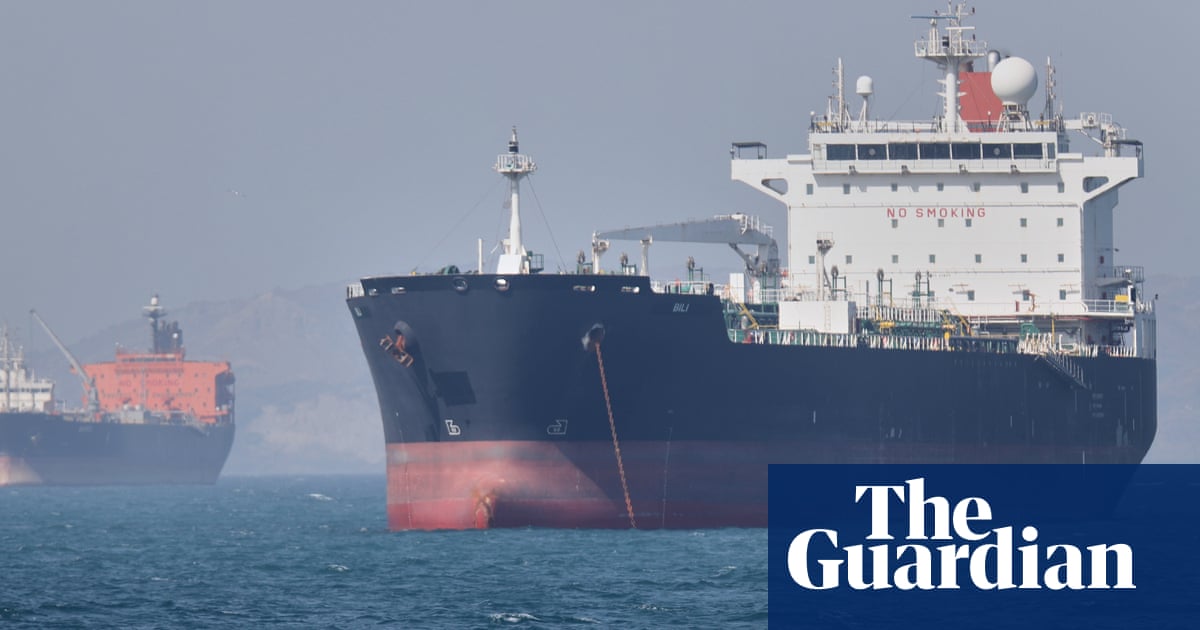
On May 8, 2026, President Donald Trump offered two statements on the Gulf region that, taken together, sent a signal of striking incoherence. Speaking to reporters at the White House, he said his administration had "no reaction" to the deployment of a US aircraft carrier toward the Strait of Hormuz — the narrow waterway through which roughly a fifth of the world's oil passes. In the same session, he expressed satisfaction with the election of Iraq's new Prime Minister, whom he had strongly endorsed, calling the outcome "a great victory."
The juxtaposition raises hard questions about the direction of US policy in a region where Iran occupies a central strategic position — controlling, directly or through proxies, significant leverage over the Hormuz chokepoint while also maintaining substantial political influence inside Iraq. An administration that congratulates Baghdad while claiming indifference to a carrier's approach toward Tehran's maritime doorstep is offering the region a posture without a clear doctrine.
The Carrier and the Strait
The Strait of Hormuz has been a flashpoint for US-Iranian tension since the 1979 revolution. Iran has repeatedly threatened to close the passage — or at least signal that capacity — in periods of heightened confrontation. The deployment of a carrier battle group toward the strait is, in standard US naval signaling, a show of presence and deterrence. That the White House chose to frame this as unworthy of comment marks a departure from the way previous administrations have treated similar deployments, which were routinely announced or discussed as deliberate signals.
Iranian military capabilities have grown significantly since the 2015 Joint Comprehensive Plan of Action was abandoned in 2018. Iran's drone fleet, naval mine capacity, and shore-based anti-ship missile systems give it a deterrent that is qualitatively different from what existed a decade ago. Iranian state media has highlighted this capability development routinely. Trump, in his May 8 remarks, appeared to acknowledge that growth — saying Iran is "seeming to come along very well militarily" — without drawing any policy conclusion from that assessment. The sources do not elaborate on what Trump's fuller view of Iran's military trajectory is, nor what response, if any, the carrier deployment is intended to signal.
Baghdad's New Prime Minister
Iraq's political landscape is shaped by competing external alignments. Successive governments in Baghdad have navigated between Iran, the United States, and domestic Shi'a, Kurdish, and Sunni political formations. The new Prime Minister, whose name is not specified in available sources, received what Trump described as his strong endorsement — a public statement of US preference in a sovereign state's leadership selection.
Trump called the election outcome "a great victory." Whether that assessment is shared by Iraq's political class, or by the populations in Baghdad, Basra, and Mosul who must live under the resulting government, is a separate question. Iraqi constitutional politics are complicated by the role of Iran-aligned political blocs, particularly in the security sector. Previous US administrations have tried and failed to shape Iraqi succession outcomes; the degree to which Trump's stated endorsement translated into actual influence, versus symbolic acknowledgment of an outcome already determined by Iraqi internal dynamics, is not clear from the available record.
The Structural Problem
Gulf diplomacy requires coherence between military signaling and political engagement. A carrier approaching Iranian territorial waters is a form of pressure. Congratulating an Iraqi leader — particularly one who likely emerged from a political formation with Tehran's quiet support or acquiescence — is a form of accommodation. Doing both simultaneously does not send a message of strength; it sends a message of improvisation.
The broader context matters here. Oil markets have been sensitive to Hormuz-related signaling for decades. Any serious disruption to traffic through the strait would roil global energy prices, with cascading effects on inflation, industrial policy, and the geopolitical positions of both net oil exporters and importers. A US administration that cannot clearly articulate where it stands vis-à-vis both Iran and its Iraqi interlocutors creates ambiguity that regional actors — and financial markets — typically price in as risk.
What Remains Uncertain
The available record does not specify which aircraft carrier was deployed, whether this represents a new operational posture or a routine transit, or what the timeline is for its approach to the strait. The sources do not identify the Iraqi Prime Minister by name, nor do they indicate the vote margin or coalition composition that produced the outcome Trump described as a "great victory." Iranian officials have not yet issued a public response to the carrier deployment as of this writing.
The deeper uncertainty is institutional: whether the White House and the Pentagon share a common view of what the carrier deployment is supposed to accomplish, and whether the State Department was consulted on the Baghdad endorsement. These questions will determine whether the signals amount to a temporary drift in messaging or a structural incoherence that regional actors will test.
\nThis publication covered the carrier deployment and Baghdad endorsement as concurrent signals. Wire coverage tended to treat them as separate stories. Monexus finds that the juxtaposition — not the individual items — is the story.
Wire provenance
This editorial synthesis draws on the following public wire/social posts:
- https://t.me/wfwitness/2847
- https://t.me/wfwitness/2846
- https://en.wikipedia.org/wiki/Strait_of_Hormuz
- https://en.wikipedia.org/wiki/Iraqi_parliamentary_elections