Trump's Three-Day Ceasefire Gambit and the Diplomacy Nobody Else Was Asked About
The announcement of a 3-day ceasefire over the May 9th commemoration period carries symbolic weight, but the diplomatic architecture that would make it real remains conspicuously absent from the public record.
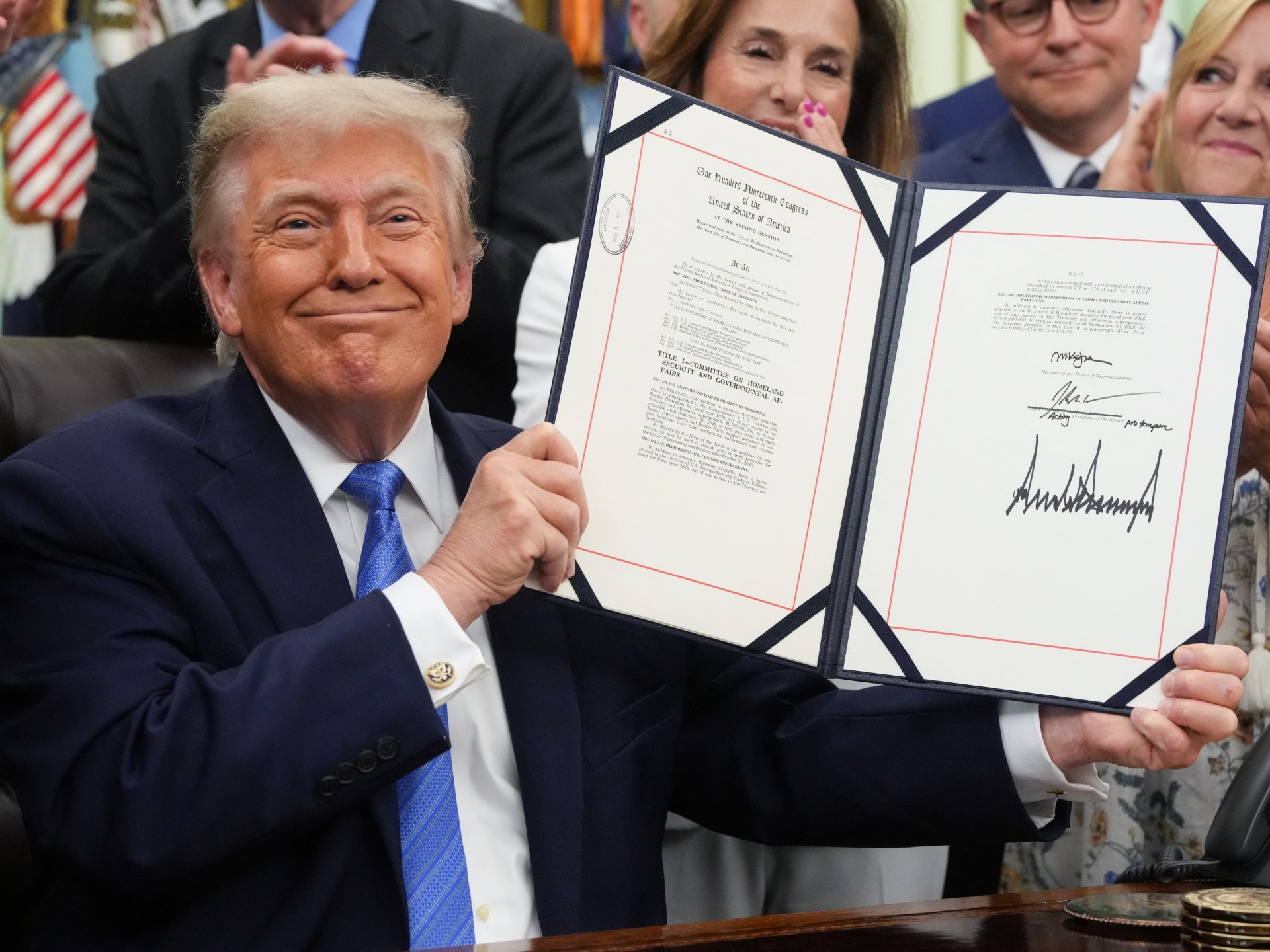
The announcement landed without ceremony on the evening of May 8, 2026. Via social media and Arabic-language wire services, the word went out that there would be a three-day cessation of hostilities in the Russia-Ukraine conflict — May 9th, 10th, and 11th. The president of the United States said he would send negotiators to Moscow if that would help.
That is what the public record contains. It does not contain evidence that Kyiv was consulted before the announcement, that European partners were given advance warning, or that any diplomatic framework has been agreed to by the parties actually fighting the war. The ceasefire, as announced, exists as an intention expressed in a post. Its substance — who would monitor it, what would trigger its end, what the parties would gain or forfeit by observing it — remains unstated.
The timing is not accidental. May 9th marks Victory in Europe Day, the commemoration of Nazi Germany's surrender in 1945. Moscow has increasingly claimed ownership of that date, staging large military parades and using it as a vehicle for narratives positioning Russia as the decisive force in the Second World War. A ceasefire called for that window carries obvious symbolic resonance, whether or not it was designed to do so.
What the announcement did not say
The sources do not indicate that President Volodymyr Zelenskyy or Ukrainian military commanders were consulted before the announcement. United24 and Kyiv Post have covered the trajectory of Ukrainian consent in ceasefire discussions extensively, and the pattern in that coverage suggests that Kyiv has insisted on verifiable security guarantees — not declared intentions — before agreeing to any cessation of hostilities. The question of whether those guarantees have been offered or discussed does not appear in the available public record from May 8.
European capitals, whose support has sustained Ukrainian resistance for more than three years, also do not appear in the sourcing. The E3 format — France, Germany, the United Kingdom — has maintained its own diplomatic track alongside U.S. efforts. Whether those capitals were informed in advance of the May 8 announcement is not addressed by any of the sources consulted for this article.
This matters because the effectiveness of any ceasefire in a active war zone depends on something more fundamental than the announcement of one. It depends on whether both parties — in this case, an invading force and a defending one — have agreed to observe it, have the capacity to enforce it on their own troops, and see strategic value in doing so. Without evidence of Ukrainian buy-in, the announcement functions as a statement of preference rather than a diplomatic fact.
The Moscow angle
The offer to send negotiators to Moscow is, on its face, a conventional diplomatic gesture. Sending envoys to the capital of a belligerent power to discuss terms is how diplomacy is conducted. But the sequencing matters. The United States has not, in the public record available for this article, disclosed what it has asked of Russia in exchange for a ceasefire, what it has offered, or what it believes a negotiating table would produce.
Russian state-adjacent sources have, across multiple reporting cycles, maintained that Moscow's conditions for a sustained cessation include territorial recognition of occupied regions, the lifting of Western sanctions, and security architecture changes that Kyiv and its partners have rejected as capitulation. Whether any of those conditions are on the table in the current U.S. approach is not specified in any of the sources consulted.
The announcement does not, on its surface, represent a shift in stated U.S. policy. The Trump administration has signaled openness to brokered outcomes since the beginning of its current term. What is notable is the unilateral character of the announcement — made in Washington, directed at Moscow, without visible evidence of prior consultation with the party that has borne the costs of the invasion for more than three years.
The structural context
Ceasefire announcements in active conflicts rarely achieve what their issuers intend. The mechanics of observation, enforcement, and compliance are technically demanding and politically sensitive. A three-day pause, even one observed, does not constitute a peace process. It is, at best, a confidence-building measure — and confidence-building requires that both sides have reason to be confident.
Ukraine has, across consistent reporting from Ukrainian and Western-aligned sources, been reluctant to enter arrangements that leave it structurally weaker at the moment fighting resumes. The concern is not hypothetical. Past ceasefire arrangements in other conflicts have been exploited by one party to reposition forces while the other stands down. Whether Russia would use a three-day window for that purpose is an open question that the available sourcing does not address.
There is also the question of what the announcement communicates to third parties. European NATO members have invested heavily in the argument that Ukraine's resistance must be sustained because a Russian victory would establish precedents dangerous to European security. An American unilateral ceasefire announcement — particularly one that appears to privilege timing over consultation with partners — complicates that argument in ways that may not be easily repaired.
What remains uncertain
The sources do not establish whether Ukrainian consent was obtained or sought before the announcement. They do not show whether European governments were briefed. They do not indicate that any Russian commitment to observe the ceasefire has been secured, or that Moscow has been asked to make such a commitment. The announcement exists; the diplomatic infrastructure to make it effective does not appear in the public record.
That gap is not necessarily evidence of bad faith. It may be that consultations are ongoing and undisclosed. It may be that the announcement is a precursor to negotiations rather than a statement of agreed terms. It may be that the administration believes a public statement of intent creates facts on the ground that are harder to walk back than private pressure.
But reporting requires evidence, not charitable interpretation. What the record shows, as of May 8, 2026, is a presidential announcement, a proposed timeline, and an offer to send negotiators to Moscow — accompanied by no disclosed evidence that the party being asked to stop fighting, or its allies, was asked first.
The stakes ahead
If the ceasefire holds — if Russian forces do not advance, if Ukrainian forces do not respond, if civilians in contested areas experience three days without bombardment — it will be treated as a positive development by every capital concerned with ending the human cost of the conflict. That outcome is genuinely worth hoping for.
If it does not hold, the consequences will depend on why. A Russian violation would expose the limits of an American declaration without allied or Ukrainian buy-in. A Ukrainian decision not to observe it would be framed, in some outlets, as defiance of American diplomacy — regardless of whether the underlying reason was a legitimate concern about security. A collapse of the ceasefire would, in either case, reduce the political space for future negotiating efforts.
The three days from May 9th to 11th will either validate the bet or reveal its cost. The announcement was made. The rest has yet to be demonstrated.
This publication covered the ceasefire announcement primarily through Arabic-language wire services and social media posts. We note that Ukrainian government sources and Western allied spokespeople have not yet appeared in the sourcing record for this developing story. Monexus will continue to update as official responses from Kyiv, Moscow, and European capitals become available.
Wire provenance
This editorial synthesis draws on the following public wire/social posts:
- https://t.me/alalamarabic/89156
- https://t.me/alalamarabic/89155
- https://t.me/euronews/89148
- https://x.com/unusual_whales/status/1919523456786789999