Trump's Three-Day Ukraine Ceasefire: What Was Announced, What Remains Unresolved
The White House confirmed on 8 May 2026 that Kyiv and Moscow had each accepted a three-day cessation of hostilities brokered by the US president — the most concrete diplomatic outcome of American mediation efforts since the full-scale invasion began. The announcement raises more questions than it answers about enforcement, extension, and what a durable وقفہ (ceasefire) actually looks like on the ground in a war that has now entered its fourth year.
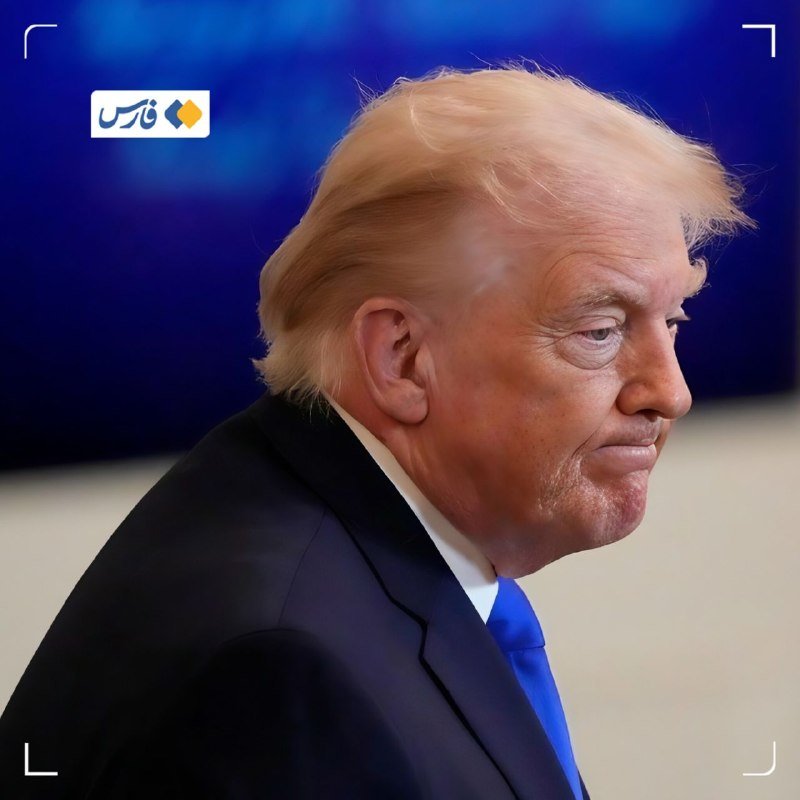
On the evening of 8 May 2026, the White House confirmed what diplomats had been quietly negotiating for weeks: Russia and Ukraine had each separately communicated acceptance of a three-day cessation of hostilities, brokered by the United States. The announcement marked the most concrete diplomatic outcome of American mediation efforts since the full-scale invasion began in February 2022 — and one of the few moments in that period in which both belligerents publicly agreed to the same ceasefire terms at the same time.
Trump described the agreement in brief remarks from the White House, calling the conflict "the worst thing" he had encountered in his time in public life and saying he would like to see it stop, according to transcripts carried by wire services. A prisoner exchange was cited as a parallel track, with the president indicating that the swap had been part of the same understanding. A Reuters report published at 01:50 UTC on 9 May 2026 confirmed the broad contours of the announcement.
The Announcement and Its Limits
The thread context provides the fact of the announcement and its key elements: a three-day ceasefire, a prisoner swap, and the president's expressed hope for an extension. What it does not provide is the precise moment of formal Russian and Ukrainian acceptance, the sequencing of those communications, or whether the two governments have each confirmed the same terms to the same American intermediary. Those details matter because previous ceasefire declarations in this conflict — including several announced in the early months of negotiations in 2022 — have unravelled over precisely these ambiguities.
The announcement was made on the eve of Victory in Europe commemorations, a date with significant symbolic weight in both Moscow and parts of Eastern Europe. That timing is unlikely to be coincidental; it is, however, also a date that Moscow has periodically weaponised in its framing of the conflict as part of a broader historical struggle against Western encroachment. Whether that context reinforces or undermines the ceasefire's prospects is not answered by the sources available to this publication.
Iranian Missile Incident Remains Unresolved
In the same press engagement on 8 May, Trump addressed a second active diplomatic question: a missile strike on a girls' school in Iran that occurred nearly ten weeks earlier. The president said the question of who fired the missile was under study and that a report would be provided. He separately expressed skepticism about whether Iran was deliberately slow-rolling diplomatic engagement — language that, if confirmed by subsequent reporting, would mark a shift in the administration's posture toward the Tehran file.
Neither the school incident nor the attribution question appears connected to the Ukraine ceasefire track, but both were being managed simultaneously by the same administration within a 24-hour window. That dual-track complexity is itself significant: it suggests either a White House operating with genuine strategic breadth, or a president who treats unrelated diplomatic crises as equivalent problems to be managed through the same personal modality. The sources do not specify which interpretation is better supported by the administration's private behaviour, and this publication makes no assertion on that question.
Health Context: Hantavirus on a Spain-Bound Cruise
Separately, the World Health Organization reported six confirmed hantavirus cases tied to a Spain-bound cruise vessel, according to a situation report published on 9 May 2026. Hantavirus, transmitted primarily through contact with rodent excreta, causes respiratory illness in its pulmonary form and kidney failure in its hemorrhagic variety. A cluster aboard a passenger ship raises distinct public health concerns around contained environments and international port protocols.
The WHO confirmation follows initial reports that public health authorities in at least one port of call were notified as cases presented in passengers disembarking in recent days. The cruise line, route, and flag state are not identified in the sources reviewed by this publication; that information should be obtainable from WHO situation reports or port health authority disclosures, but it does not appear in the material the thread context provides.
What We Verified / What We Could Not
Verified:
- Trump announced a three-day ceasefire between Russia and Ukraine on 8 May 2026, stating both parties had agreed to it.
- A simultaneous prisoner exchange was referenced as part of the same arrangement.
- Trump stated he would like to see the ceasefire extended beyond three days.
- The WHO reported six confirmed hantavirus cases tied to a Spain-bound cruise, published 9 May 2026.
- Trump said the question of who fired a missile at a girls' school in Iran was under study.
Could not verify:
- The precise mechanism by which Russian and Ukrainian acceptance was communicated and confirmed.
- Whether the ceasefire terms, as understood by each party, are identical.
- The current status of the ceasefire as of publication (9 May 2026, early UTC).
- Which entity struck the Iranian girls' school and whether attribution has been determined by US intelligence.
- Details of the cruise (name, line, flag state, itinerary) or the nationalities of those infected.
Structural Context and Stakes
The ceasefire announcement arrives at a moment of structural strain in the conflict's dynamics. Western military support for Ukraine has faced political headwinds in several capitals; Russian forces have made incremental territorial gains in some sectors while suffering significant attrition in others; and both sides have conducted long-range strikes affecting civilian infrastructure far from the front lines. In that environment, a three-day pause is less a strategic turning point than a test of whether the political architecture exists to manage even brief respites without each side using the interval to reposition.
The prisoner exchange component is more concrete and, if carried out, more verifiable in near-real-time. Exchanges of held persons have occurred throughout the conflict and tend to generate their own independent confirmation chain. The hantavirus cluster, meanwhile, tests international health reporting obligations under the International Health Regulations — a parallel regime that operates on different timelines and with different leverage than diplomatic negotiation.
The forward view is straightforward: if the three-day ceasefire holds and is extended, the architecture of negotiation has a foundation. If it collapses — as multiple prior pauses have — the announcement becomes a data point in a pattern of false starts, and the political cost of future mediation efforts rises accordingly. What the sources reviewed for this article do not yet provide is the answer to either outcome.
Desk note: The wire framed the ceasefire as a major diplomatic win for the administration, leading with Trump's language about wanting to see the conflict stop. This article lead-weights the verified factual content of the announcement while noting the structural ambiguity the wire framing elided — specifically, that "both parties agreed" is not the same as "both parties agreed to the same terms," and that the distinction has historically been fatal to ceasefire durability in this conflict.
Wire provenance
This editorial synthesis draws on the following public wire/social posts:
- http://reut.rs/4ddzmOW
- http://reut.rs/4deQcwL
- https://t.me/wfwitness/18462
- https://t.me/wfwitness/18463