Venezuela's Uranium, Iran's Shadow: The Story Behind the Headlines Trump Didn't Mean
A Guardian report on Trump's uranium acquisition from Venezuela was widely misread as an Iran story, illustrating how nuclear politics and media shorthand routinely collide.
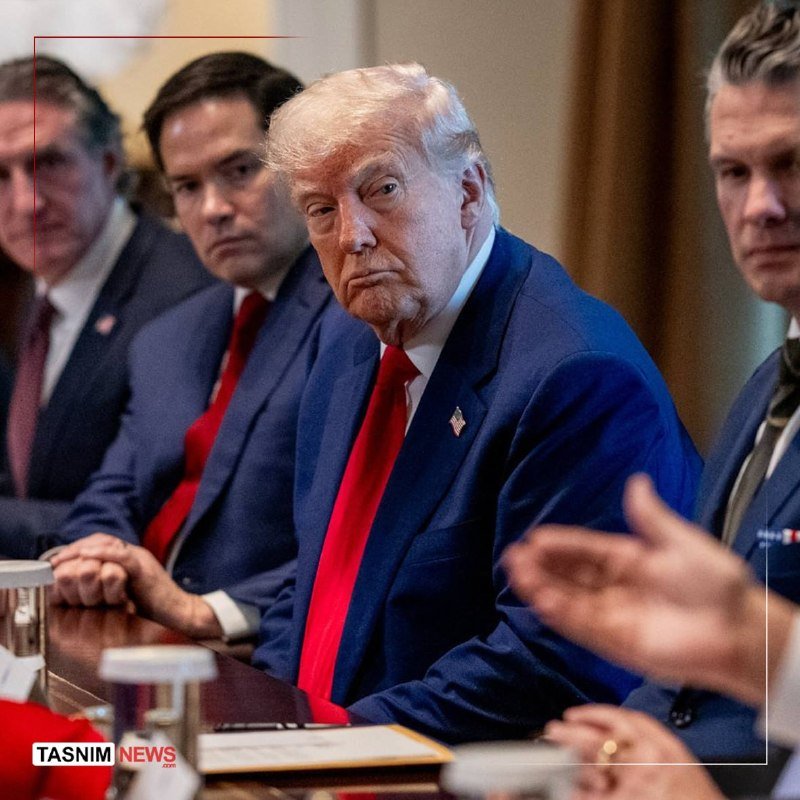
On 8 May 2026, a Guardian newspaper report circulated with a claim that landed like a thunderclap in diplomatic circles: Donald Trump had finally secured enriched uranium reserves. The inference, for readers tracking Middle Eastern geopolitics, seemed obvious. Iran had been at the centre of American nuclear negotiations for years. A headline about American access to enriched uranium, especially during an active standoff over Tehran's nuclear programme, would be politically seismic. Except the story was not about Iran at all.
The Guardian's reporting detailed a successful American operation to remove uranium from Venezuela—a separate, if related, node in the global uranium trade. The distinction mattered enormously. Venezuela sits outside the framework of Nuclear Non-Proliferation Treaty obligations that Iran operates under; its nuclear programme, while subject to International Atomic Energy Agency oversight, occupies a different legal and political category. Yet across social media and in several wire-service summaries, the Venezuela angle vanished, replaced by reflexive association with Tehran. By the time Iranian state-adjacent outlets like Fars News and Tasnim flagged the correction on 8–9 May, a narrative had already calcified in certain quarters: Trump had extracted concessions from a regional adversary through quiet nuclear diplomacy.
This pattern—where a concrete nuclear development gets refracted through the most politically charged lens available—is familiar enough to constitute its own kind of editorial hazard. The facts of the Venezuela story are specific: the United States secured enriched uranium material from Venezuelan custody, through mechanisms that remain partly classified but appear to involve bilateral negotiation rather than the kind of coercive demand that preceded nuclear stand-offs with Iran. What changed was not the substance of the operation but the interpretive frame applied by audiences already primed to read American uranium news through a Persian Gulf prism.
The Venezuela Precedent
Venezuela's relationship with its own nuclear material has been a background concern for Western intelligence agencies for nearly two decades. Hugo Chávez's government pursued civilian nuclear cooperation agreements with Russia and Iran during the 2000s, raising questions about the ultimate disposition of any enriched stock. Under Nicolás Maduro, Caracas has maintained nominal IAEA safeguards agreements, though inspections have been episodic and the political will to enforce transparency has varied with Washington-Venezuela relations. The Guardian report, as characterised by the Iranian news agency Tasnim on 8 May, described a successful American acquisition—not a discovery or seizure, but a negotiated removal of material that had been sitting in Venezuelan hands.
The geopolitical weight of that distinction is substantial. A negotiated acquisition implies Venezuelan consent, or at least acquiescence, at a moment when Maduro's government has been under severe economic and diplomatic pressure from the United States. The alternative framing—coercive removal—would carry different legal and political implications under international nuclear materials conventions. Neither the Guardian piece nor the subsequent Iranian coverage spelled out which mechanism applied, leaving the characterisation to inference. This ambiguity is where editorial framing does its most consequential work.
Iran's Quiet Wait
The timing of the Guardian story intersects with a more pressing diplomatic open thread: Iran's response to an American proposal whose contents remain unspecified in the publicly available record. Trump confirmed on 8 May, in remarks carried by Iranian state media, that his administration was awaiting Tehran's reply. The proposal itself has not been made public by either side; Axios and other outlets have reported on outlines and frameworks, but the specifics that would allow outside observers to assess what Iran is being asked to concede—and what it would receive in return—remain contested.
Iran's nuclear programme has operated under varying constraints since the 2015 Joint Comprehensive Plan of Action, which the Trump administration exited in 2018. Enrichment levels, centrifuge numbers, and site access have all been subjects of negotiations that have repeatedly stalled and resumed. The current pause, as Tehran formulates its response to whatever Washington has tabled, occurs against a backdrop of domestic pressure within Iran—hardliners opposed to any deal that involves monitoring concessions, pragmatists arguing that the economic costs of non-engagement are unsustainable. The enriched uranium acquisition from Venezuela, if it reaches American or allied custody, does not directly change this calculus. But in the information environment surrounding nuclear diplomacy, perception is not irrelevant to outcome.
The Framing Problem
Media coverage of nuclear politics operates under structural pressures that make precision difficult. Uranium is scarce, politically charged, and distributed across a relatively small number of states in ways that invite categorical confusion. The word "enrichment" carries associations with weapons programmes even when the material in question is reactor-grade. American negotiations with Iran involve uranium in a technical sense; so do American negotiations with Venezuela. When both stories run simultaneously, the risk of conflation is not a failure of individual editorial judgment but a feature of a media environment that rewards speed and association over nuance.
Iranian state-affiliated outlets, whose Telegram channels carried the Venezuela correction on 8–9 May 2026, have their own structural incentives. Emphasising the Iran angle of any American nuclear development—even a development that does not concern Iran—serves a domestic narrative about American pressure and Iranian isolation. That does not make the correction false; it makes the motivation visible. The same visibility applies, in the other direction, to Western wire services whose default frame for any American nuclear story defaults to Iran unless explicitly corrected. Neither side is fabricating facts; both are selecting which facts to foreground, and the selection is not neutral.
What Happens Next
The Venezuela uranium material, if it has indeed changed custody, enters a supply chain whose details are classified. American nuclear material holdings are tracked by the Department of Energy, but specifics of newly acquired foreign stocks are not routinely disclosed. Whether this acquisition strengthens American leverage in nuclear diplomacy with Iran depends on variables that are not publicly available: the quantity involved, the enrichment level, and whether the material represents a genuine strategic reserve addition or a diplomatic trophy.
Iran's response to the American proposal remains outstanding. The structure of whatever Tehran is being asked to accept—and whatever it would receive in return—will define the next phase of negotiations that have now been running in various forms for over a decade. The Venezuela story, meanwhile, will likely fade from headlines, having served its function as a Rorschach test for pre-existing assumptions about American nuclear policy. What remains is a reminder that in nuclear politics, the gap between what happened and what was understood to have happened is often where the real geopolitics operates.
This publication's framing prioritised the distinction between Venezuelan and Iranian nuclear contexts, a distinction that several English-language wire summaries elided. The Iranian state-adjacent Telegram sources, which first highlighted the Venezuela angle, have been cited as counter-claim material reflecting their institutional framing rather than as independent verification of the Guardian's original reporting.
Wire provenance
This editorial synthesis draws on the following public wire/social posts:
- https://t.me/tasnimnews_en/18743
- https://t.me/FarsNewsInt/28471
- https://t.me/FarsNewsInt/28467
- https://t.me/farsna/38912
- https://t.me/FarsNewsInt/28465