Hormuz Closure Forces Asia to Rethink Energy Security Architecture
The closure of the Strait of Hormuz following February's U.S.-Israeli strikes on Iran has exposed a structural vulnerability that Asian states have long deferred confronting: their dependence on a single maritime chokepoint for the bulk of their energy imports.
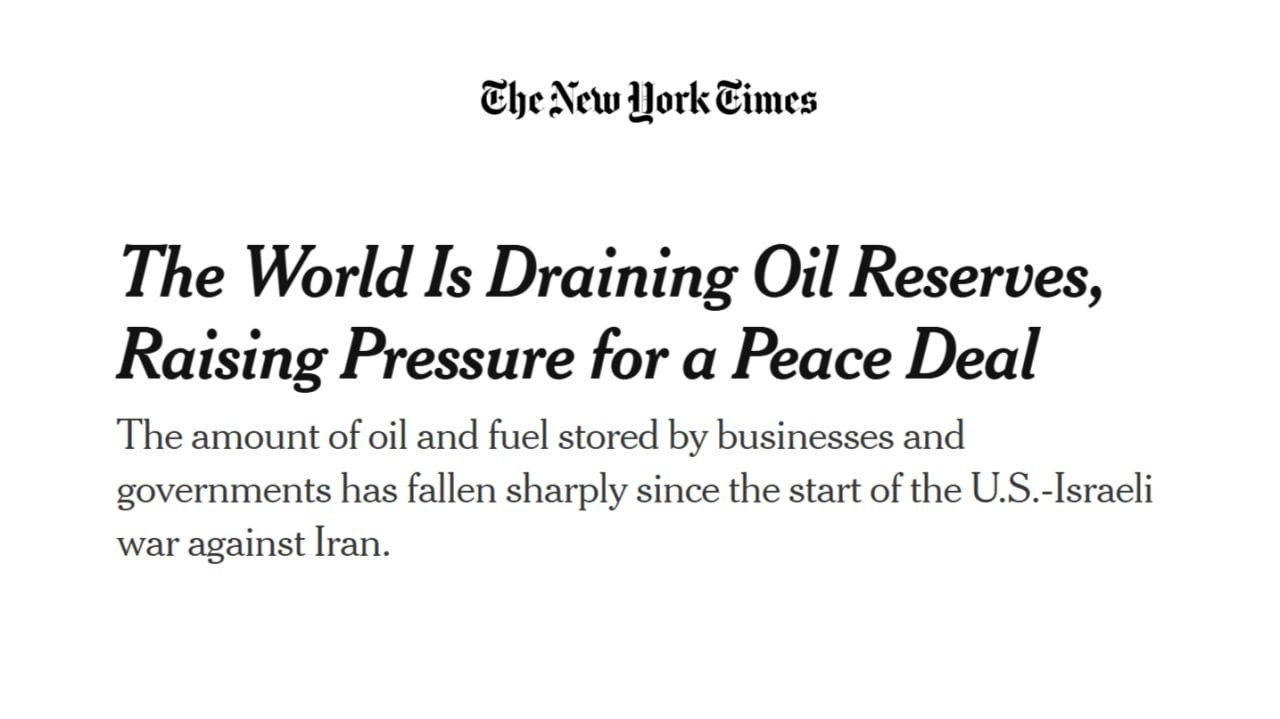
The Strait of Hormuz fell silent in February 2026. The closure, triggered by U.S.-Israeli strikes on Iranian territory, severed the world's most critical oil transit corridor and sent immediate shockwaves through Asian economies that rely on the waterway for roughly a fifth of global oil flows. Japan, South Korea, India, and China—the region's largest energy importers—found themselves confronting a supply shock they had modelled in contingency exercises but never seriously planned to endure beyond days.
Six weeks later, the ripple effects continue to reshape how Asian capitals think about energy security, regional cooperation, and the costs of a geopolitical order they did not build but cannot opt out of.
The closure has exposed a structural vulnerability that Asian states have long deferred confronting: their dependence on a single maritime chokepoint for the bulk of their energy imports. Hormuz carries approximately 21 million barrels per day—about a fifth of global oil consumption. For countries like Japan and South Korea, which import virtually all their crude, the shutdown meant tapping strategic reserves within days. For India, the world's third-largest oil importer, the shock came as New Delhi was already managing the economic aftershocks of earlier sanctions regimes. China, with its more diversified supply base, faced mounting tanker premiums as Beijing scrambled to reroute shipments through longer corridors including the Cape of Good Hope route.
The immediate crisis has passed—some tanker traffic has resumed under negotiated security arrangements—but the structural reckoning it triggered is only beginning.
The Framework Problem
The closure has exposed a fundamental mismatch between the regional order Asian states inherited and the one they now need. A former Indian national security adviser, speaking in the aftermath of the disruption, argued that existing cooperation frameworks are inadequate for an era in which energy infrastructure itself has become a target of great-power competition.
The framing matters. For decades, multilateral institutions in the Asia-Pacific were designed around trade facilitation and economic integration—functional mechanisms that assumed political stability in the hydrocarbon heartlands. That assumption, always fragile, collapsed in February. What the Hormuz closure revealed is that Asia's institutional architecture lacks the mechanisms to collectively manage a supply shock originating outside the region but with devastating domestic consequences.
India's position is instructive. New Delhi has sought to position itself as a swing state in the emerging multipolar order, maintaining strategic partnerships with both Washington and Moscow while building new energy relationships with Gulf producers. The Hormuz disruption forced a rapid recalibration: Indian refineries accelerated talks with Russian suppliers and began exploring alternative routing through the Trans-Caspian corridor. Yet those alternatives remain constrained by infrastructure bottlenecks and financing complexities that no bilateral diplomacy can dissolve overnight.
China's response has been more systematic. Beijing's "Belt and Road" energy infrastructure—pipelines running through Central Asia, port agreements in the Indian Ocean, and expanding strategic petroleum reserves—provided some insulation from the worst effects of the closure. The geopolitical calculus, however, is more complex. China has deepened its engagement with Iran through alternative payment mechanisms, including yuan-denominated oil contracts, in ways that partially circumvent the dollar-denominated pricing system that has long given Washington leverage over global energy markets.
Alternative Routes, Real Constraints
The obvious rejoinder to Asia's Hormuz dependency is diversification: more pipelines, more strategic reserves, more investment in alternative energy. Japan and South Korea have long pursued this logic through strategic petroleum reserves and aggressive LNG expansion. Yet the mathematics of global oil trade are stubborn. No alternative route matches the throughput economics of a narrow strait flanked by producer states with decades of infrastructure investment.
The route most frequently cited as an alternative—the Trans-Pacific corridor bypassing the Gulf entirely—remains economically marginal for Asian consumers locked into long-term contracts with Gulf producers. The infrastructure to make a meaningful shift to North American or West African supplies does not yet exist at scale. Rerouting through the Cape adds 15 to 20 days to voyage time, increases shipping costs substantially, and introduces new security considerations in the Gulf of Aden and Indian Ocean chokepoints.
The energy transition argument—that Asia's pivot to renewables reduces long-term vulnerability—holds structurally but offers no relief on the time horizon that matters for current policy. Oil will remain the dominant transport fuel in Asia through at least the mid-2030s under most plausible scenarios. The vulnerability is structural, not cyclical.
The Dollar Question
There is a subtext to the Hormuz shock that Asian policy communities are beginning to voice more openly: the current system for pricing and settling global oil trades is a geopolitical instrument, not a neutral market mechanism. The petrodollar system, which anchors global oil pricing to U.S. dollar transactions cleared through U.S. financial infrastructure, gives Washington the ability to sanction Iranian oil exports with systemic effect. That was the point. But the weaponisation of that leverage has accelerated interest in alternatives among states that do not consider themselves Washington's adversaries but do not wish to be collateral damage in other states' conflicts.
India's rupee-ruble settlement mechanisms for Russian oil, China's yuan-denominated contracts with Saudi Arabia and Iran, and growing intra-Asian trading in local currencies are early but consequential indicators of a structural shift. The Hormuz closure has given those trends political cover. Governments that might have been reluctant to openly signal disenchantment with dollar-centric energy finance now have an economic justification for hedging: energy security and financial sovereignty are suddenly the same argument.
What Comes Next
The immediate question is whether the Hormuz closure was an anomaly—a specific and non-repeating consequence of February's escalatory dynamics—or a preview of a more volatile energy landscape in which chokepoint vulnerability becomes a recurring instrument of geopolitical competition. The answer depends largely on whether the U.S.-Iran trajectory stabilises, whether Gulf producers invest in overland export capacity as a hedge against future strait disruptions, and whether Asian states choose to treat the 2026 closure as a one-off or as a structural warning.
For Japan and South Korea, the calculation is straightforward and uncomfortable: their alliance relationships with Washington make them more secure in the security domain but more exposed in the energy domain, since the same U.S. policies that provide their defence guarantee contribute to the volatility of the hydrocarbon markets on which their economies run. That tension is not new. What is new is the political permission—created by the 2026 closure—to name it explicitly in official policy discourse.
For India, the Hormuz shock reinforces a strategic logic New Delhi has been pursuing incrementally for years: diversification of suppliers, investment in alternative routing, and a financial architecture less dependent on Washington-blessed clearing mechanisms. The pace of that shift, previously constrained by the costs and friction of non-dollar transactions, has accelerated.
For China, the closure validated the infrastructure investments Beijing made over the preceding decade. The strategic petroleum reserves, the Central Asian pipeline routes, the port agreements with Indian Ocean states—all of it functioned as designed. That performance will embolden the argument, already prominent in Beijing's policy community, that Asia's long-term interest lies in a regional order with less American presence and more Chinese initiative.
The Strait of Hormuz reopened. The tanker traffic resumed. But the conversation it interrupted—about who controls the arteries of Asian prosperity and at what cost—will not.
This publication's framing centred on structural vulnerability and institutional inadequacy rather than the immediate military dynamics. Where the wire focused on the strikes and the closure, this analysis examined the longer-term recalibration of Asian energy and financial architecture that the closure has accelerated.
Wire provenance
This editorial synthesis draws on the following public wire/social posts:
- https://t.me/nikkeiasia/28451
- https://t.me/nikkeiasia/28452