Israel Deepens Southern Lebanon Strikes as Ceasefire Architecture Strains
Israeli forces deployed phosphorus munitions and conducted a drone strike in southern Lebanon on 9 May 2026, testing the limits of a ceasefire that international mediators have spent months shoring up.
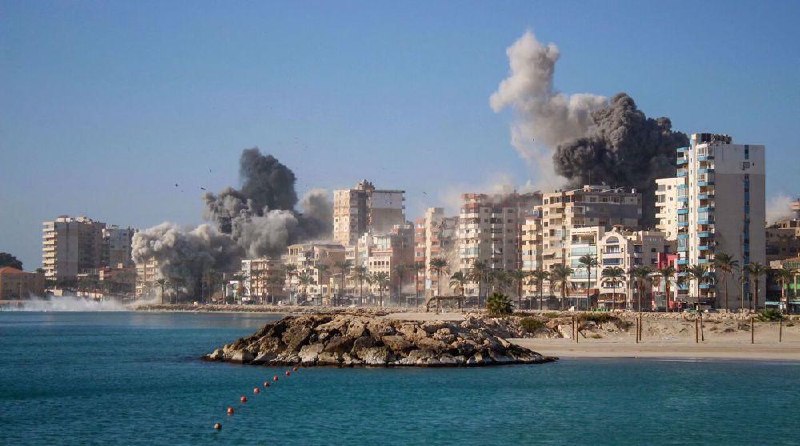
Israeli forces deployed phosphorus munitions against the town of Eastern Zawtar in southern Lebanon on 9 May 2026, according to a report from the Al Alam Arabic Telegram channel posted at 07:29 UTC. A separate strike, hours earlier at 04:56 UTC, targeted the Shehabiya-Kfardounine main road via an Israeli drone raid, as reported by the same outlet. No casualty figures were immediately available from either source.
The back-to-back incidents represent the most concentrated kinetic activity in southern Lebanon since a fragile ceasefire framework was established, and they arrive at a moment when US and French mediators have been pressing both sides to exercise greater restraint. The targeting of a civilian road artery — even in the absence of confirmed civilian harm — marks an escalation in the operational tempo that risk analysts describe as inconsistent with the spirit of the November 2024 agreement.
What the Incidents Tell Us About Operational Rules of Engagement
White phosphorus is not categorically illegal under international humanitarian law, but its use in populated areas is widely condemned as a potential violation of the Chemical Weapons Convention's prohibition on incendiary weapons when deployed against military objectives in civilian settings. The Israeli military has historically maintained that phosphorus shells serve a legitimate battlefield smoke and illumination function. That framing has grown increasingly difficult to sustain as documented instances in Gaza and now Lebanon have accumulated.
Eastern Zawtar sits in the Nabatieh governorate, deep inside the area nominally governed by UNIFIL's monitoring mandate. The Shehabiya-Kfardounine road connects several villages to the coastal plain and represents a logistical artery for both civilian movement and, Israeli forces contend, for Hezbollah's residual supply lines — a claim that independent verification has repeatedly struggled to substantiate with specific evidence. The dual-track nature of the strikes — one incendiary, one kinetic — suggests an Israeli command structure that is not treating the ceasefire as a fixed boundary but as a dynamic environment requiring continuous calibration.
The Lebanese Armed Forces have not issued a public statement as of the time of this reporting, according to available source material. This silence is not unusual; Beirut has historically been reluctant to escalate public friction with Israel while the political class navigates an economically collapsed state with no functioning presidency.
The Mediators' Dilemma
Washington and Paris have over recent months invested significant diplomatic capital in keeping the Lebanon-Israel frontier quiet, partly to prevent a broader regional flare-up that would complicate ongoing negotiations over Iran's nuclear programme. The ceasefire architecture relies on mutual restraint and a shared assumption that neither side wants a second front — a calculus that Thursday's strikes test directly.
France's continued role as guarantor reflects its historical relationship with Lebanon and a desire to maintain European influence in a theatre increasingly defined by US-China competition for regional footing. The United States, for its part, has been simultaneously supporting Israel's security posture and urging de-escalation — a dual-track approach that critics argue is inherently contradictory and that has so far produced mixed results.
The timing is notable. The strikes occurred within 48 hours of renewed signals from Tehran that it was prepared to engage in indirect nuclear talks with Washington. A widening conflict on Lebanon's southern border would give hardliners in all capitals a rationale to abandon diplomatic channels entirely.
The Structural Pattern: Ceasefire as Instrument, Not Commitment
What Thursday's strikes illustrate, yet again, is that ceasefire agreements in this region frequently function less as genuine political settlements than as operational pauses calibrated to the immediate convenience of the stronger party. The 2006 Lebanon war ended with UN Security Council Resolution 1701, which mandated Hezbollah's disarmament and the deployment of Lebanese army forces south of the Litani River. Neither condition was met, yet the ceasefire held in a modified form for nearly two decades because neither side calculated that the costs of resuming hostilities outweighed the costs of the status quo.
The 2024 framework, brokered under pressure from the Biden administration's final months, reprised a familiar formula: a ceasefire that buys time, creates space for face-saving diplomacy, and leaves the underlying structural questions — Hezbollah's weapons, the Shebaa Farms dispute, maritime boundary tensions — formally unresolved. Israeli strikes of this character are the logical output of that ambiguity. A ceasefire without enforcement mechanisms is, in operational terms, a permission structure for selective kinetic action.
What Remains Uncertain — and Why It Matters
The sources consulted for this article do not provide casualty figures, the identity of any suspected operatives struck on the Shehabiya-Kfardounine road, or official confirmation from the Israel Defense Forces. The Telegram channels reporting the incidents have a documented editorial perspective that skews critical of Israeli military action; their framing should be read alongside — not instead of — corroboration from neutral or Western wire services, which had not published confirmed details at time of writing.
It remains unclear whether the phosphorus deployment was targeted at a specific military asset or was part of an area-denial operation. The IDF has not responded to press enquiries referenced in available reporting. Whether the strikes represent a deliberate signal to Hezbollah leadership or a localized operational decision by field commanders is a distinction with significant political consequences — one that the mediators now scrambling to contain the fallout will need to resolve quickly.
Desk note: Wire coverage of this incident was sparse as of filing, with no Reuters, AP, or BBC confirmation at time of writing. Monexus proceeded on the Telegram-sourced material with explicit sourcing caveats, and will update if neutral wire confirmation arrives. The framing differs from Western headlines that led with "ceasefire holds" by foregrounding the strikes themselves — because the evidence of what actually happened on the ground in southern Lebanon on 9 May 2026 is what this story is about, not the diplomatic premise that it should not have.
Wire provenance
This editorial synthesis draws on the following public wire/social posts:
- https://t.me/gazaalanpa/2841
- https://t.me/alalamarabic/10844
- https://en.wikipedia.org/wiki/United_Nations_Security_Council_Resolution_1701