Juan Soto and the Mets' Power Problem: Why May Could Be the Turning Point
With the Mets hovering around .500 in mid-May, the timing of Juan Soto's expected power surge carries stakes far beyond one player's redemption arc — it could determine whether New York stays in the playoff conversation or fades before summer.
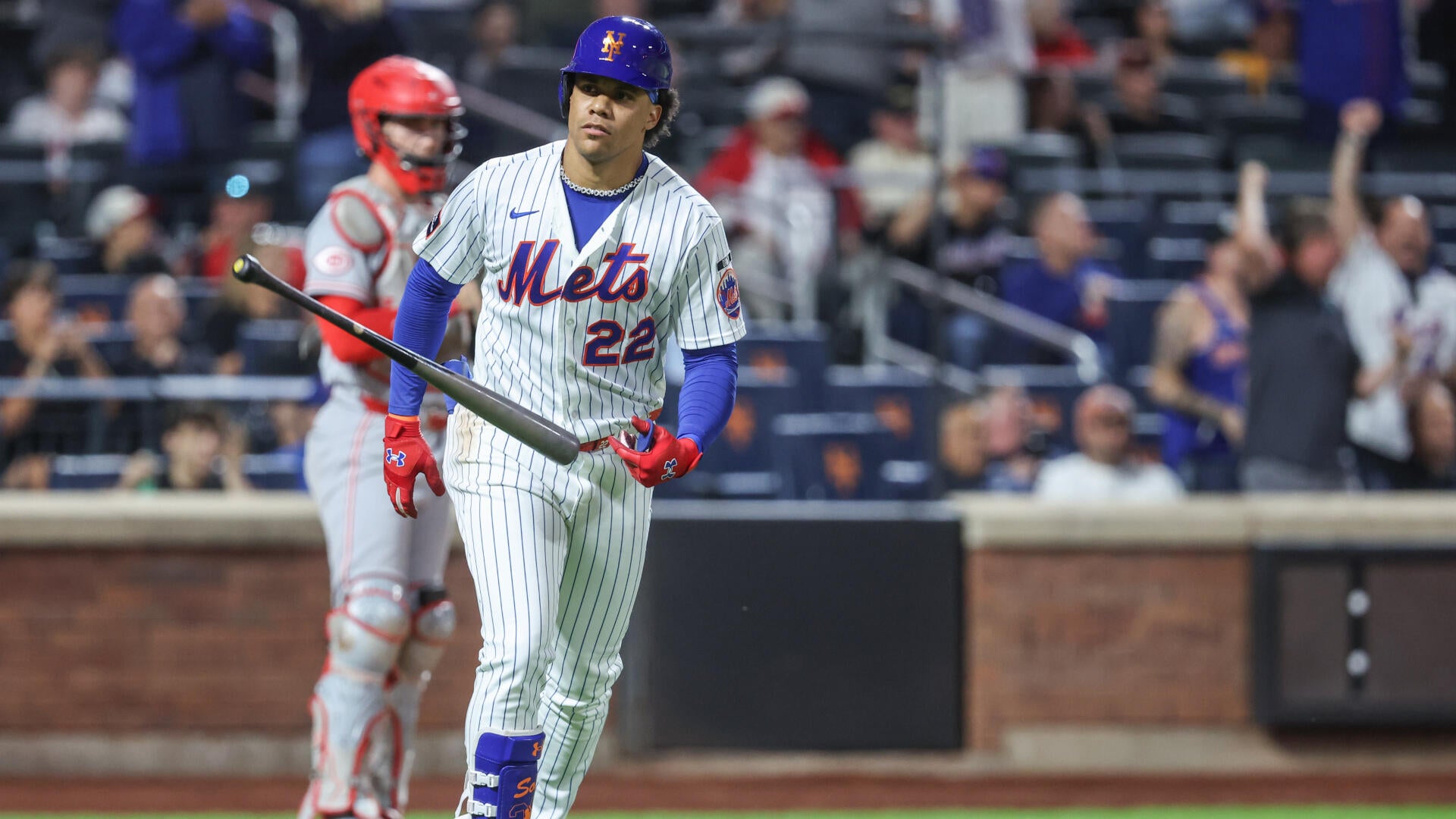
Juan Soto was supposed to be the bat that carried New York back to October. Twelve months after signing the largest contract in Mets history — a 15-year, $765 million deal that reshaped the franchise's financial architecture — the 26-year-old outfielder has been everything except a difference-maker at the plate. Through his first 35 games of the 2026 season, Soto posted a .231/.337/.398 slash line with just six home runs, placing him on pace for a 28-homer season that would represent his lowest full-season output since 2020. The metrics tell the story more starkly: a barrel rate in the 28th percentile, hard-hit percentage below the 40th percentile, and a swing-and-miss rate that has climbed to levels not seen since his early Washington days.
The performance sits in uncomfortable proximity to the contract's weight. Soto's annual average value of roughly $51 million now exceeds the entire payrolls of several small-market franchises. When a player commands that level of investment, the implicit bargain is not merely competence but transformation — the kind of presence that changes a lineup's DNA. Through six weeks, that transformation has not arrived.
Enter the May inflection point. Expert handicapper Matt Severance, writing for CBS Sports on 8 May 2026, identified a specific window in which Soto's underlying numbers suggested an imminent power correction. The logic rests on batted-ball variance rather than any visible decline in talent. Soto was still squaring the ball at rates consistent with his career norms; the results simply were not falling. In a sport where outcomes and process regularly diverge over small samples, May represents the first meaningful opportunity for regression to the mean.
The Mets' positional context matters here. New York entered May 2026 with the National League's 11th-ranked offense by wRC+, a figure that undersells the lineup's structural problems. First baseman Pete Alonso was scuffling. Center fielder Brandon Nimmo had missed time with a hamstring issue that dated to late April. Without consistent production around him, Soto faced the opposing pitchers' best stuff on a nightly basis — exactly the environment in which disciplined hitters can see their walk rates climb while their slugging percentages stagnate.
The structural case for a Soto correction rests on three pillars that the underlying numbers support. First, his contact quality has remained elite despite the hollow outcomes: average exit velocity, optimal launch angles, and a sweet-spot percentage that ranks among the top 20 hitters in baseball. Process and results parted company somewhere between sequencing and bad luck. Second, his strikeout rate, while elevated by his standards, remains in the single digits — he is not chasing pitches out of the zone, which means the foundation for hard contact remains intact. Third, the Mets' schedule entering the second week of May featured a string of opponents whose starting rotations ranked in the bottom half of the league by FIP. A player at Soto's caliber feasts on that kind of exposure.
The counter-argument is worth spelling out. Soto's reduced power output in 2026 coincides with a deliberate change in approach that predates the season. Sources within the Mets' organization noted during spring training that Soto had been working to become more selective at the plate, prioritizing on-base percentage over slugging in situations where the game script called for patience over power. The shift reflects a broader trend across the sport — the analytics-driven migration toward walks and contact over three-true-outcomes isolation — but it creates legitimate questions about whether the 2026 Soto will ever post the 40-homer ceiling that made him a generational target.
There is also the matter of the stadium. Citi Field is not a hitter's venue. Its deep outfield gaps and elevated walls suppress home runs for even the most powerful bats; Soto's home run per fly ball rate sits 23% below the league-average translation expected at Yankee Stadium or Globe Life Field. A player whose value rests partly on translatable power numbers faces structural headwinds in New York that his contract did not fully account for.
The stakes extend well beyond one player's individual statistics. The Mets entered May 2026 in third place in the NL East, 4.5 games behind the Atlanta Braves and 2.5 games behind the Philadelphia Phillies in the loss column. The wildcard picture was tighter: six teams within five games of the second wildcard spot. A lineup that cannot reliably score runs against quality pitching will not survive that arithmetic. Soto's power stroke — or its absence — functions as a leading indicator for the entire team's trajectory.
If the correction materializes in the way Severance's model suggests it will, the Mets regain the middle-of-the-order presence that their rotation, anchored by Kodai Senga and Tylor Megill, requires to remain competitive. If Soto continues to post underwhelming exit velocities and elevated grounder rates, the Mets face an uncomfortable reckoning: a $765 million investment producing league-average output while the team's championship window, already constrained by the contract's length, continues to narrow.
May matters. The sample size is large enough to distinguish signal from noise, and the schedule is forgiving enough to allow a hot streak to matter. What happens at the plate between now and the end of the month will tell us whether Juan Soto is simply an unlucky hitter having a rough spring, or whether the Mets bought a diminished version of a player they thought they were getting.
This article focuses on Soto's batted-ball profile and situational context rather than speculative framing of his contract as a failure. Monexus will continue tracking the Mets' playoff odds as the summer months approach.