Mojtaba Khamenei Consolidates Power as Iran’s De Facto War Strategist
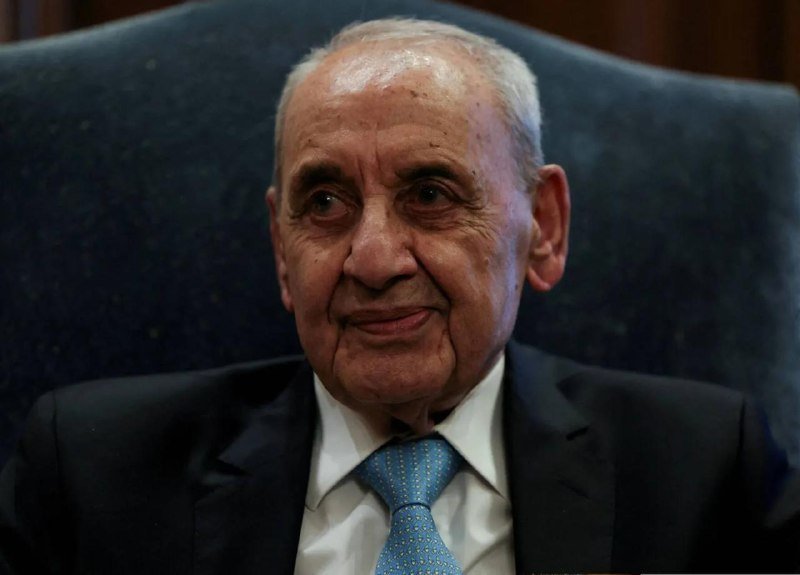
Iranian officials confirmed on 9 May 2026 that Mojtaba Khamenei, elevated to Supreme Leader following the death of Ali Khamenei in October 2024, has fully recovered from injuries sustained during the transition period and is in good health. The confirmation, carried by the semi-official Tasnim news agency, was the most direct public statement yet on the new Leader’s physical condition. It landed alongside a CNN report citing U.S. intelligence assessments that Khamenei has been playing a “critical role” in shaping Iran’s war strategy alongside senior officials despite those injuries. The overlap in timing was not accidental.
The two accounts—one domestic, one sourced from Western intelligence—converge on a single point: Mojtaba Khamenei is not a caretaker. He is the decision-maker. That convergence matters because it forces a recalibration of how Washington, European capitals, and Gulf Arab states should read Iran’s posture right now.
The Transition and the Power Vacuum That Never Opened
Ali Khamenei died in October 2024 after 35 years as Supreme Leader. The succession to his son Mojtaba was not seamless in public, but it was rapid in private. Within days, the Islamic Revolutionary Guard Corps had publicly aligned behind the new Leader. The Expediency Discernment Council, which nominally manages high-level institutional disputes, convened an emergency session and endorsed the transfer. No public dissent emerged from within the clerical establishment.
What followed was a period of managed opacity about Mojtaba Khamenei’s health. Iranian state media carried no photographs of him for several weeks. Social media channels associated with opposition figures and Gulf-based news outlets circulated reports of a serious medical incident. The Tasnim statement on 9 May is the first official acknowledgment that those reports were grounded in reality—and the first official dismissal of the speculation about lasting incapacitation.
The timing is significant. Nuclear negotiations with the United States have reached a fragile juncture. The Trump administration revoked Iran’s sanctions waivers in April 2026, a move that sent oil markets skittish and sharpened pressure on Tehran’s fiscal position. In that environment, a weakened Supreme Leader would have been a useful negotiating lever for Washington. The health recovery announcement removes it.
What U.S. Intelligence Found—and What It Means for Talks
The CNN report, citing current and former U.S. officials, describes a Khamenei who has been embedded in military strategy sessions throughout the health crisis. That is a materially different picture from a regent-like figure ruling through proxies. It suggests Khamenei is personally engaged with the Revolutionary Guard’s operational planning—a configuration that historically precedes escalation rather than de-escalation.
The assessment aligns with what regional analysts have flagged for months: that Iran’s most hardline institutional layers—the IRGC Quds Force, the Defense Ministry, and the Supreme Leader’s office—have converged around a unified strategic posture since the succession. That convergence is not incidental. It reflects a deliberate consolidation, not a factional contest.
The counter-argument, advanced by some Gulf-based analysts, holds that Khamenei’s elevation was always going to be a hardline outcome regardless of his health trajectory—that the real question is not whether he leads, but how institutional guardrails might constrain him. That view is not wrong, but it underweights the operational dimension. Khamenei is not simply the highest religious authority. He holds command authority over the IRGC and approval rights over nuclear-related decisions. A wounded but present Khamenei is categorically different from an absent one.
The Structural Picture: Who Wins If Khamenei Stands Firm
The nuclear deal architecture that once governed U.S.-Iran relations is a scaffolding that no longer fully bears weight. The Joint Comprehensive Plan of Action frayed under maximum-pressure campaigns during the first Trump term, collapsed under the second, and has not been rebuilt. What exists now is a set of ad hoc pressure mechanisms: sanctions designations, naval posturing in the Gulf, and the now-expired waivers that allowed Iraq to receive Iranian electricity and third countries to receive Iranian oil without triggering secondary sanctions.
In that environment, Khamenei’s consolidation has a predictable beneficiary: the IRGC’s institutional agenda. A leader who is simultaneously the religious validator of the state and the operational commander of its most powerful security apparatus has fewer internal checks than a divided leadership would. The Guard’s preference for strategic patience—building deterrence through regional proxies, advancing the nuclear programme at a measured pace, avoiding direct confrontation with U.S. forces while testing red lines—is now Khamenei’s preference too.
For the United States, this is a worst-case read on the succession. A divided Iranian leadership would have created negotiating opportunities. A unified one does not. The lesson of two decades of Iran policy is that sanctions施加maximum pressure produce either capitulation or escalation—and that Khamenei’s institutional base will not capitulate.
The Road Ahead: Deals, Deadlines, and Regional Spillover
The immediate pressure point is nuclear. The International Atomic Energy Agency’s board meets in June 2026 to assess Iran’s compliance with its additional protocol obligations. If Iran’s uranium enrichment levels continue their documented upward trajectory, the meeting will produce a resolution that could trigger a snapback of UN sanctions. That outcome would end whatever residual diplomatic architecture remains.
For Gulf Arab states watching from closer range, the Khamenei consolidation changes the calculus on their own deterrence investments. Saudi Arabia and the UAE have deepened defence cooperation with Washington and invested in their own nuclear programmes under IAEA civilian frameworks. A Iran that is institutionally unified and operationally engaged is a different strategic actor than one managing an internal succession contest.
The uncertainty that persists is the depth of Khamenei’s personal involvement in day-to-day nuclear decisions versus the strategic framing of them. U.S. intelligence assessments are probabilistic, not documentary. They reflect a pattern of behaviour inferred from communications intercepts, personnel movements, and open-source analysis—not access to Khamenei’s inner circle. The gap between assessment and certainty is where diplomatic miscalculation lives.
The Tasnim health announcement is a signal aimed simultaneously inward and outward. Domestically, it reassures the IRGC command structure that the chain of authority is intact. Internationally, it communicates that any leverage derived from perceived frailty should be discarded. Khamenei is standing. The question is what he intends to build from that footing.
This publication has covered Iran through multiple iterations of the nuclear file—from the 2015 deal to its unraveling to the present moment of institutional reconsolidation. The wire framing has centered on sanctions efficacy and regime stability. This piece centers instead on command architecture: who is actually making decisions and what the structure of that authority means for regional and diplomatic outcomes.
Wire provenance
This editorial synthesis draws on the following public wire/social posts:
- https://t.me/rnintel/3742
- https://t.me/wfwitness/2981