The Peace Signal and the Cruise Missile: Washington Can't Have It Both Ways on Risk
The same week the US signalled openness to Iran diplomacy, it struck Iranian tankers. Markets absorbed both. UBS bought the dip. The contradiction is the story.
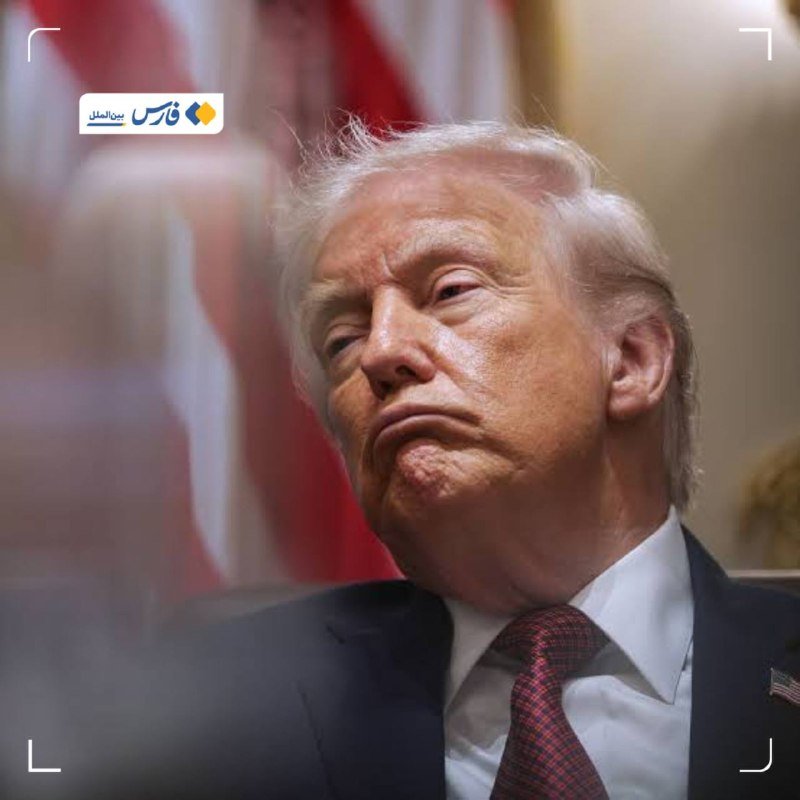
The week of May 9, 2026 offered a masterclass in the kind of cognitive dissonance that defines modern risk markets. At 02:14 UTC on May 9, the signal went out: Washington was leaving the door open to talks with Tehran, and equities, gold, and Bitcoin all ticked higher on the implied discount on geopolitical premium. Fourteen hours later, the same administration had struck two Iranian oil tankers — reportedly empty, reportedly a message — and Bitcoin had shed $58 billion in market capitalisation. The peace premium vanished inside an hour of the strike becoming public.
That sequencing is not accidental, and it is not confusing. It is the message.
The Anatomy of a Mixed Signal
To parse what happened: the initial market reaction reflected a genuine recalculation. Peace talks with Iran, even the vague possibility of them, would ease the pressure on crude supply chains that have been a persistent inflation variable since the start of the broader Middle East escalation. Gold rallied. Bitcoin rallied. Stocks ticked up. The logic was straightforward — uncertainty discounted, optionality expanded, risk-on territory.
The strikes that followed were not a contradiction from the White House perspective. They were the second voice in a conversation Tehran has been hearing for years: negotiate, but from a weakened position. The tankers were empty, which tells you something about intended signalling versus kinetic reality. No cargo was destroyed. No sailors killed. What was destroyed was the calm that the peace signal had briefly created.
The market read this correctly, if quickly. Bitcoin's $58 billion decline was not a panic — it was a repricing of tail risk that investors had briefly allowed themselves to ignore. When the military action arrived, the option value of peace evaporated.
What UBS Saw in the Wreckage
Which makes what happened next all the more instructive. UBS Group, the Swiss banking heavyweight, disclosed a $98 million purchase of Strategy shares on May 8, 2026 — a stake in the company that has made Bitcoin treasury reserves its core identity. This was not a small-cap position taken on speculation. This was deliberate deployment of institutional capital into the very asset class that had just absorbed the military-risk shock.
Phong Le, Strategy's CEO, had been on record — as reported in the thread on May 9 — articulating a philosophy of selective Bitcoin sales as a value lever. The framing was not that Bitcoin was a trading vehicle. It was that Bitcoin, held on a corporate balance sheet, had properties as a strategic reserve that justified holding through volatility while managing exit timing for maximum value extraction.
UBS's purchase sits in that same logic. The strike on Iranian tankers, the $58 billion Bitcoin decline, the peace signal that preceded both — UBS was not reacting to the 24-hour news cycle. It was making a multi-year bet on what Bitcoin represents in a portfolio when governments routinely weaponise uncertainty to extract diplomatic concessions.
The Structural Reality Behind the Headlines
Here is the uncomfortable frame that the initial market reaction obscured: the rhythm of American escalation and de-escalation in the Gulf has become, in functional terms, a market instrument. The peace signal was not purely humanitarian or diplomatic — it was also a tool for managing oil prices and, by extension, inflation optics ahead of a domestic policy moment. The strike was not purely punitive — it was a reminder to Tehran that diplomatic space can be closed quickly.
This is not a conspiracy. It is a pattern that sophisticated actors in commodity and digital asset markets have begun to price in with increasing sophistication. The volatility is not noise. It is signal about how the hegemon manages its leverage. And the actors who have absorbed this lesson most completely — Strategy, UBS, the broader cohort of corporate treasurers treating Bitcoin as a reserve asset — are positioning for an environment where such mixed signals become more frequent, not less.
The hantavirus case on the cruise ship, meanwhile, sat as a footnote to this week: a low-R0 human transmission event that moved the usual epidemiological monitoring systems but commanded minimal market attention. Its presence in the data stream this week reflects a media environment that still struggles to weight biological risk appropriately relative to geopolitical risk, even after the pandemic era should have recalibrated that judgment. The market's relative indifference to the outbreak is, in its own way, as revealing as its reaction to the tanker strikes.
The Takeaway for Investors Who Are Actually Paying Attention
What this week demonstrates is not that Bitcoin is a safe haven in the traditional sense. It is not. It is a contingent safe haven — one that benefits when the alternative store-of-value instruments (dollar-denominated assets, US Treasuries) are themselves subject to geopolitical manipulation by the same state that claims to be their guarantor.
The peace signal, the cruise missile, the UBS purchase, and the Strategy CEO's framing of selective sales as a value mechanism are all data points in the same argument: institutional holders of Bitcoin are not betting on a world where geopolitical risk disappears. They are betting that Bitcoin's properties make it more resilient than the alternatives precisely because it exists outside the direct control of any single state's foreign policy apparatus.
The $58 billion decline was real. The UBS purchase was real. Both were rational responses to the same fact set, seen from different time horizons. That is the market we are in now — one where the hegemon's own instruments of statecraft have become so routine that sophisticated capital has learned to monetise the pattern rather than simply hedge against it.
The peace signal will come again. So will the cruise missiles. Monexus will be watching how markets price the gap between them.
This publication noted the contrast between the wire framing, which treated the peace signal and the tanker strikes as sequential but unrelated events, and the structural analysis here, which treats them as components of a single policy instrument. The market reaction — sharp in both directions, quickly absorbed — suggests investors have reached the same conclusion.
Wire provenance
This editorial synthesis draws on the following public wire/social posts:
- https://t.me/CryptoBriefing/21432
- https://t.me/CryptoBriefing/21430
- https://t.me/CryptoBriefing/21428
- https://t.me/CryptoBriefing/21427