Arteta's Presence Doctrine: How Arsenal's Manager Turned Mental Fortitude Into a Title Contender
As Arsenal enter the final stretch of the Premier League season, manager Mikel Arteta's emphasis on mindfulness and emotional control has reshaped how the club approaches high-stakes football — and forced the wider game to reconsider what leadership looks like in the modern technical area.
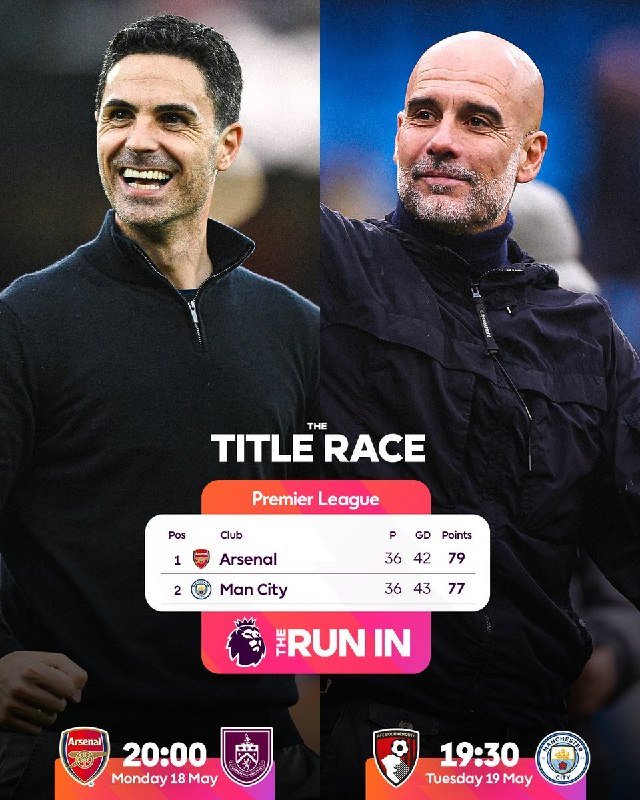
Mikel Arteta has spent much of the past two seasons telling anyone who will listen that Arsenal must learn to live in the moment. On 8 May 2026, with the Premier League title race entering its final and most unforgiving chapter, the Arsenal manager made the same argument again — this time to his players and to the club's supporters directly. "Stay present and live the moment," Arteta told the Gunners faithful, according to a BBC Sport report. It is a phrase that has become almost a signature instruction from the Spanish coach, and one that increasingly defines how Arsenal approach the business end of a season.
The instruction matters more than it might sound. Football at this level is not decided by tactics alone. The games are tight, the margins between first and second are measured in set-piece conversions and goalkeeping interventions, and the psychological weight of expectation can buckle a squad that has not been trained to carry it. Arteta's insistence on presence — on not projecting forward to the trophy ceremony or backward to past stumbles — is a deliberate inoculation against that weight. It is also, observers have noted, a notable departure from the managerial norm at elite English clubs, where the tendency has historically been to rev up players with intensity rather than centre them with calm.
Arteta arrived at the Emirates in December 2019 with a reputation shaped by his time under Pep Guardiola at Manchester City. The City's model — meticulous, possession-dominant, emotionally controlled — is visible in how Arsenal now play. But Arteta has added a dimension that his mentor did not foreground in quite the same way: a structured attention to the mental state of the group. He has spoken openly about the influence of mindfulness practices and has incorporated breathing exercises and visualisation routines into the club's daily operations. The squad's psychologist, Laura McAllister, has spoken in past interviews about how the playing group has embraced approaches that would have been dismissed as soft a decade ago.
The results have been measurable. Arsenal finished runners-up in consecutive seasons — 2023–24 and 2024–25 — and in each case the decisive factor was not a tactical failure but a lapse under pressure in a key fixture. The 2024–25 title was lost when Arsenal dropped points at home to a mid-table side while leading the table in March, a fixture in which players visibly struggled with the atmosphere inside the stadium. The club's internal review, fragments of which were reported in subsequent months, identified a need to manage emotional arousal more effectively in high-stakes environments. Arteta appears to have taken that conclusion seriously.
The question now is whether presence is enough. Football's title races are decided by accumulated technical execution, by squad depth, and by luck — the kind that materialises as a refereeing error or a deflection that loops over a goalkeeper's hand. Mental composure does not directly produce those variables. But it shapes how players respond when the deflection does not go their way, when the referee makes a call against them, when the crowd turns. It is a force multiplier on the other elements rather than a substitute for them.
There is also a structural argument for Arteta's approach that extends beyond the individual fixture. English football's media environment is relentless. The Premier League generates a volume of coverage that few other leagues match, and Arsenal — as a club with a global supporter base and a history of dramatic collapses — attract a disproportionate share of it. Players returning from international duty, or from injury, are routinely asked to account for the club's position in ways that can introduce noise into a preparation. Arteta's insistence on staying present functions partly as a shield against that noise. It trains the squad to treat the build-up to a match as a controlled environment, insulated from the external chatter that might otherwise destabilise them.
The final fixtures will test that insulation. Arsenal face a sequence that, on paper, offers both opportunity and trap. Games against sides fighting for European qualification or fighting to avoid relegation each carry their own psychological texture — opponents who press high because they have to, who make the game chaotic because order has not saved them. Presence in those environments means not absorbing the opponent's desperation, not matching their disorganisation with your own. It means playing the game that the situation requires rather than the game that anxiety demands.
Arteta is not alone in prioritising this dimension. A growing number of Premier League clubs have added sports psychologists, mindfulness coaches, and neuroscientists to their backroom teams over the past decade. The investment reflects a broader acceptance in elite sport that the gap between technically equal squads is often closed — or opened — by mental factors. What distinguishes Arsenal's approach under Arteta is the degree to which it is codified into daily language rather than treated as a discrete intervention for when things go wrong.
Whether that distinction translates into a trophy — the first for the club since 2004 — will depend on the usual variables: form, fitness, and fortune. But the presence doctrine has already accomplished something less visible. It has given Arsenal a framework for navigating the chaos that the title race's final act will inevitably produce. That framework may not win the league. But without it, the club would be navigating that chaos with less equipment than it currently has.
This desk covers the Premier League with emphasis on how managerial philosophy and technical culture shape outcomes. Monexus has followed Arsenal's tactical development through three seasons of the Arteta project.