Can SpaceX and Blue Origin Deliver Moon Landers by 2028? NASA's Tight Deadline Faces Real Obstacles
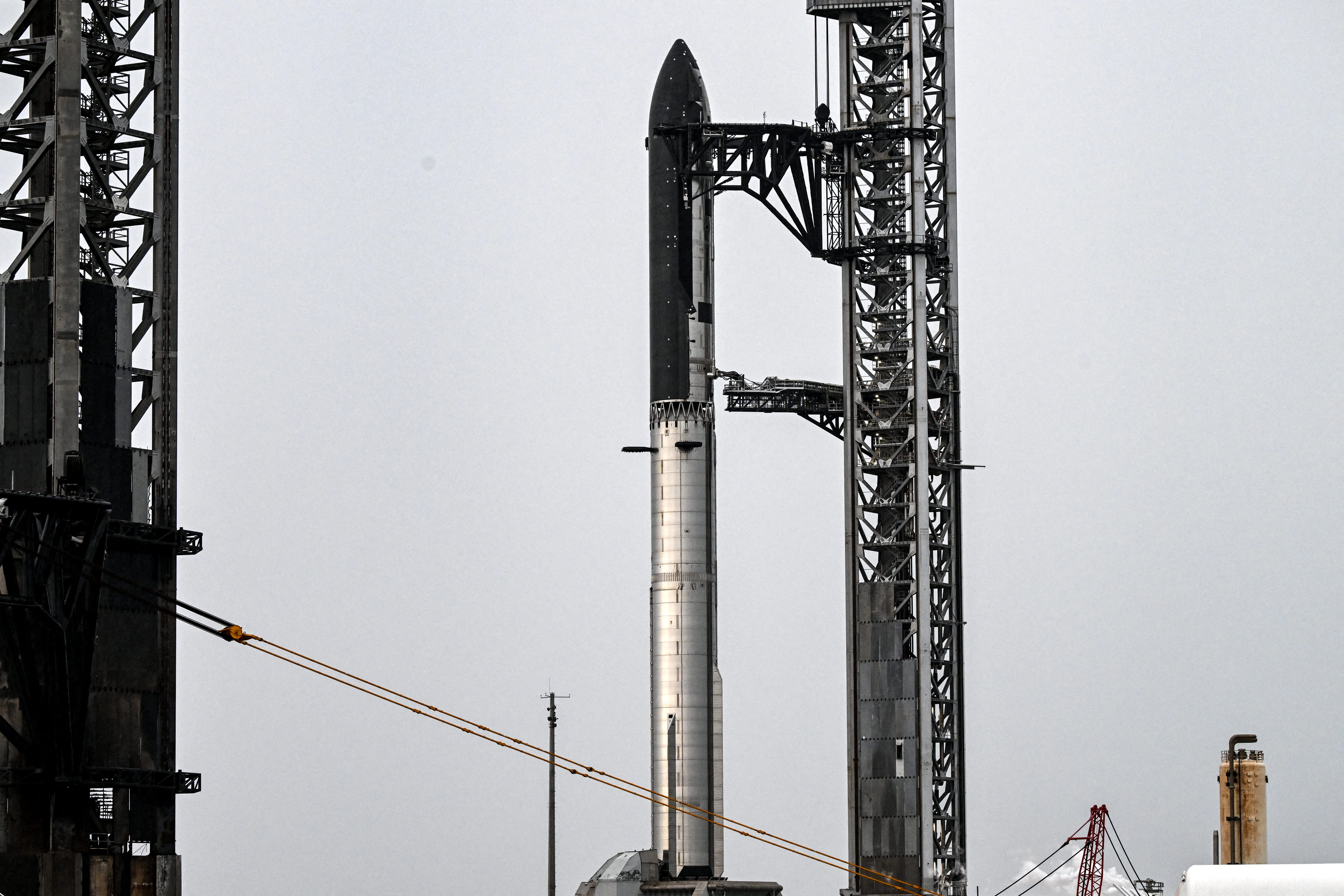
At the Johnson Space Center in Houston on 9 May 2026, NASA officials faced a question that has grown more pointed with each passing quarter: can the two companies contracted to build the Artemis program's human landing systems actually deliver hardware capable of meeting a 2028 crewed touchdown? The Indian Express, citing agency briefings and industry filings, reported that both SpaceX and Blue Origin remain under scrutiny for schedule compliance as NASA's internal review cycles accelerate.
The agency awarded SpaceX the initial Human Landing System contract in 2021, extending it in 2023 to include a second, more capable variant of Starship. Blue Origin — whose own National Team bid lost the original competition — secured a separate lunar lander contract in 2023 under the Sustaining Lunar Development program. Together, they represent the commercial architecture of America's return-to-the-moon effort. Together, they are also under a timeline that many independent engineers describe as aggressive to the point of risk.
The 2028 Mandate and NASA's Exposure
NASA has publicly committed to landing astronauts near the lunar south pole before the decade closes. That date is not arbitrary. It reflects political pressure, international signalling, and the agency's own programme architecture, which treats Artemis III — the crewed landing mission — as the proof-of-concept for a sustained lunar presence. A failure to make 2028 would not end the programme, but it would compress the timeline for everything that follows: the Gateway orbital station, the lunar surface infrastructure, and the long-term commercial ecosystem NASA has pitched to industry.
The agency's exposure is significant. Unlike the Apollo era, when NASA built and owned most of the critical hardware, Artemis relies on commercial providers for the lander element. That shifts schedule risk onto contractors while NASA retains mission assurance responsibility. If SpaceX or Blue Origin slips, NASA's crew do not land — and the agency absorbs the reputational and political cost of that delay.
Independent assessments have flagged that neither company has yet demonstrated the full integrated sequence required for a crewed lunar descent: orbital propellant transfer, a fully operational Starship or Blue Moon lander in lunar-relevant conditions, and validated life support for the descent and ascent phases. These are distinct technical challenges that each programme must solve independently before a joint mission can be credible.
SpaceX: Starship's Dual Role and the Schedule Question
SpaceX's situation is distinctive in scale. The company is building Starship for two roles simultaneously: as a deep-space launch vehicle and as a lunar lander variant. The core rocket has flown orbital test flights, with iterative updates following each attempt. The programme has moved faster than legacy competitors, but the path from an orbital test article to a lunar-rated human spacecraft involves steps that cannot be compressed without incurring risk.
The propellant transfer demonstration — critical for in-orbit refuelling that Starship requires to reach the lunar surface — remains pending at the time of reporting. NASA has said the transfer must be validated before crew assignment. Industry sources familiar with the programme's internal review schedule suggest that a successful transfer test could be the gating item for the 2028 timeline. Without it, the landing system cannot reach the required propellant load.
SpaceX has a track record of rapid iteration that its defenders credit as a structural advantage. Critics note that the company has not yet flown a crewed deep-space mission, and that human-rating a vehicle still in active development introduces certifiable risks that standard oversight processes are designed to catch. NASA has indicated it will not waive crew safety requirements for schedule reasons — but the agency has also signalled it will not abandon the commercial model that underpins the current programme.
Blue Origin: The Late Entrant's Path
Blue Origin entered the sustained lander competition later and with a different development profile. The company's Blue Moon Mk2 lander draws on Blue Origin's broader portfolio — its New Shepard suborbital vehicle, the New Glenn orbital rocket, and BE-7 engine family — but the lunar application requires modifications and new testing that the company has yet to fully characterise publicly.
Blue Origin has received less public scrutiny than SpaceX, partly because its contract value and mission assignment are structured differently under the Sustaining Lunar Development line. But the engineering requirements are comparable: the lander must demonstrate descent capability, surface hover and landing precision, and an ascent stage capable of returning crew to the lunar orbit rendezvous point.
The company's development cadence has historically been more conservative than SpaceX's — a characteristic its engineers describe as appropriate for human-spaceflight reliability, and that critics attribute to a slower organisational culture. Blue Origin's board-level changes over recent years have also been noted by industry observers as a factor in programme continuity.
The 2028 date presents a different kind of pressure for Blue Origin than for SpaceX. Blue Origin has not yet conducted an orbital launch of its New Glenn vehicle — the same rocket intended to launch elements of the lander stack. That creates a compound dependency: the launch vehicle must be certified, the lander must be integrated and tested, and the full mission sequence must be validated — all before a crewed lunar attempt becomes realistic.
What the Deadline Actually Requires
The structural reality of the 2028 mandate is that it imposes parallel rather than sequential development pressure. Both lander programmes must advance simultaneously: hardware testing, safety certification, mission operations design, crew training, and ground segment preparation must all converge on a narrow window. The technical risks are compounding rather than independent.
The commercial logic NASA is operating under is not inherently flawed, but it requires that both contractors perform at the outer edge of their development capacity. If one programme slips, the other cannot compensate — they are separate systems with different architectures. The agency has no redundant crewed lander option beyond the contracts already awarded.
What remains genuinely uncertain is whether the current timeline reflects a realistic engineering assessment or a political planning artefact. NASA's official position is that 2028 is achievable. The gap between that official position and the technical readiness picture reported by independent observers is the space this article occupies. Neither company has yet demonstrated all of the capabilities the mission demands. Both have time-bound opportunities to do so. The outcome will determine not just whether Americans return to the moon, but whether the commercial model NASA has staked on them is vindicated.
This publication's 2024 coverage of the Artemis programme noted the structural dependency on Starship's development cadence as a gating risk for the lunar surface architecture. That assessment remains relevant to the current schedule discussion.